

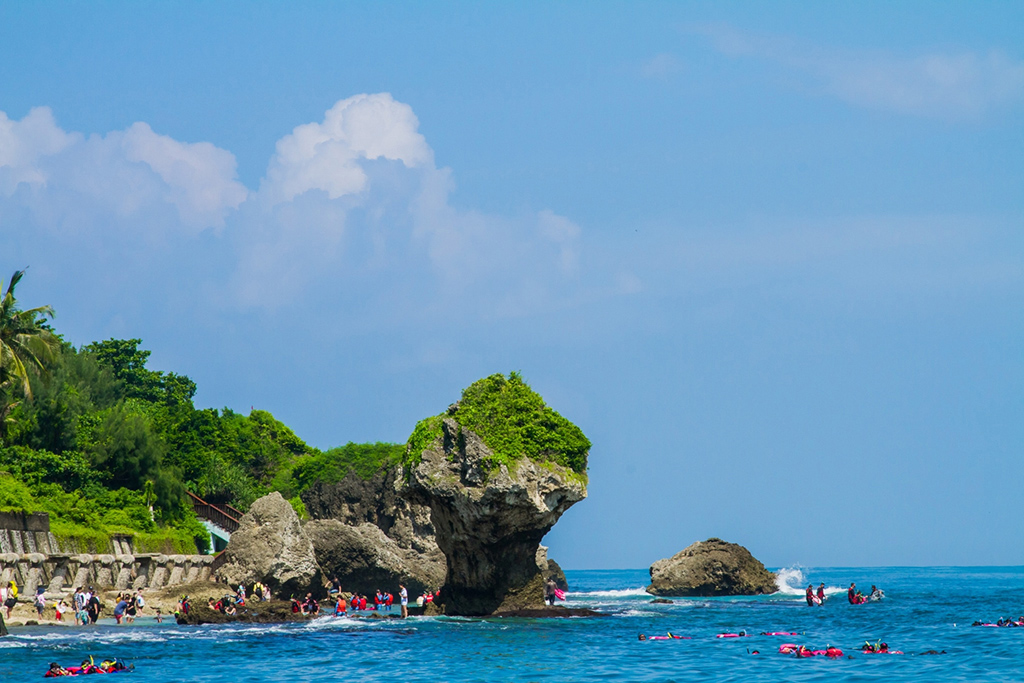
For activities such as snorkeling and scuba diving, please choose legal, qualified operators and confirm that they possess valid business registration.please choose legal, qualified operators
👉 Choose licensed operators. Protect yourself. Protect our oceans.
Liuqiu is home to the largest population of purple land crabs in Taiwan. During the land crab larval release season from May to September each year, motor vehicles such as cars and scooters are prohibited from passing through the restricted areas between 7:00 p.m. and 10:00 p.m.Part of the Beauty Cave area (approximately 1,200 feet long) is closed to traffic and designated as a pedestrian ecological corridor.
👉 Walking more and riding scooters less at night not only help protect land crabs, but also reduce carbon emissions.
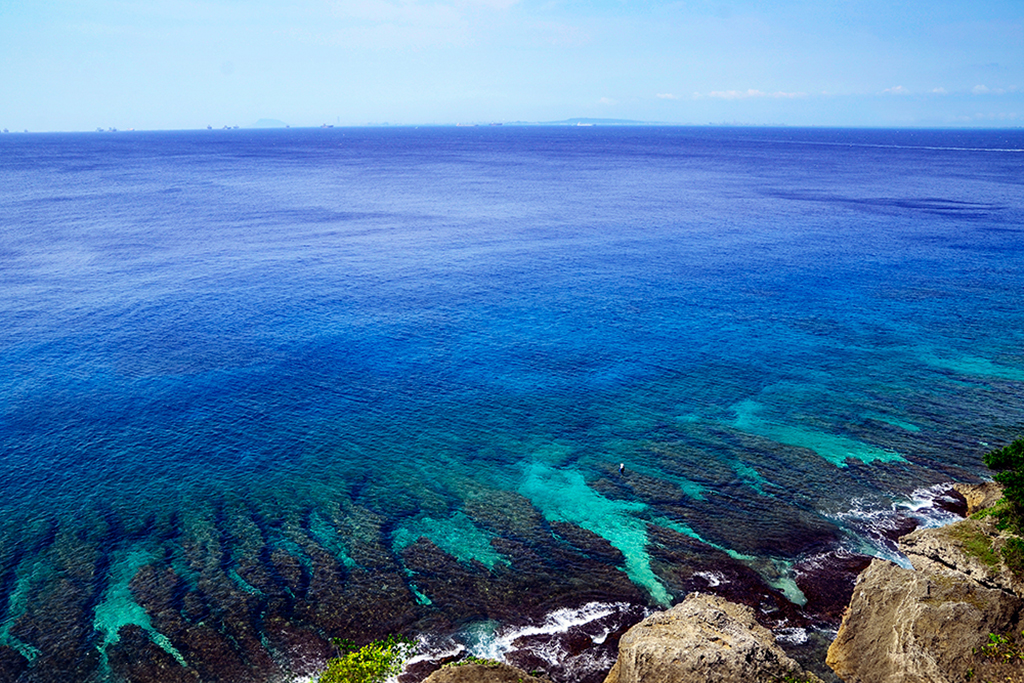
The best time to visit intertidal zones is within one hour before and after low tide. Visitors are advised to check tide schedules in advance and join guided tours.
An ecological conservation fee of NT$60 is required to enter the intertidal zones.For guided tour and reservation information, please refer to the “Liuqiu Intertidal Zone Ecological Conservation Network” website.Liuqiu Intertidal Zone Ecological Conservation Network
👉 If We Can See It, We Must Protect It.
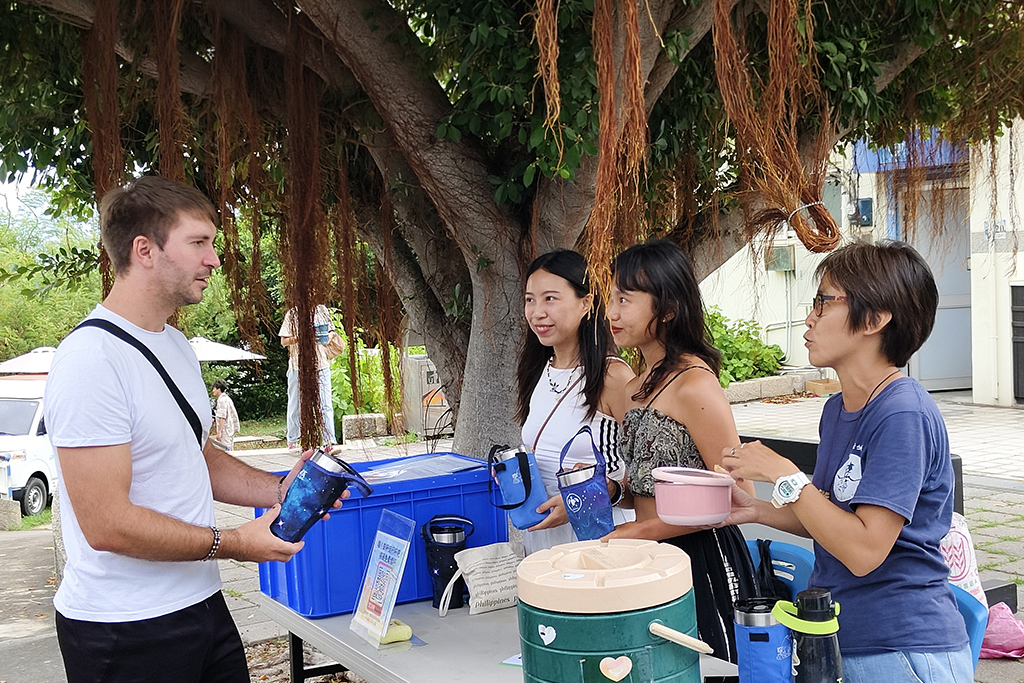
Liuqiu Promotes a Reusable Tableware Program to Reduce Single-Use Waste。Gugu Bowls and Liuxing Cups are available for rent at participating partner stores and capsule toy machines.。For more information, please visit Laogu Islet AssociationFB 、 Chaoliu Ecological Conservation Network 。
👉 Bringing your own reusable tableware or renting eco-friendly alternatives makes travel more sustainable.
Green Dining and Low-Carbon Transportation: Easy and Environmentally Friendly
Support local businesses and contribute to community co-prosperity by giving priority to environmentally friendly restaurants and green food establishments certified by the Ministry of Environment.Support low-carbon travel methods: From the Taiwan Railway Xinzuoying Station or Taiwan High Speed Rail Zuoying Station, visitors may take the Taiwan Tourist Shuttle Dapeng Bay–Liuqiu Express (i.e., bus No. 9127D) to the Donggang Ferry Terminal and then take a ferry to Liuqiu.Transportation options on the island include electric-assist bicycles, electric scooters, round-the-island buses, and walking.
Taiwan Tourist Shuttle Xiaoliuqiu Express (No. 601)-Low-Carbon Transportation
Taiwan Tourist Shuttle Dapeng Bay–Liuqiu Express (No. 9127D)
Taiwan Tourist Shuttle Xiaoliuqiu Express (No. 601)
👉 Travel slowly and sustainably to better appreciate the beauty of Liuqiu
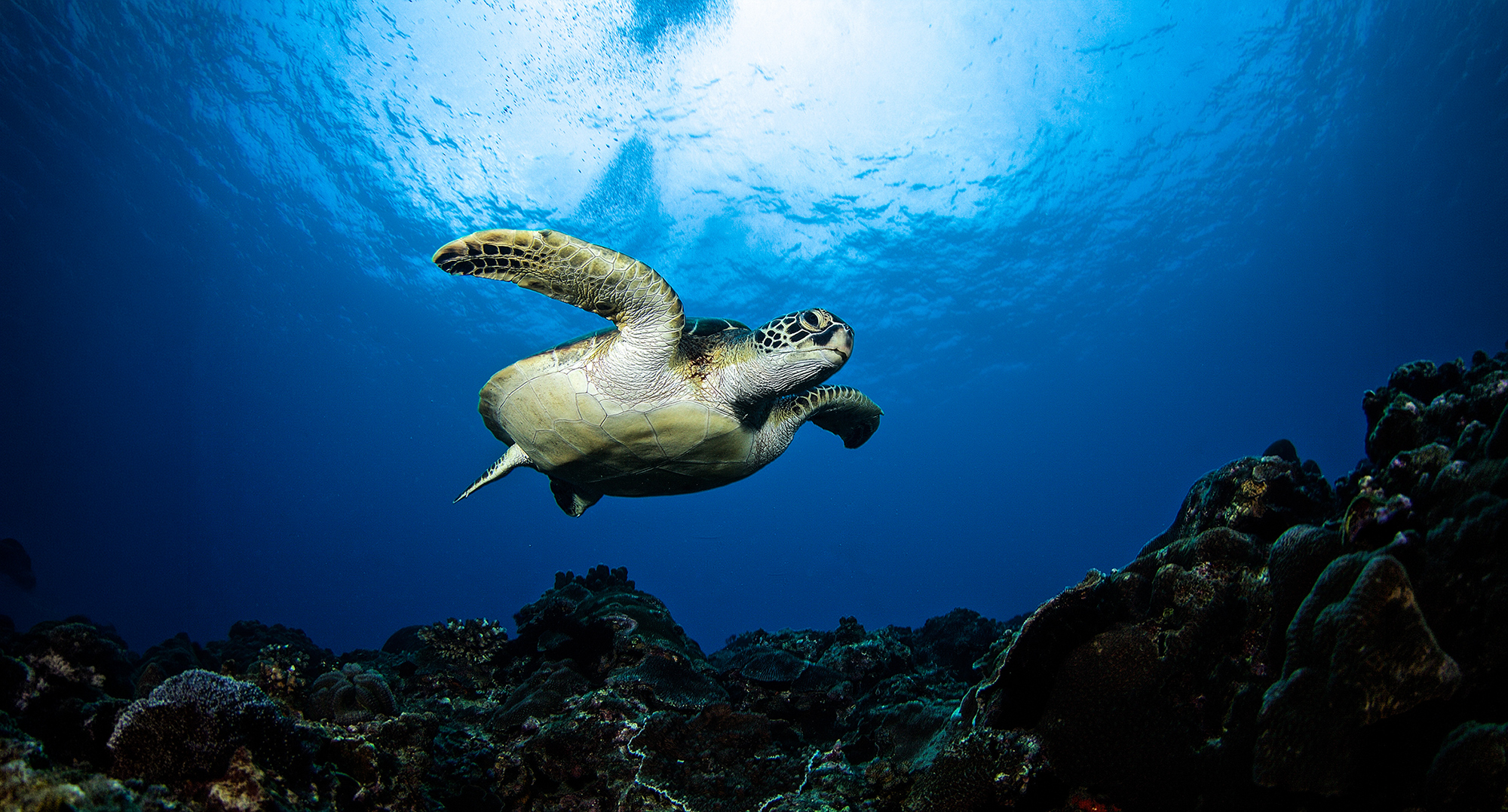
Liuqiu’s surrounding waters are rich in the algae and seagrass that green sea turtles love. As one of the world’s seven sea turtle species, green sea turtles are frequent visitors to the island. Go snorkeling or diving, and you may spot them grazing peacefully on algae-covered rocks right beside you!
You can still enjoy a unique turtle-watching experience from shore—keep an eye out for “Turtle Surfacing”! Since sea turtles breathe air through their lungs, they regularly come to the surface for a breath before diving back into the sea. With a little patience, you may catch a glimpse of their heads popping above the waves. So, find a spot by the shore, watch the sea, and wait for your turtle encounter!
Let’s protect the special bond between Liuqiu and its sea turtles. Keep your distance, stay calm, and enjoy watching them in their natural habitat. Getting too close can frighten sea turtles and may drive them away in search of safer waters. Give them space, so they can continue to call Liuqiu home.。
Protecting sea turtle habitats starts with understanding the turtles that call them home. Knowing how many live in the surrounding waters, where they travel, and when they are most active helps us protect them better. But how can we gather this valuable information without disturbing them?
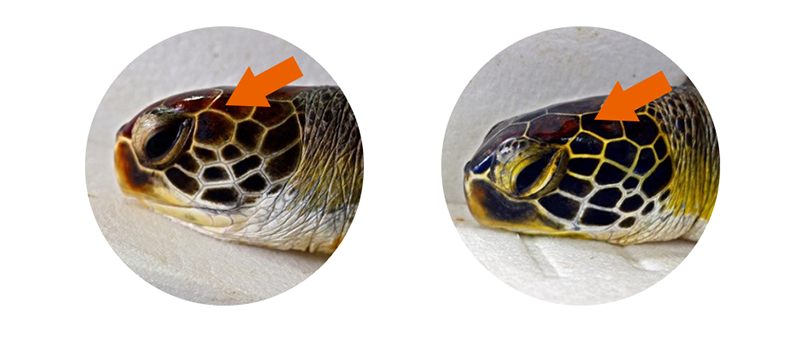
Nature has given us a remarkable way to identify sea turtles—each one has a face as unique as a fingerprint. The scales on their cheeks differ in size, shape, and pattern, and each side of the face is distinct. Researchers use underwater cameras to photograph both sides, then compare and catalog the images to track where each turtle has been spotted. Like an ID card for sea turtles, this “photo-ID” method helps us better understand the ecology and behavior of Liuqiu’s sea turtles.
More About Sea Turtles
- Personality: Warm, welcoming, and never shy, this sea turtle loves to slow down and enjoy a leisurely swim, inviting friends to explore his coral garden together.
- Favorite Activity: Back-scratching. This turtle loves rubbing its back against rocks, looking every bit as adorable as a cat rubbing against its owner for attention.
- Name Origin: Local diving instructors named three friendly sea turtles often spotted in this area after “Xiao Gu,” the sea turtle from Finding Nemo. They were named Da Gu, Zhong Gu, and Xiao Gu according to their size.
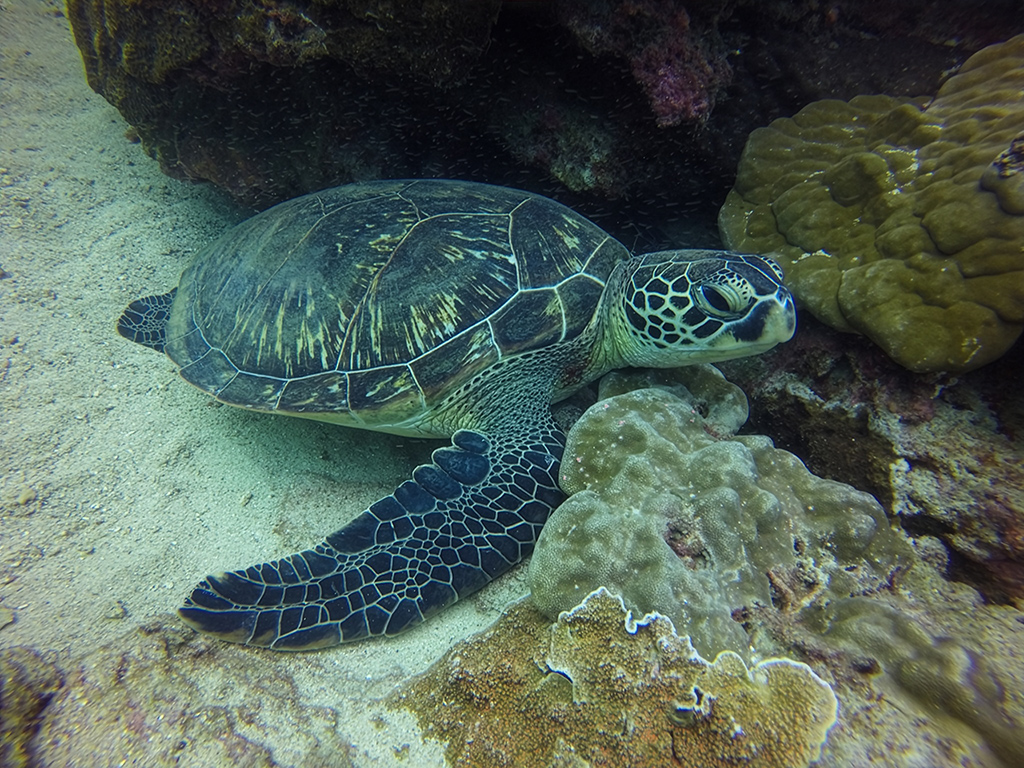
- Personality: Bold and carefree, this turtle has no qualms about its enthusiastic eating style. A true food connoisseur, it always goes for the freshest, most tender algae shoots.
- Favorite Activity: Munching on algae. A true foodie of Liuqiu, she is almost always spotted enjoying an algae feast. While sea turtles usually stay alert when feeding and swim away when people approach, Foodie is different—once she starts eating, she becomes completely absorbed in her own little world of algae, barely noticing anything around her.
- Name Origin: Almost every time she is spotted, she is busy enjoying a meal. The name “Foodie” couldn’t suit her better!
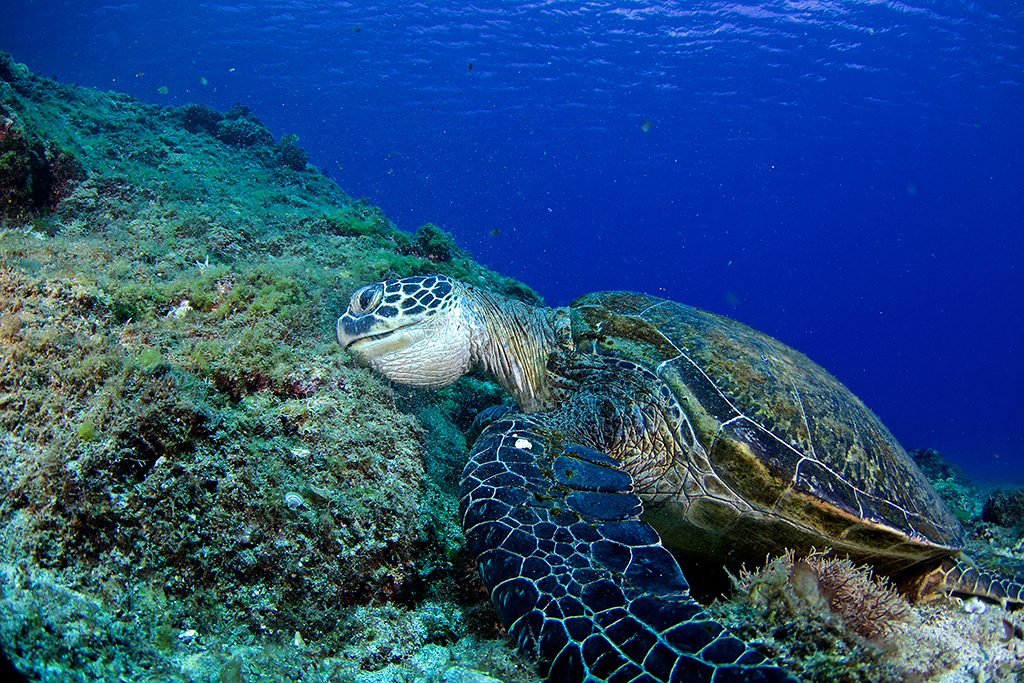
- Personality: With a scar on the left side of its face, Scar may look tough despite its small size. But beneath that fierce look is a gentle, kind turtle that simply takes a little time to warm up.
- Favorite Activity: Gliding solo through the sea and striking a pose—always making sure he has an audience.
- Name Origin: A prominent scar runs from beneath the left eye to the mouth, giving this turtle a tough, gangster-like look—and inspiring the name “Scar.”
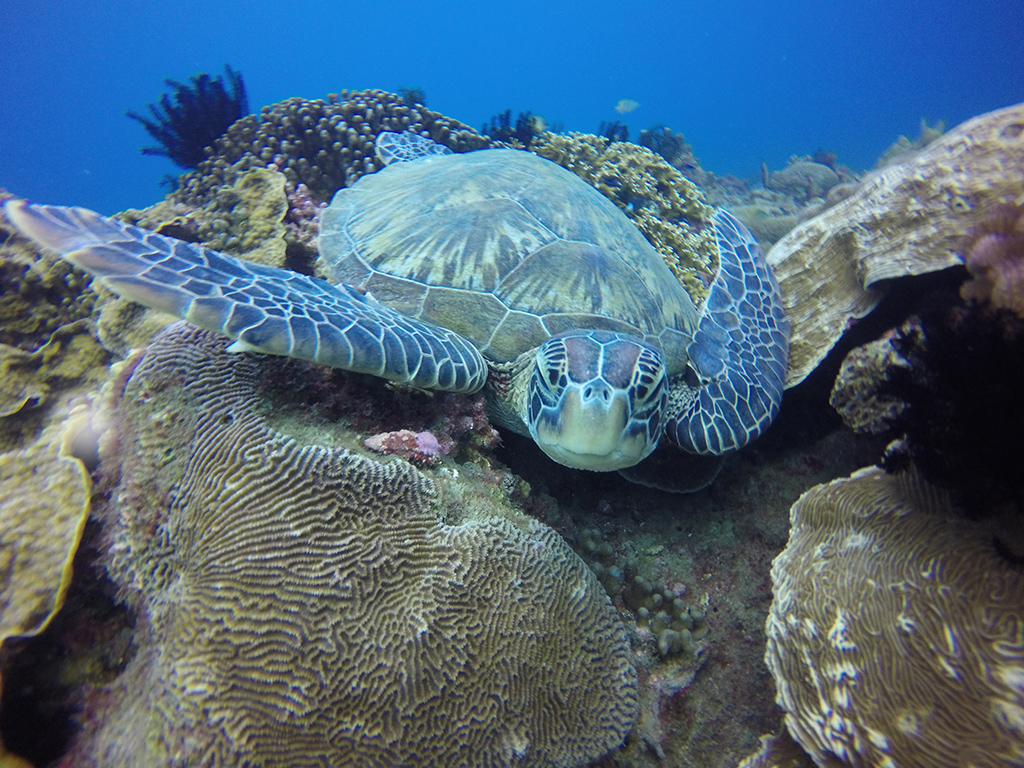
- Personality: Curious and always on the move, Xiao Piao has no favorite feeding spot and loves exploring new places.
- Favorite Activity: Drifting along with researchers, following the currents in search of tasty algae. After a quick bite, Xiao Piao is soon off again, riding the current to catch up with the researchers.
- 名Name Origin: Most green sea turtles have favorite feeding grounds where researchers regularly conduct surveys. Unlike the others, Xiao Piao is always on the move—drifting with the currents, stopping for a quick bite, and following researchers from place to place. Her free-spirited nature made every goodbye a little bittersweet, earning her the name “Xiao Piao,” meaning “Little Xiao Piao.”
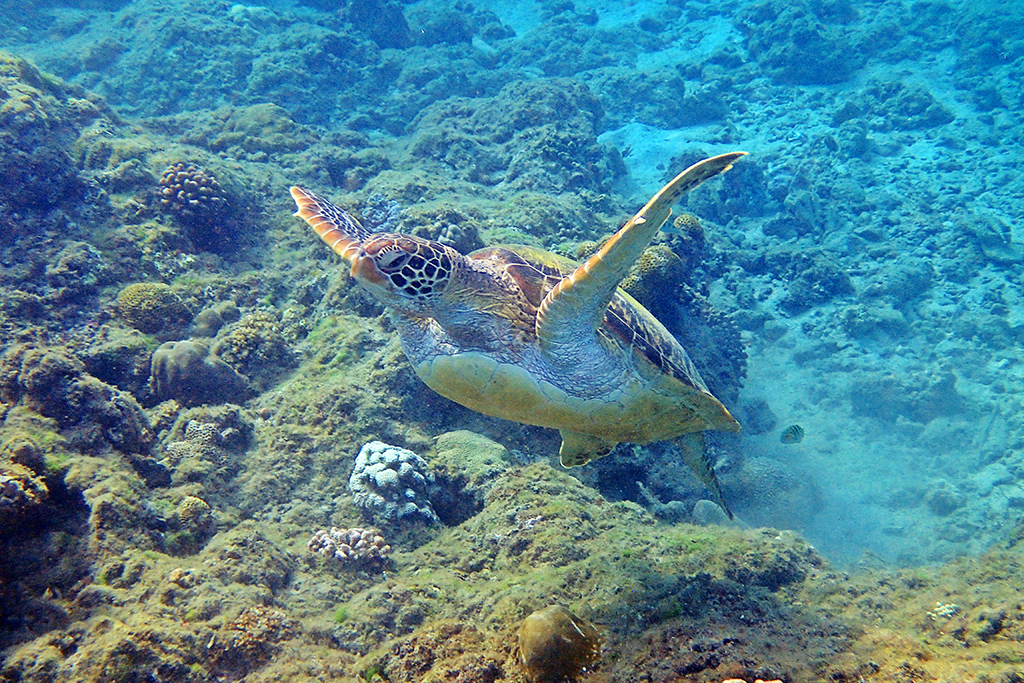
- Personality: Playful, hungry, and full of energy, this little guy loves roaming the sea and exploring new places!
- Favorite Activity: Multitasking—eating, playing, resting, and shell-rubbing, all at once!
- Name Origin: Green sea turtles love a good coral reef spa. Rubbing against the reef helps remove algae, barnacles, and other hitchhikers from their shells. Afterward, they head back to their favorite resting spot for a well-earned nap.
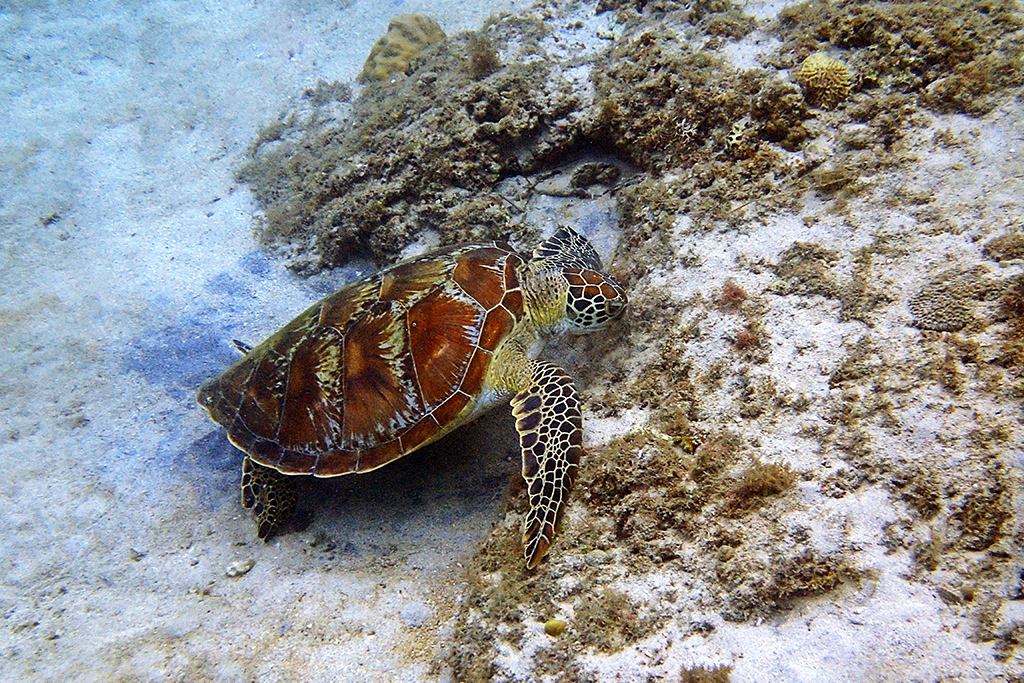
- Personality: Despite a physical disability, this resilient green sea turtle continues to thrive with a positive spirit. Its limited mobility means more algae tend to grow on its shell than on those of other turtles.
- Favorite Activity: Diving down for a bite of algae, then cleverly finding sheltered spots where the currents are gentler.
- Name Origin: “Xiao Youyou” carries a wish for good fortune and protection as this resilient turtle grows stronger. Its story also reminds us of the threats sea turtles face—from fishing hooks to marine debris. Together, we can help protect our oceans and the turtles that call them home.
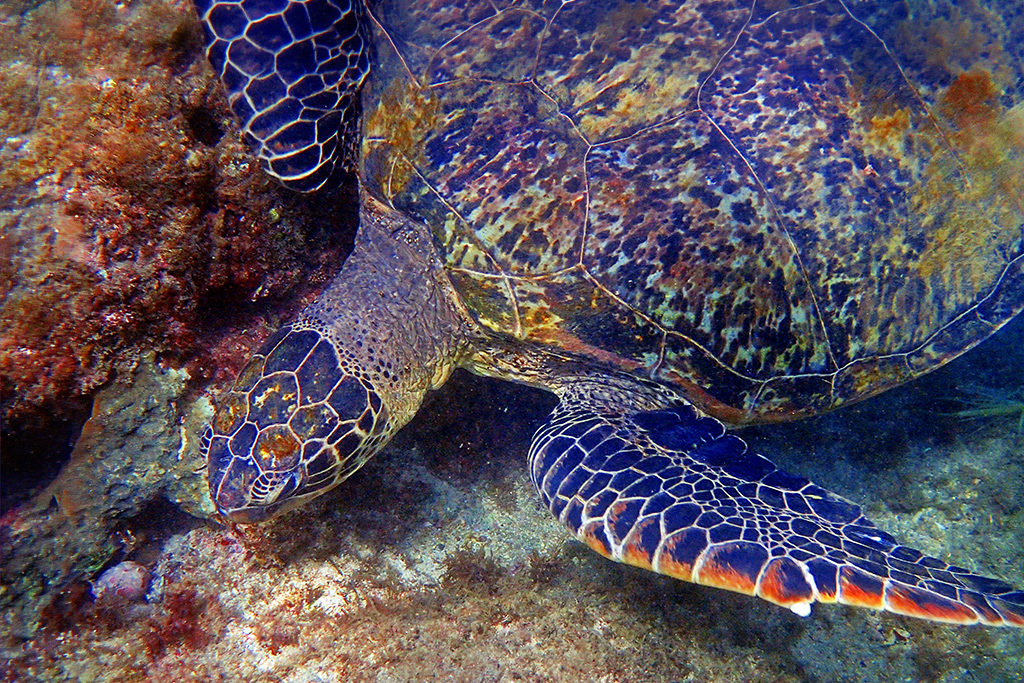
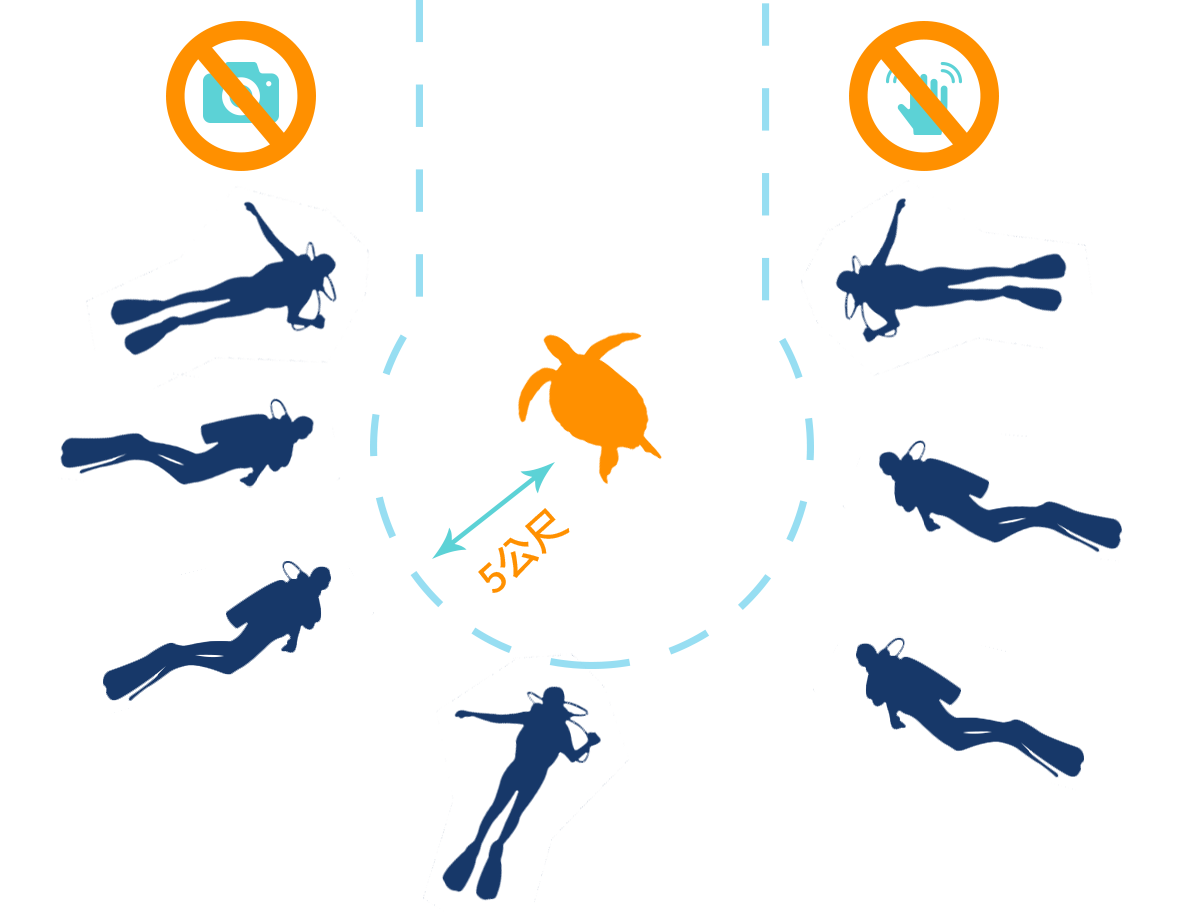
- Do not touch, catch, chase, surround, or disturb sea turtles.
- Never block their path.
- Keep at least 5 meters away to give them plenty of space.
- Do not disturb turtles that are resting or sleeping.
- Minimize sunscreen use, or choose reef-safe sunscreen.
- Never feed sea turtles.
Please follow the sea turtle watching guidelines and encourage others to do the same. If you’re joining a diving or snorkeling tour, remind your guide and fellow participants to respect these rules. Chasing, touching, or disturbing sea turtles may result in fines.
Record the incident with video and clear photos. Note the time and location, and collect any details that may help identify those involved. Make sure the footage clearly shows that the incident occurred in the waters around Liuqiu.
Take your trash with you, cut down on plastic, and help protect Liuqiu’s marine environment.!
Pursuant to Article 16 of the Wildlife Conservation Act, unless otherwise provided by the Act or other laws and regulations, protected wildlife shall not be harassed, abused, hunted, killed, traded, displayed, exhibited, possessed, imported, exported, or kept or bred.Any person who harasses or abuses protected wildlife shall be punished by imprisonment for not more than one year, detention, or a fine of not less than NT$60,000 and not more than NT$300,000, or by both imprisonment and a fine. If such conduct results in the death of the wildlife, the offender shall be punished by imprisonment for not more than two years, detention, or a fine of not less than NT$100,000 and not more than NT$500,000, or by both imprisonment and a fine.。
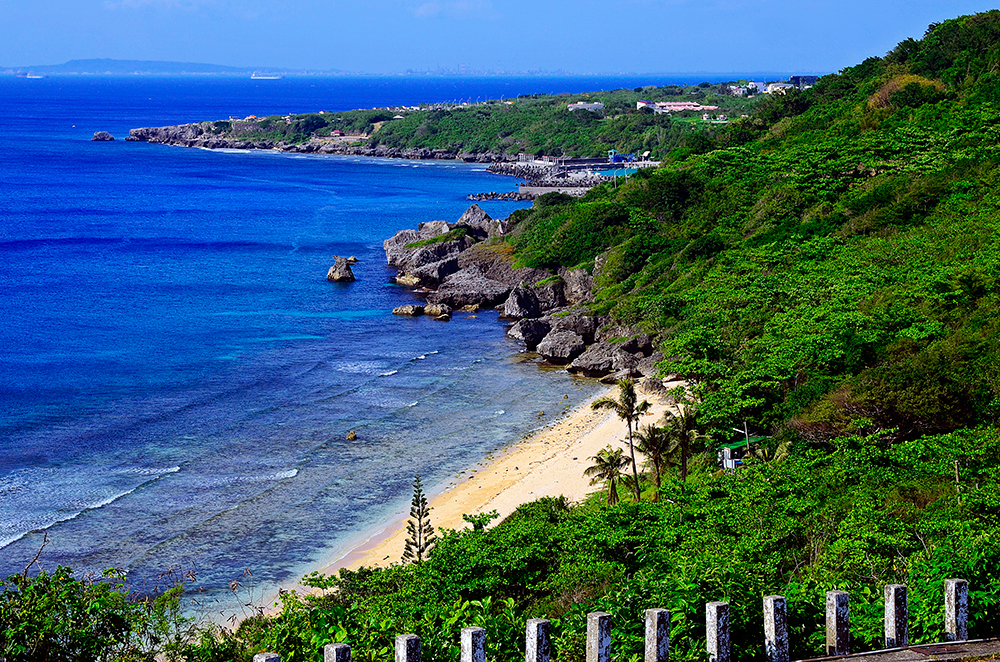
Geban Bay (Venice Beach)
Photo by Mr. Li Si-Wei
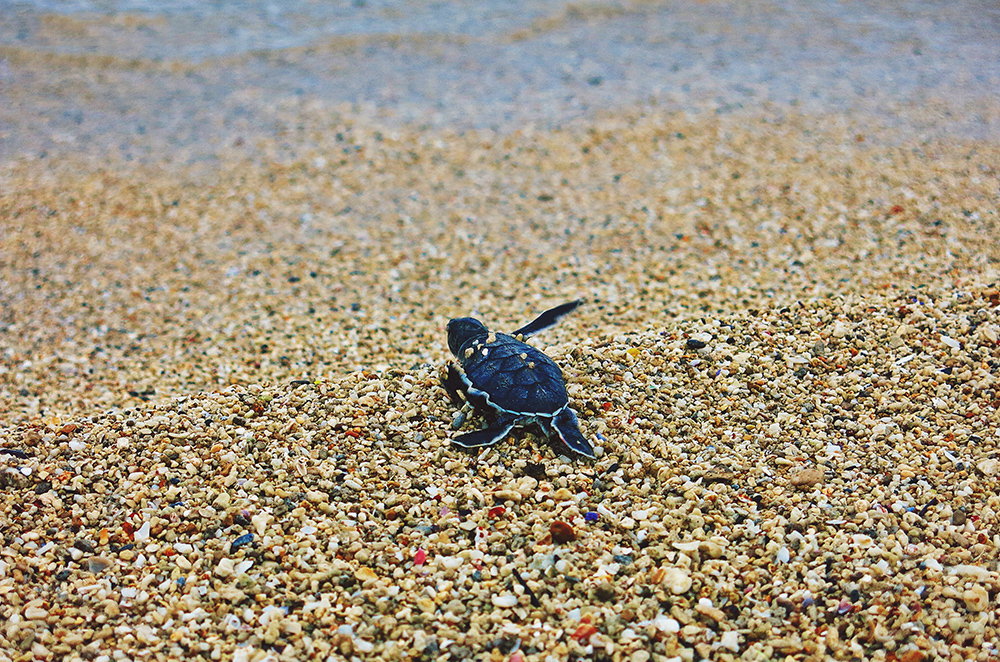
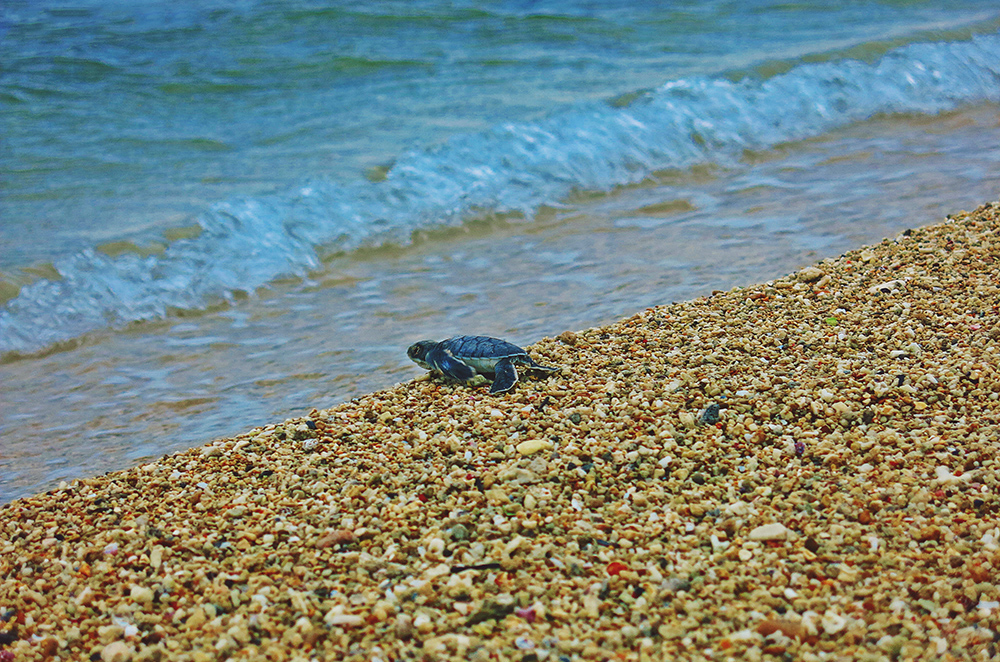
A Green Sea Turtle Striving Toward the Sea
Photo by Mr. Li Si-Wei
If you encounter a stranded sea turtle on the beach, you could be the one who helps save its life—but the wrong response could also put the turtle at risk.If you find a sea turtle stranded on the shore or floating in the water, check whether it appears intact and shows no signs of an unusual odor. It may be temporarily stunned and still need help. Here’s what you can do:
First, gently open the turtle’s eyelid and lightly stimulate the eye area or tail to check for a slight reflex response.
If the turtle shows a slight reflex response, do not return it to the sea or place it in a container of water. Move it to a shaded, cool indoor area, and gently cover its body with a damp towel.
Immediately report the sighting to the local county government or Coast Guard by calling 118. They will connect you with the appropriate authorities for assistance.。
If the turtle is still able to crawl, place it in a container large enough to move comfortably and add just enough seawater to wet its flippers. Do not fill the container with water, as a weakened turtle may struggle to surface for air and could drown.For turtles found along Taiwan’s west coast from Miaoli southward to Hualien on the east coast, rehabilitation and care are handled by the National Taiwan Ocean University Marine Ecology and Conservation Laboratory. In southern Taiwan, the National Museum of Marine Biology and Aquarium provides care. For 24-hour assistance, call (08) 882-5001 ext. 5052.
If you find a sea turtle that has died, call 118 for assistance. No need to remember multiple numbers—just remember 118. The Coast Guard will help connect you with the appropriate authorities.
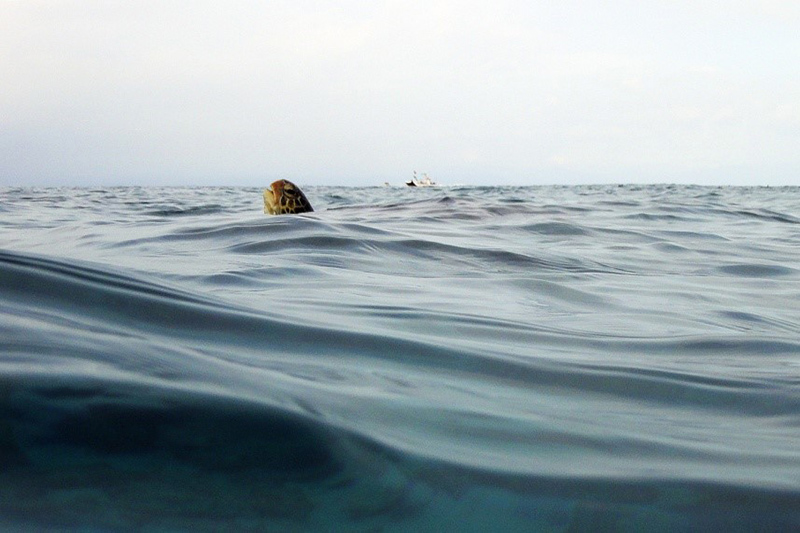
Sea Turtle Release After Rehabilitation
Photo By:Fu Kuo
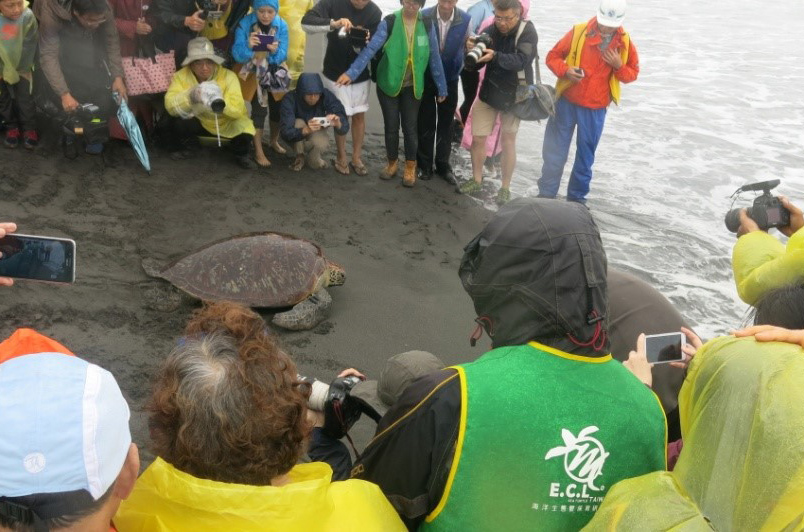
Back to the Sea
Photo by Mr. Li Si-We