
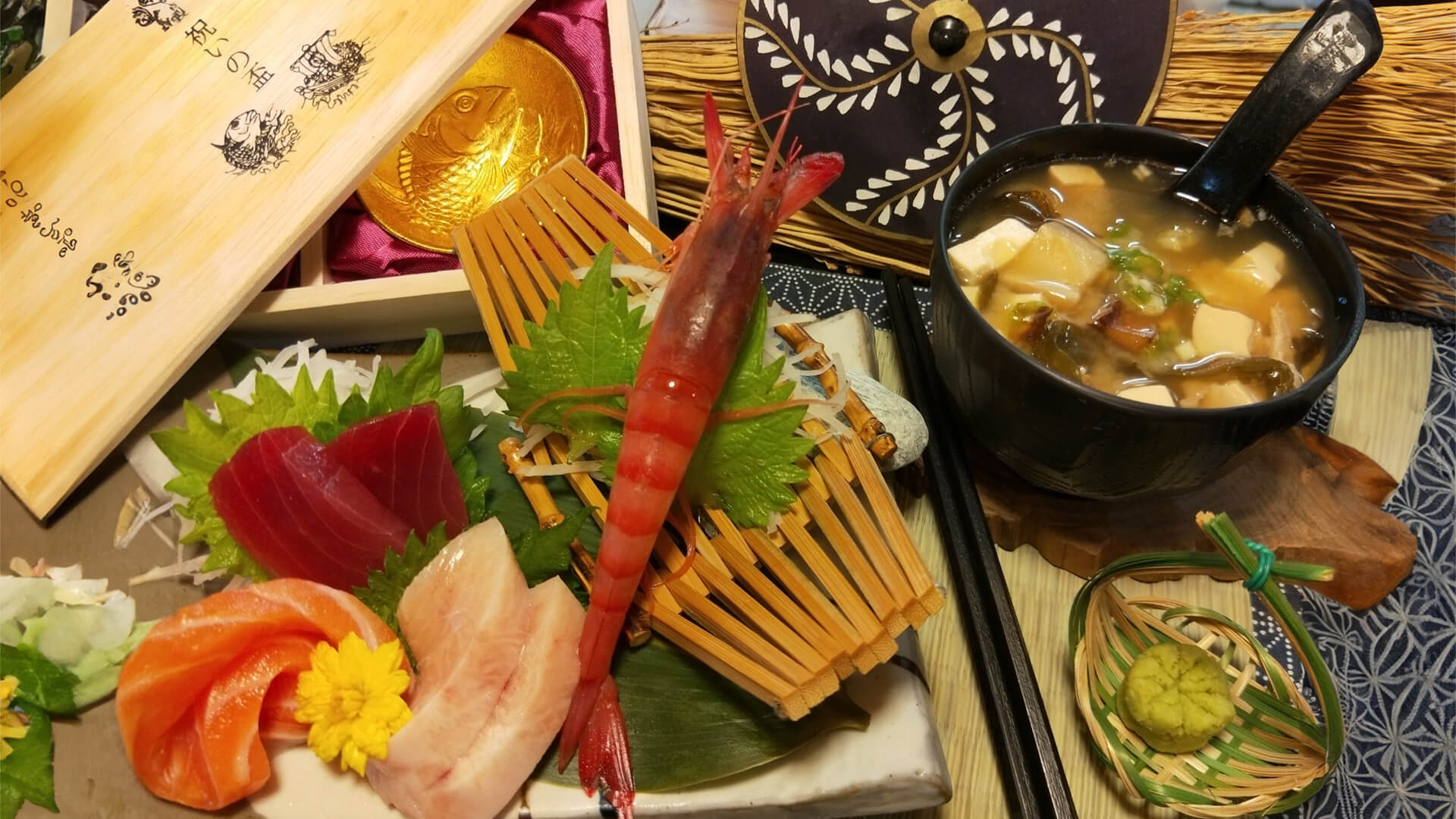

A Gift from the Sea: Delicacies You Can't Miss on a Trip to Donggang!
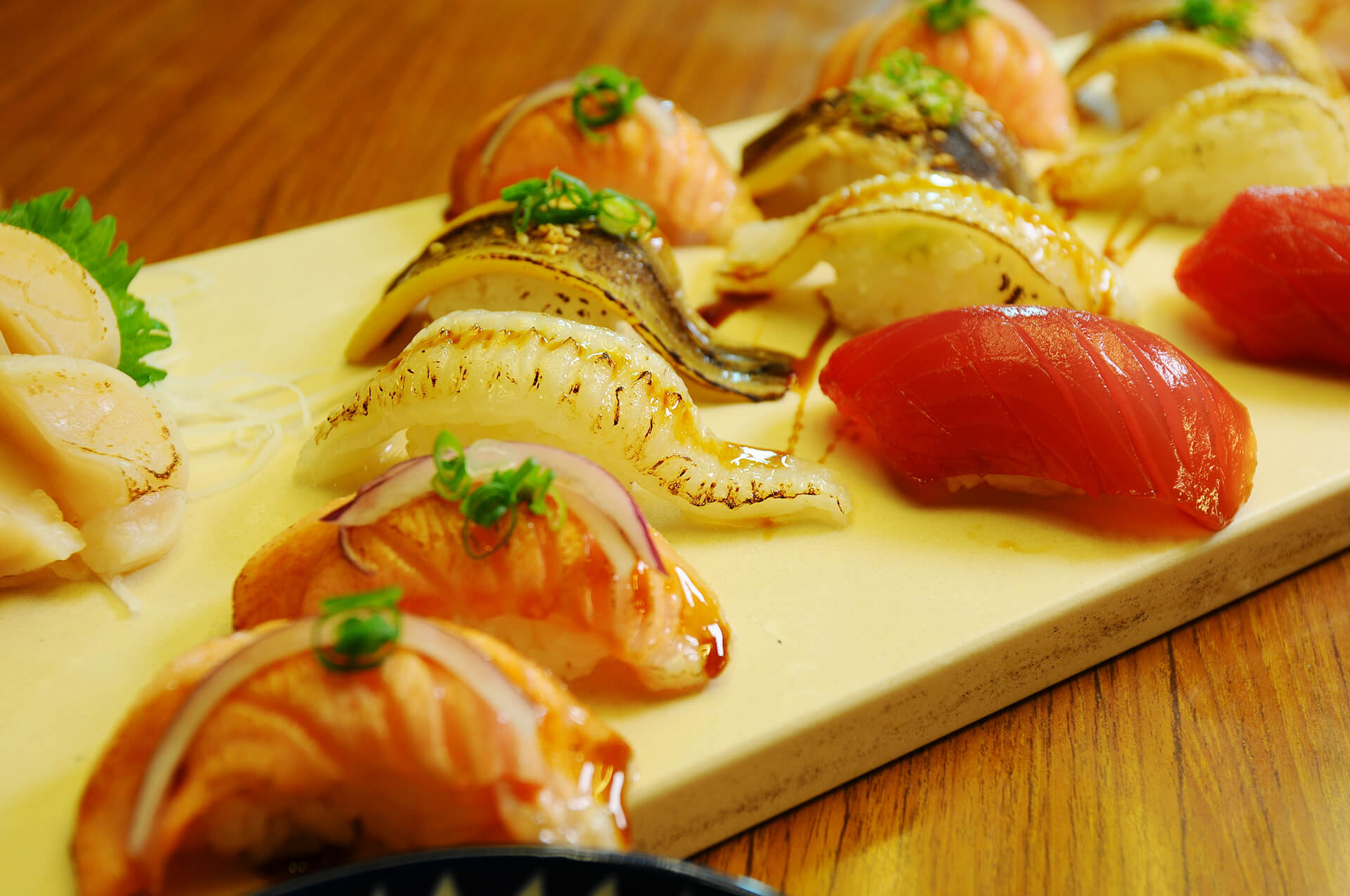
Among all tuna species, the one commonly called "Black Jar String" or "TORO" is the most robust, as large as a jar, and can reach a body length of 300 centimeters. Its color is black (black-blue) on the back. In English, it is called Bluefin tuna, also known as Northern Pacific Bluefin Tuna (*Thunnus orientalis*). The period from April to June each year is when it is the plumpest, as it migrates to the waters between Japan and the Philippines to spawn. The fish meat has the highest nutritional content during the breeding season. Furthermore, because it has been swimming for a long time, the meat is fresh, delicious, and elastic at this time. This is why Donggang Township's annual "Bluefin Tuna Festival" is scheduled to kick off in May.
Its streamlined, spindle-like body helps it accelerate in the water. The two dorsal fins arranged front and back, along with the pectoral fins and pelvic fins on both sides, help the bluefin tuna maintain balance and control direction. The caudal fin is slender and powerful—truly mighty! It acts like a propeller, quickly generating thrust and accelerating forward to catch prey. The bluefin tuna is one of the fastest swimming fish species in the world. How fast? Consider this: Olympic gold medalists run quite fast, right! It takes them about 9.7 seconds for every 100 meters. The cheetah, the fastest animal on land, takes about 3.75 seconds, while our champion, Mr. and Mrs. Bluefin Tuna, only need a brief 2.5 seconds to cover 100 meters! When sprinting, their speed can reach up to 160 kilometers per hour, earning them the nickname "Porsche of the Sea."
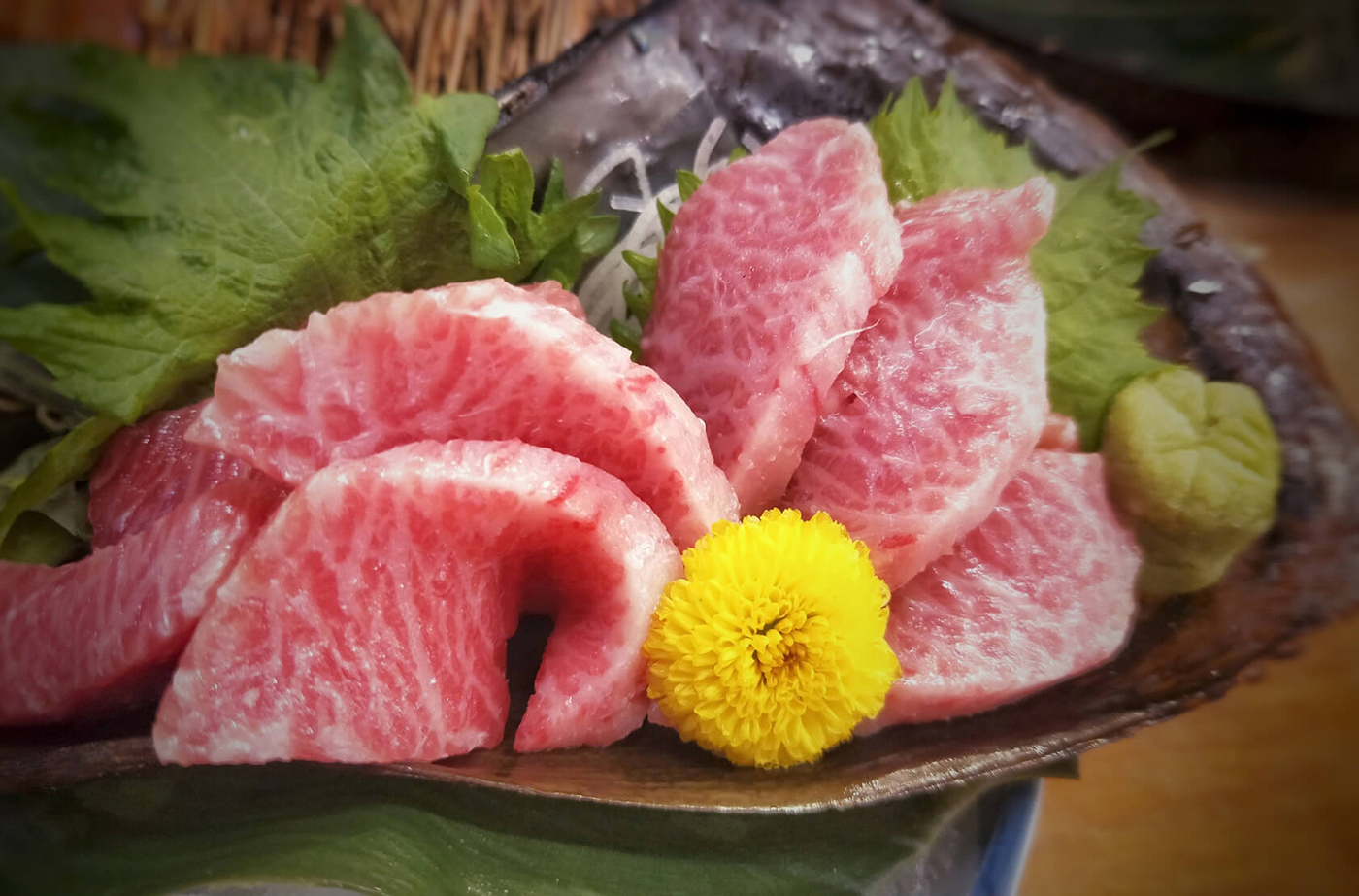
Bluefin tuna can be said to be valuable in every part, and the market selling price varies depending on the cut. The highest grade comes from the area from the belly to the gills, called "O-toro" or "OTORO." It is rich in fat and tender, pale pink in color, and melts in your mouth. It is the tastiest and most expensive part, usually made into sashimi. Next is the section from the mid-belly to the tail, called "Chu-toro," which has slightly less fat and is also high in DHA, classifying it as upper-middle grade. The next is the back meat, which is low in fat, has a vibrant red color, and contains EPA.
- High protein, low fat, low calories: The biological value of its protein is as high as 90, which can effectively combine with amino acids, making it the best source of protein.
- Methionine and Cystine: Enhance liver function.
- Taurine: Can inhibit sympathetic nerve excitement, lower blood pressure and blood cholesterol, and prevent arteriosclerosis.
- DHA and EPA: Highest content among fish. Eating more can prevent thrombosis and myocardial infarction.
- Iron and Vitamin B12: Can prevent and treat anemia.
- Nucleic Acid: Can prevent aging.
- Niacin and Vitamin B6: Beneficial for children's development.
- Potassium: Potassium maintains 75% of the body's water; a lack of potassium will affect nerve and muscle function.
Sakura shrimp (*Sergia lucens Hansen*) is scientifically known as "Sergia lucens Hansen." It is named because it is covered with red pigment and 161 photophores, making it look like falling "cherry blossoms" in the seabed from a distance. Donggang locals call it "Hua Ke Zi" (Flowery Shell).
Sakura shrimp belongs to the oceanic planktonic shrimp class and is one of the few zooplankton that can be directly utilized by humans. (There are only two producing areas worldwide: Suruga Bay and its surrounding waters in Japan, and the coastal waters from Donggang to Fangshan in Taiwan.)
The season for catching Sakura shrimp in Donggang is from November to May of the following year. Every shrimp boat adheres to total allowable catch limits and closed fishing periods, a standard maintained for over a decade, setting a model for the sustainable management of marine resources. The ever-growing Sakura shrimp industry brings in hundreds of millions of NT dollars in production value annually, benefiting related industries such as food processing, fishing gear, and transportation, creating a win-win situation for economic development and fishery resource recovery.
Most aquatic animals have the characteristic of high water content, and Sakura shrimp is no exception. It must be dried and dehydrated for convenient preservation. Sakura shrimp is rich in calcium, astaxanthin, chitin, and chitosan, making its nutritional value very high. It is ideal as a nutritional supplement for growing children, postpartum women, and the elderly, making it the best health food. The entire shrimp has a soft texture and can be chewed directly. It is suitable for stir-fries, mixing with rice or other delicious food, or processing into a snack to be eaten directly.
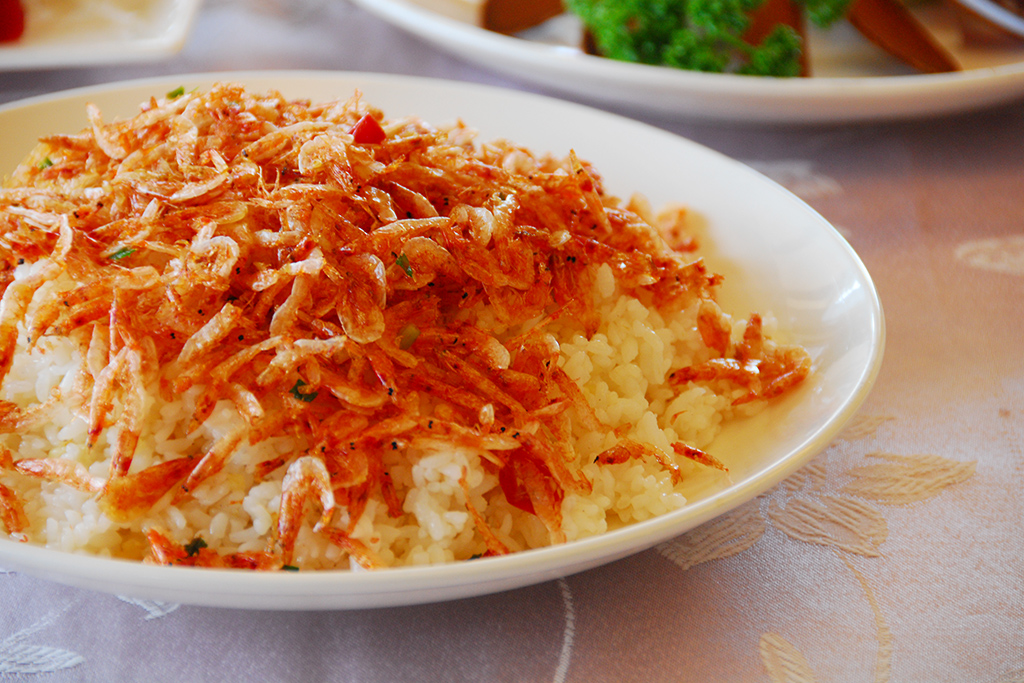
Sakura Shrimp Fried Rice
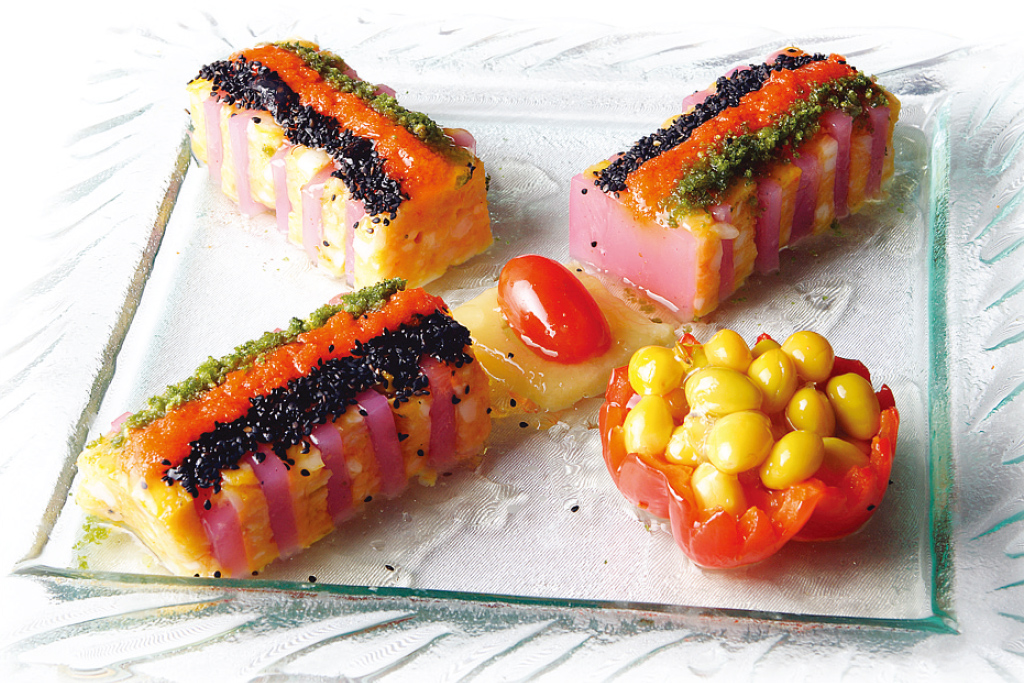
Creative Sakura Shrimp Dishes
- Sun-drying: The production process is more complicated. It requires preventing the shrimp from being blown away by strong winds or pecked by birds, and the drying quality is also affected by climate change. The color retention is poorer, and the color after drying is brownish-tea.
- Hot-air drying: The production process is simpler and is not affected by external factors or weather. The drying efficiency is high, the color retention is excellent, and the color of the dried Sakura shrimp is orange-red (the same as when fresh).
Oilfish is a deep-sea fish species, also known as "Escolar" or "Black Escolar." Locals in Donggang call it "Cu Lin Zi" (Coarse Scale Fish). Oilfish can be used as raw material for sashimi in restaurants. It is called oilfish precisely because of its high-fat content. The white fish meat is extremely sweet, but its fat cannot be digested and absorbed by the human body; it is a wax-like substance, so excessive consumption is not recommended. Locals in Donggang make use of its roe, following the preparation method of mullet roe, to create the unique Oilfish Roe of Donggang. Most commercially available vacuum-packed products are finished products that have been roasted. Since it is a cured product, the saltiness varies from vendor to vendor. The method of eating is the same as mullet roe: first, slice the product thinly, then eat it with garlic sprouts and white radish. If you prefer a refreshing flavor, you can switch to eating it with apple slices or pear slices. The taste is salty with a slight sweetness, and the aroma and texture are comparable to or even better than mullet roe, leaving a lasting flavor for gourmets.
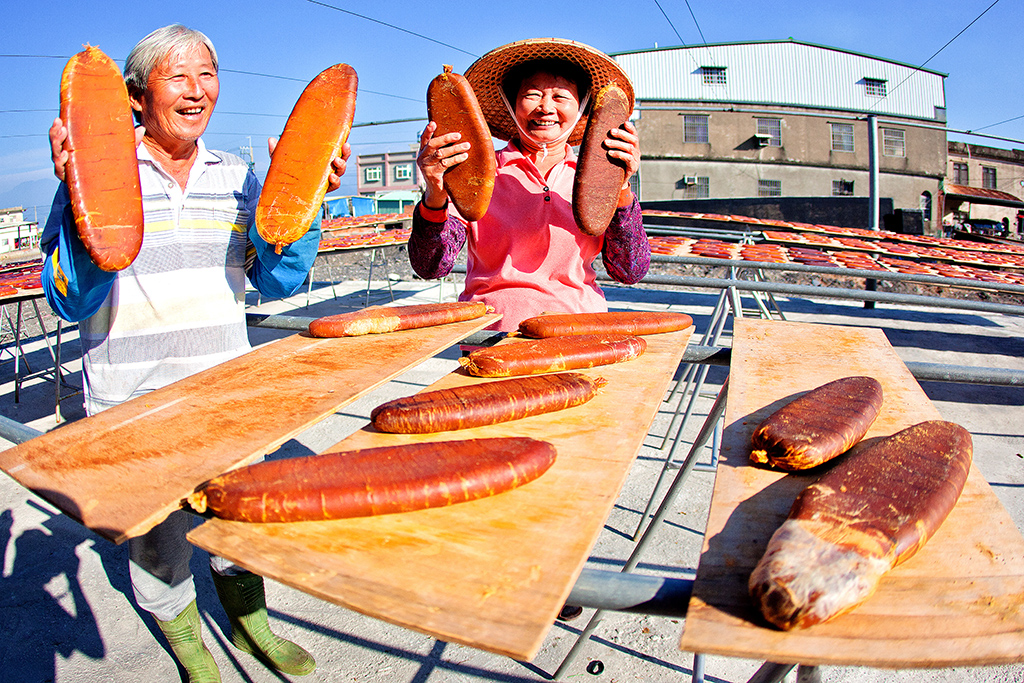
Locals in Donggang make use of its roe, following the preparation method of mullet roe, to create the unique Oilfish Roe of Donggang
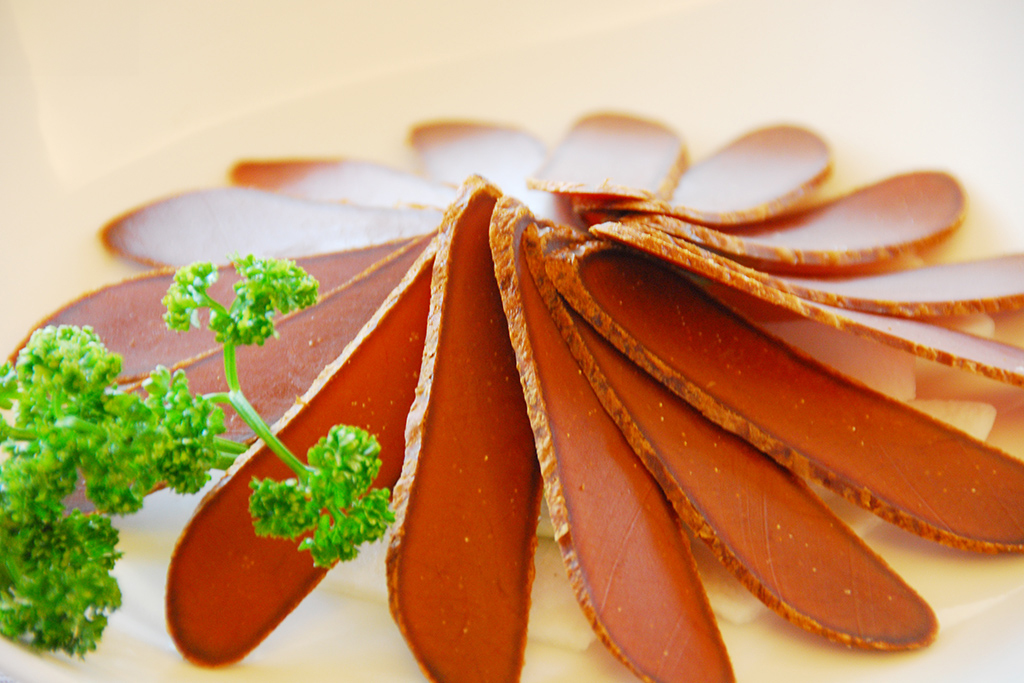
Sliced thinly and eaten with garlic sprouts and white radish, it is salty with a slight sweetness, leaving a delicious, lasting flavor
In addition to the famous Bluefin Tuna, "Nage Yu" (That Fish) is also quite well-known in Donggang. When the Bluefin Tuna season is over, "Nage Yu" is in its fresh season. You can not only buy it at the Huaciao Market but also taste it fresh on the spot.
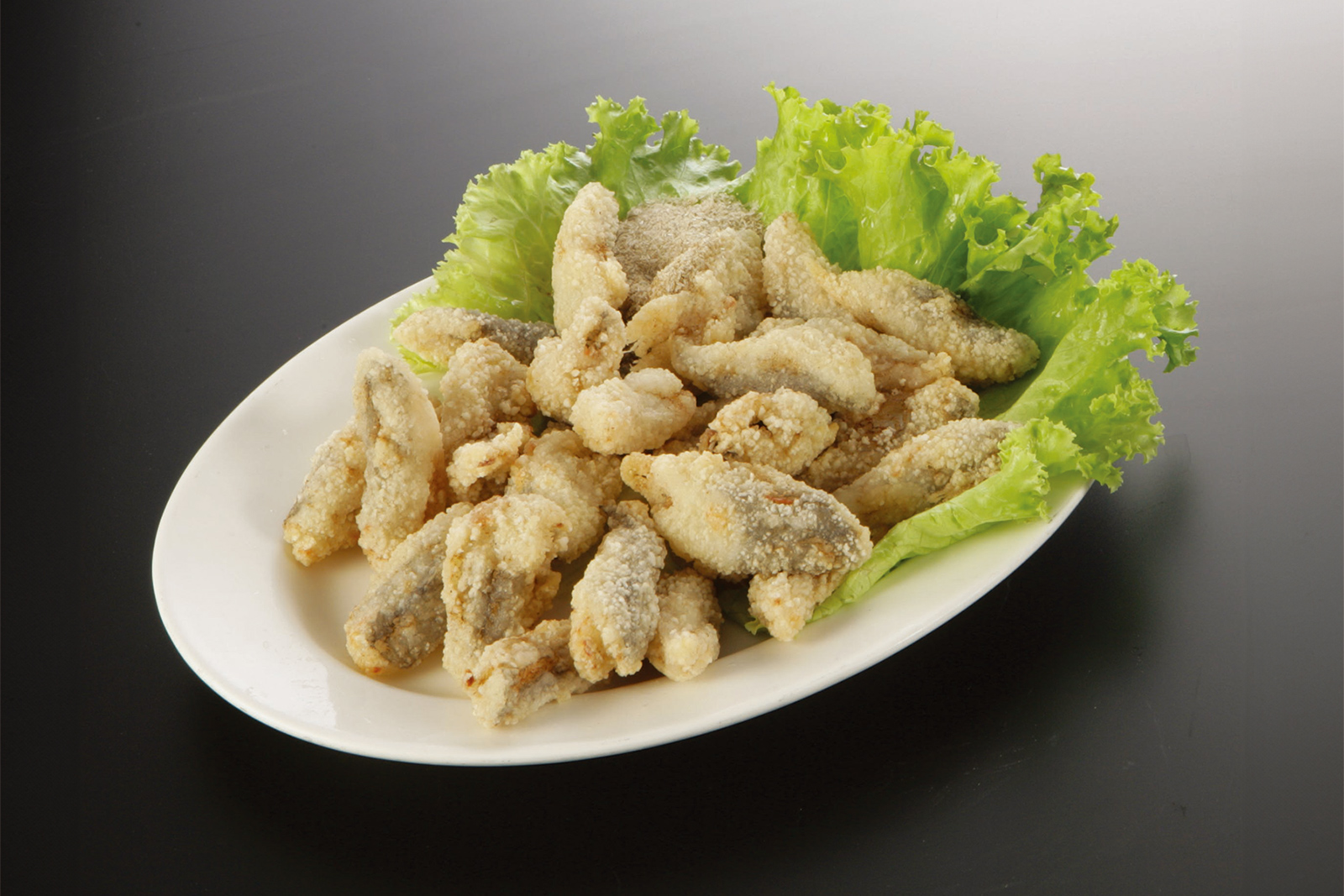
The Chinese name for "Nage Yu" is "Small-finned Lizardfish" (*Harpadon microchir*), which belongs to the lizardfish family. It can grow up to 70 centimeters and weigh about 0.6 kilograms, but what is seen in the market is generally between 20 and 30 centimeters in length. The front half of the body is scaleless, and there are few scales on the tail or lateral line. The scales are extremely thin and easily fall off, so most people think of it as a scaleless fish, somewhat like a small eel!
In the past, because the meat of the Small-finned Lizardfish was too soft and mushy, making it unpleasant to cook, most fishermen would discard their catch. Recently, it was discovered that by deep-frying (but not for too long), the "Nage Yu," when just served, melts in your mouth. The crispy exterior and tender interior, seasoned with special pepper salt, leaves a fresh, savory, and salty taste in the mouth, making everyone who tries it unforgettable.
Dapeng Bay's Seafood Flavors, Liuqiu's Local Snacks: Fresh, Affordable, and Unforgettable
The specialty snacks of Dapeng Bay and Siaoliuqiu are each uniquely wonderful, perfectly interpreting the marine style and local culture of Southern Taiwan.
Dapeng Bay (Donggang), based on its abundant fishery resources, emphasizes "freshness" and "authenticity" in its specialty snacks. The famous "Donggang's Three Treasures" (Bluefin Tuna, Sakura Shrimp, Oilfish Roe) attract countless food lovers. You can enjoy fresh and affordable sashimi and various seafood delights at the Huaciao Market. Furthermore, local daily dishes like "Fan Tang" (rice soup), the chewy "Rou Guo" (meat rice cake), and the sweet and soft "Shuang Gao Run" (two-layer glutinous rice cake) are all must-try snacks full of nostalgic flavors, showcasing the simple charm of the fishing village.
Siaoliuqiu, due to its unique geographical location (Taiwan's only coral reef island), has developed creative and island-style specialty desserts. The "Mahua Twist" (fried dough twist) seen everywhere on the island is a must-buy souvenir, with various flavors, crispy and addictive. Creative dishes like "Flying Fish Roe Cheese Toast", "Honeycomb Shrimp", "Dorado Dried Fish Fried Rice", "Siaoliuqiu Sausage", and refreshing specialty shaved ice desserts all combine local characteristics and have a unique flavor.
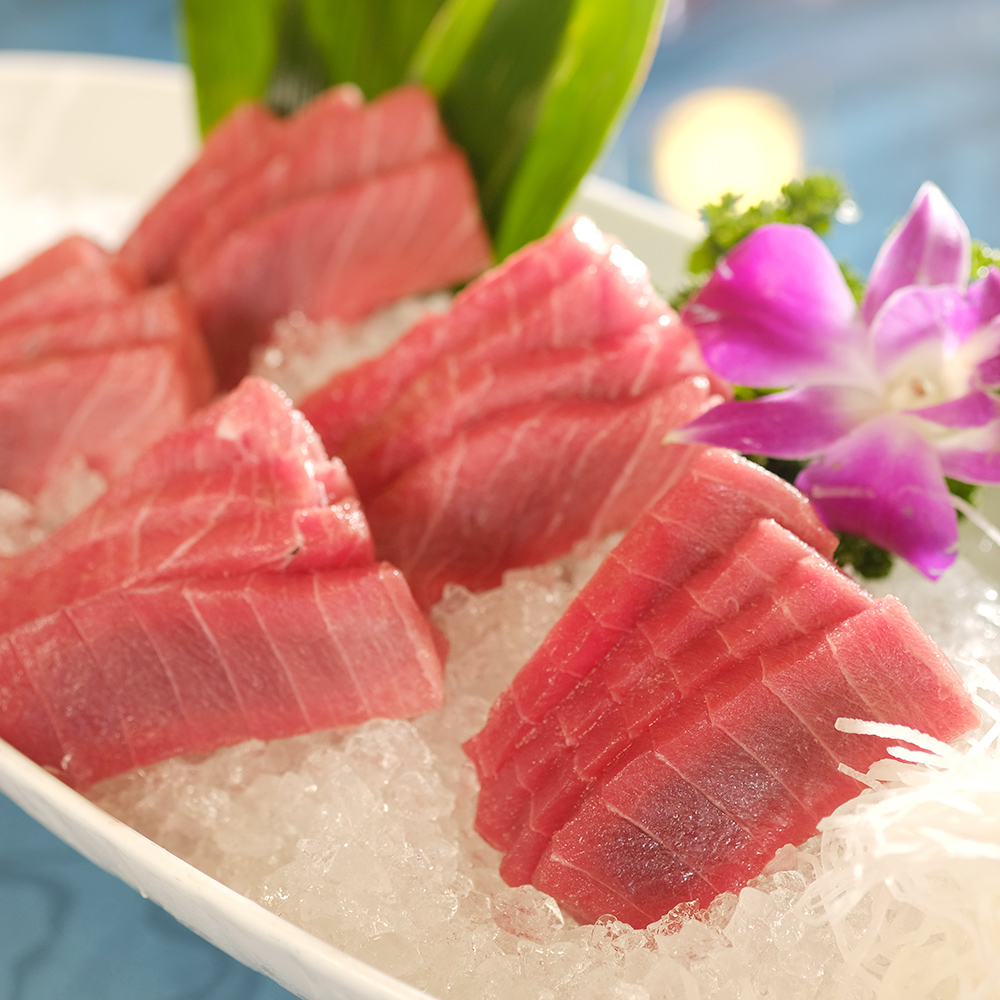
Among all tuna species, the bluefin tuna, commonly called "Black Jar String" or "TORO," is the most robust and as large as a jar, with a body length that can reach 300 centimeters. Its color is black (black-blue) on the back. In English, it is called Bluefin tuna, also known as Northern Pacific Bluefin Tuna (*Thunnus orientalis*). The period from April to June each year is when it is the plumpest, as it migrates to the waters between Japan and the Philippines to spawn. The fish meat has the highest nutritional content during the breeding season. Furthermore, because it has been swimming for a long time, the meat is fresh, delicious, and elastic at this time. This is why Donggang Township's annual "Bluefin Tuna Festival" is scheduled to kick off in May.
Bluefin tuna can be said to be valuable in every part, and the market selling price varies depending on the cut. The highest grade comes from the area from the belly to the gills, called "O-toro" or "OTORO." It is rich in fat and tender, pale pink in color, and melts in your mouth. It is the tastiest and most expensive part, usually made into sashimi. Next is the section from the mid-belly to the tail, called "Chu-toro," which has slightly less fat and is also high in DHA, classifying it as upper-middle grade. The next is the back meat, which is low in fat, has a vibrant red color, and contains EPA.
Most aquatic animals have the characteristic of high water content, and Sakura shrimp is no exception. It must be dried and dehydrated for convenient preservation. Sakura shrimp is rich in calcium, astaxanthin, chitin, and chitosan, making its nutritional value very high. It is ideal as a nutritional supplement for growing children, postpartum women, and the elderly, making it the best health food. The entire shrimp has a soft texture and can be chewed directly. It is suitable for stir-fries, mixing with rice or other delicious food, or processing into a snack to be eaten directly.
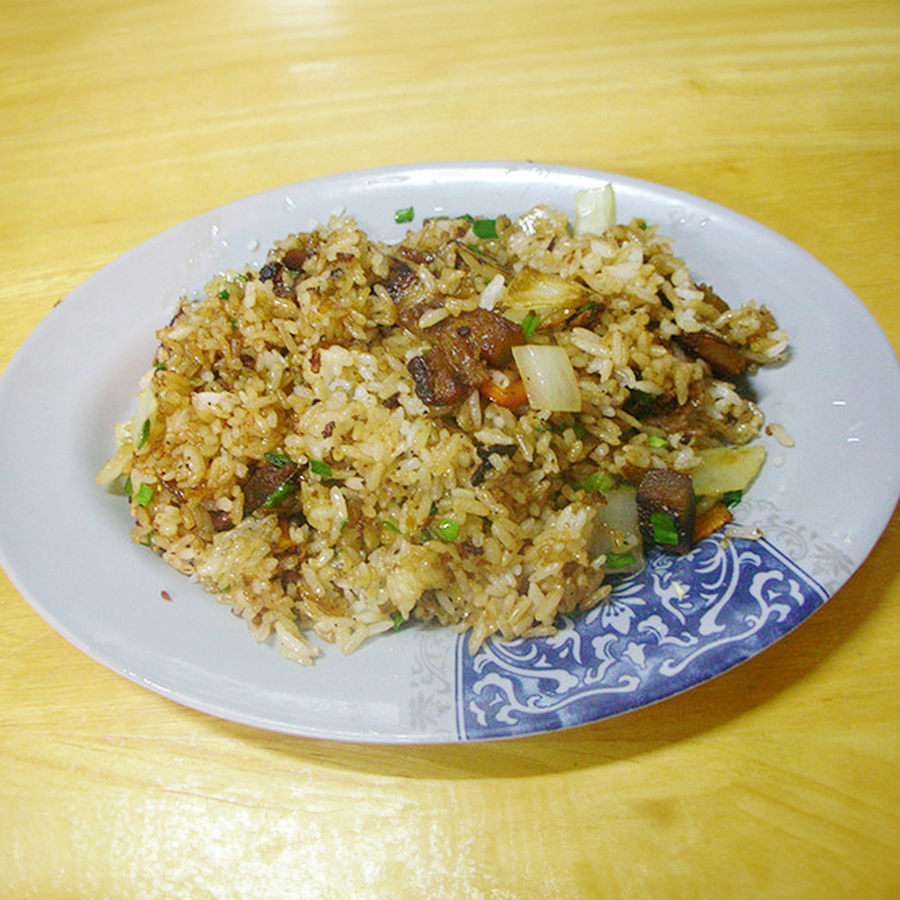
Dorado is also known as "Flying Tiger Fish." When flying fish migrate to the waters east of Taiwan in spring and summer, the Dorado chases and preys on migratory fish like mackerel and flying fish, hence the name. Dorado is abundant from March to May. Its meat is delicate and has a good texture. It can be pan-fried, boiled, or deep-fried, each having a different flavor. When visiting Siaoliuqiu, be sure to try the Dorado Fried Rice. The wonderfully textured dried Dorado fish, combined with stir-fried rice that has been wok-fried to bring out the aroma, is truly delicious!
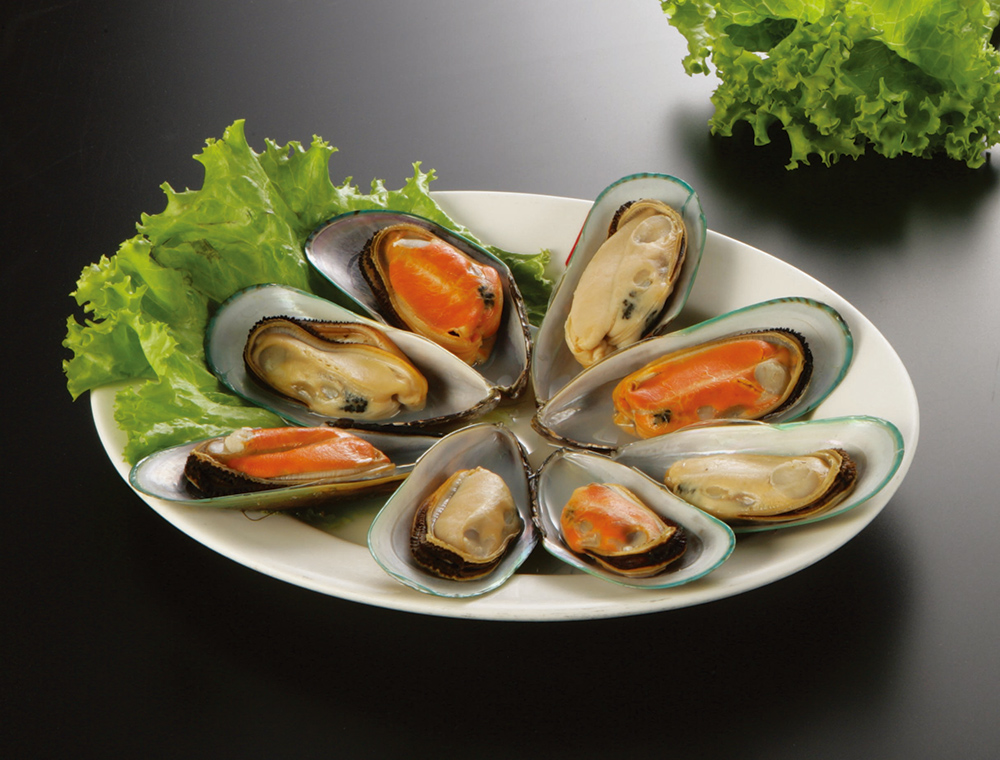
These seafood products, absent from Dapeng Bay for over 30 years, have been reborn after the removal of oyster and cage culture facilities in the bay area. Their fresh and sweet taste will leave you with endless aftertaste.
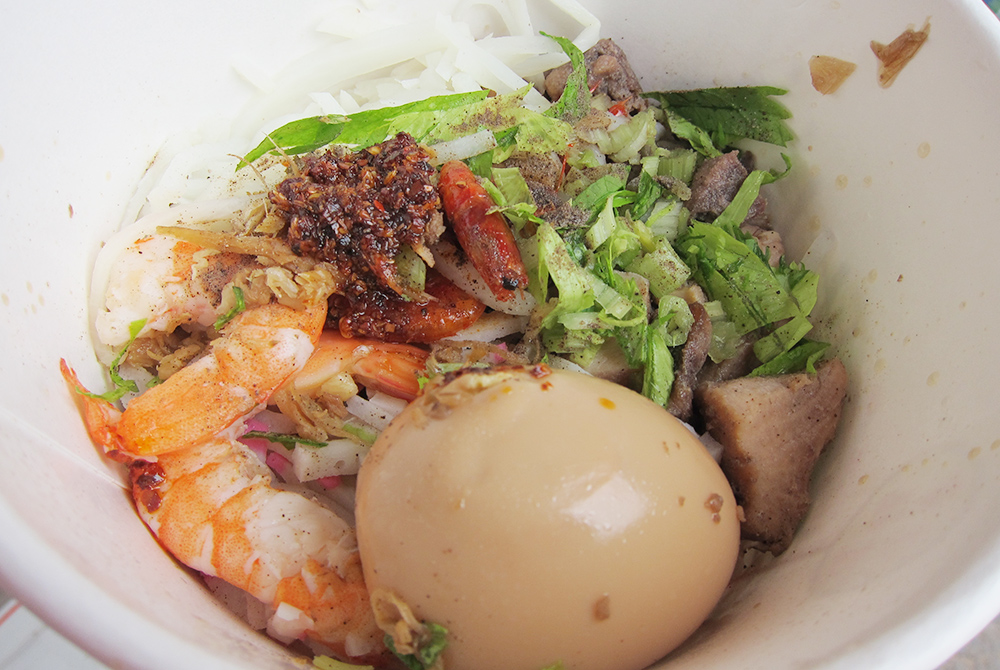
Fan Tang is a traditional Southern Taiwanese dish, much like a mother's home-cooked meal. It can be eaten for brunch or as an afternoon snack, and it's an essential food for weddings, funerals, and temple fairs. Steamed white rice is topped with fresh, shelled shrimp, wok-fried "shrimp monkeys" (mantis shrimp), special tuna ground pork, shredded fish cake, shredded bamboo shoots, cilantro, and celery. Finally, it's topped with a special broth and fish balls. That's authentic Donggang Fan Tang! When you don't have an appetite in the summer, a bowl of Fan Tang is truly appetizing!
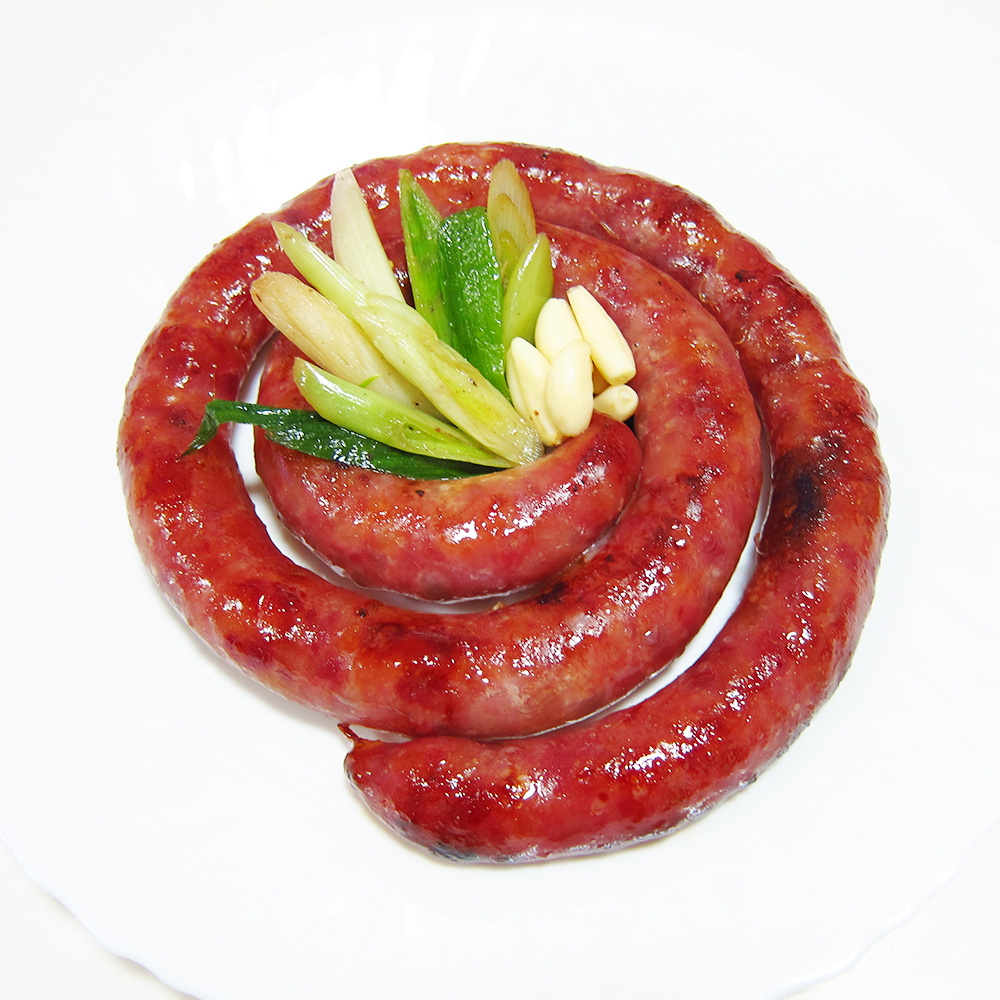
The main characteristic of Liuqiu Sausage is that it is "de-sinewed" and not segmented, with a length that can reach one to two meters. De-sinewing means removing the soft bone and thin sinews from the meat filling, so the texture of Liuqiu Sausage is not difficult to chew. The sausage is not segmented because of the strong religious faith of the Siaoliuqiu locals; residents traditionally offer the entire length of sausage as a sacrifice to the gods, symbolizing "longevity." The Siaoliuqiu specialty business district sells freshly grilled sausage. Remember to pair it with garlic slices for an even better flavor!
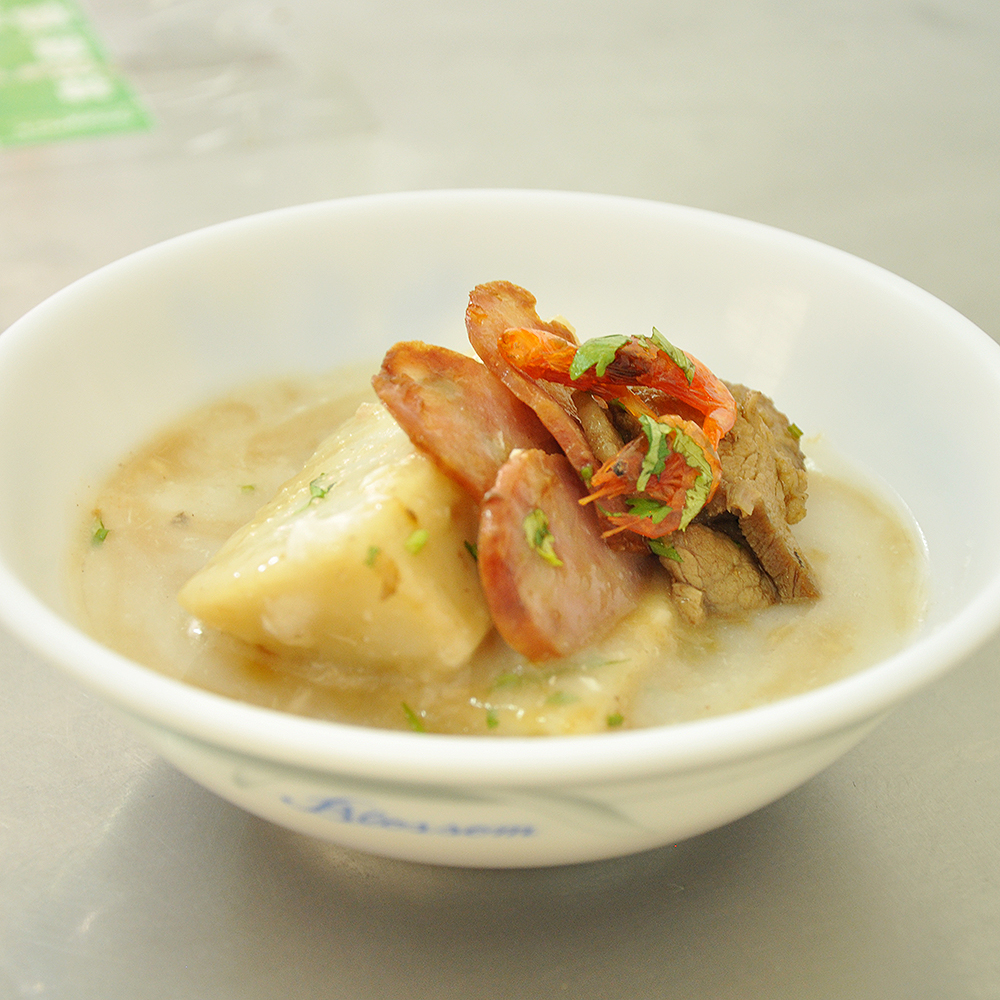
Rou Guo is an authentic Donggang snack. The process involves soaking indica rice, grinding it with water into a rice slurry, and then pouring the slurry into a steamer to steam it until cooked—the method is the same as for savory rice cake. The steamed rice cake is topped with thinly sliced sausage, wok-fried three-layered pork, mantis shrimp, and finally drizzled with a thick soup, thickened with rice slurry, which has been simmered for nearly ten hours using milkfish, pork marrow bone, and a special recipe. This makes a bowl of the most authentic Donggang Rou Guo.
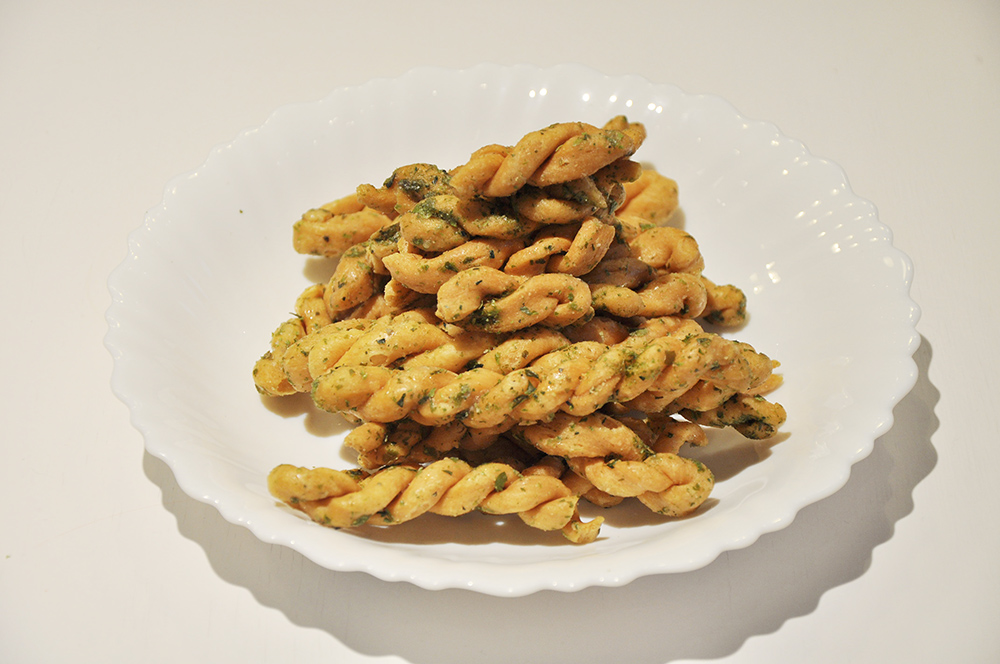
Siaoliuqiu is an island, and most residents work on fishing boats. Wives would prepare Mahua Twist for their husbands to eat on the boat as a snack to satisfy cravings. Today, this golden, crispy, sugar-coated Mahua Twist, which has a fragrant and crunchy texture, has become one of Siaoliuqiu's specialty souvenirs through word-of-mouth praise from tourists. When you visit Siaoliuqiu, you might even see many mothers and grandmothers making Mahua Twist together!
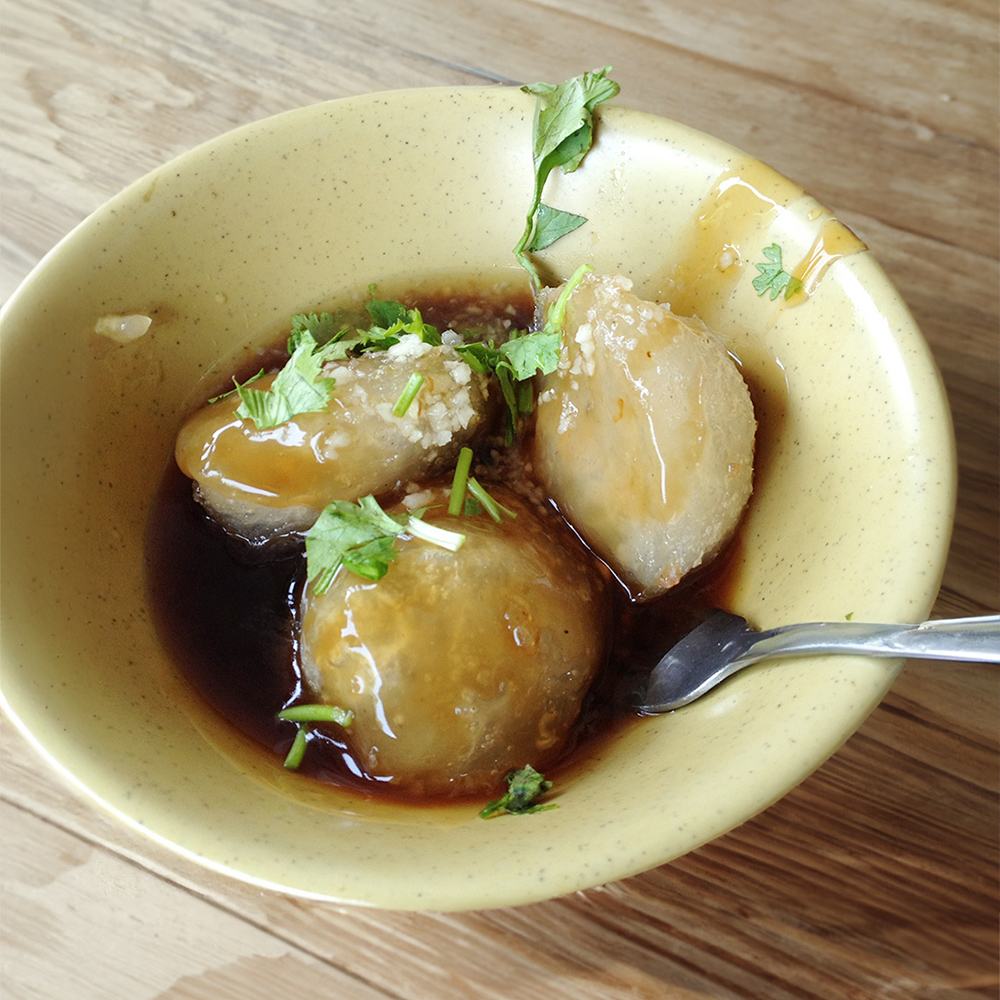
The small size of the Ba-wan, which can be eaten in three bites, is the characteristic of Donggang's Ba-wan. The skin of the Ba-wan is glossy, and there are two flavors. The "Mushroom Meatball" is filled with selected mushrooms and pork; or the "Shrimp and Bamboo Shoot Meatball," which is filled with a whole fresh shrimp and juicy shredded bamboo shoots. It is recommended to drizzle it with mashed garlic and add cilantro before eating for enhanced flavor.
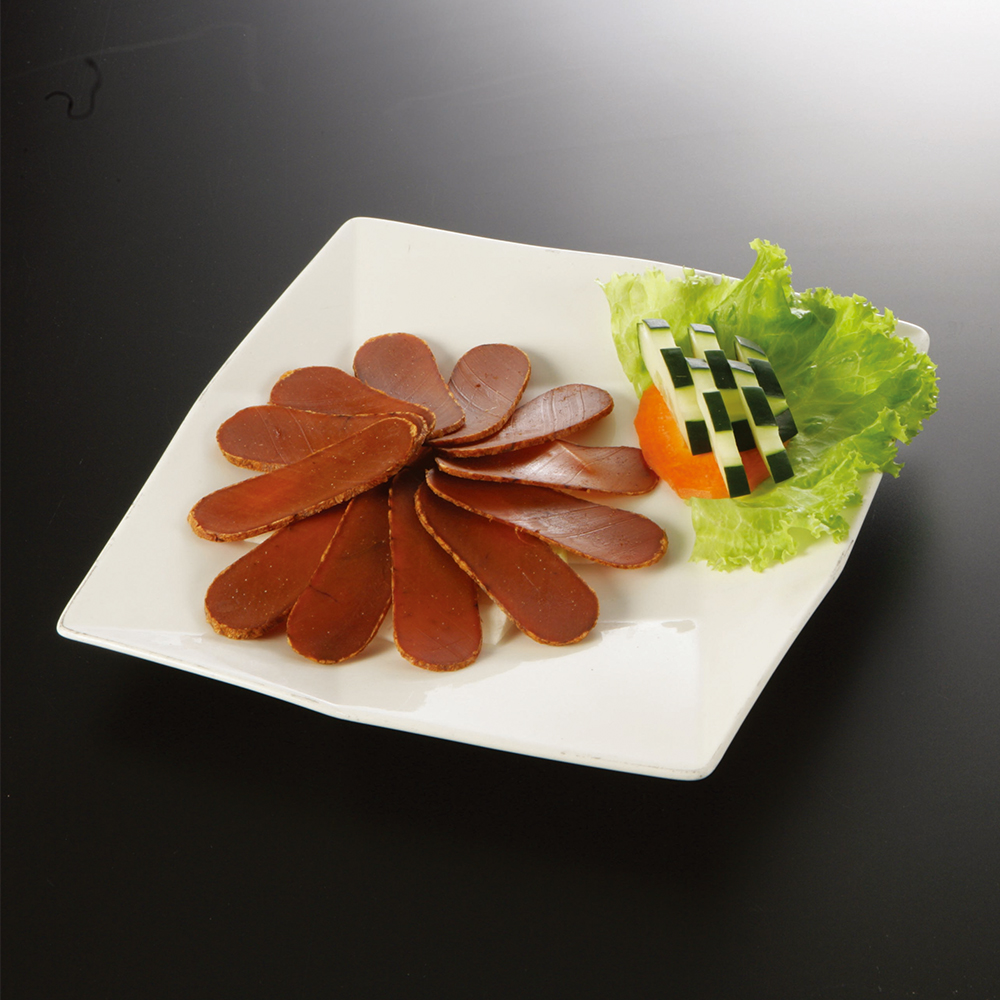
Oilfish is a deep-sea fish species, also known as "Escolar" or "Black Escolar." Locals in Donggang call it "Cu Lin Zi" (Coarse Scale Fish). Oilfish can be used as raw material for sashimi in restaurants. It is called oilfish precisely because of its high-fat content. The white fish meat is extremely sweet, but its fat cannot be digested and absorbed by the human body; it is a wax-like substance, so excessive consumption is not recommended. Locals in Donggang make use of its roe, following the preparation method of mullet roe, to create the unique Oilfish Roe of Donggang. Most commercially available vacuum-packed products are finished products that have been roasted. Since it is a cured product, the saltiness varies from vendor to vendor. The method of eating is the same as mullet roe: first, slice the product thinly, then eat it with garlic sprouts and white radish. If you prefer a refreshing flavor, you can switch to eating it with apple slices or pear slices. The taste is salty with a slight sweetness, and the aroma and texture are comparable to or even better than mullet roe, leaving a lasting flavor for gourmets.
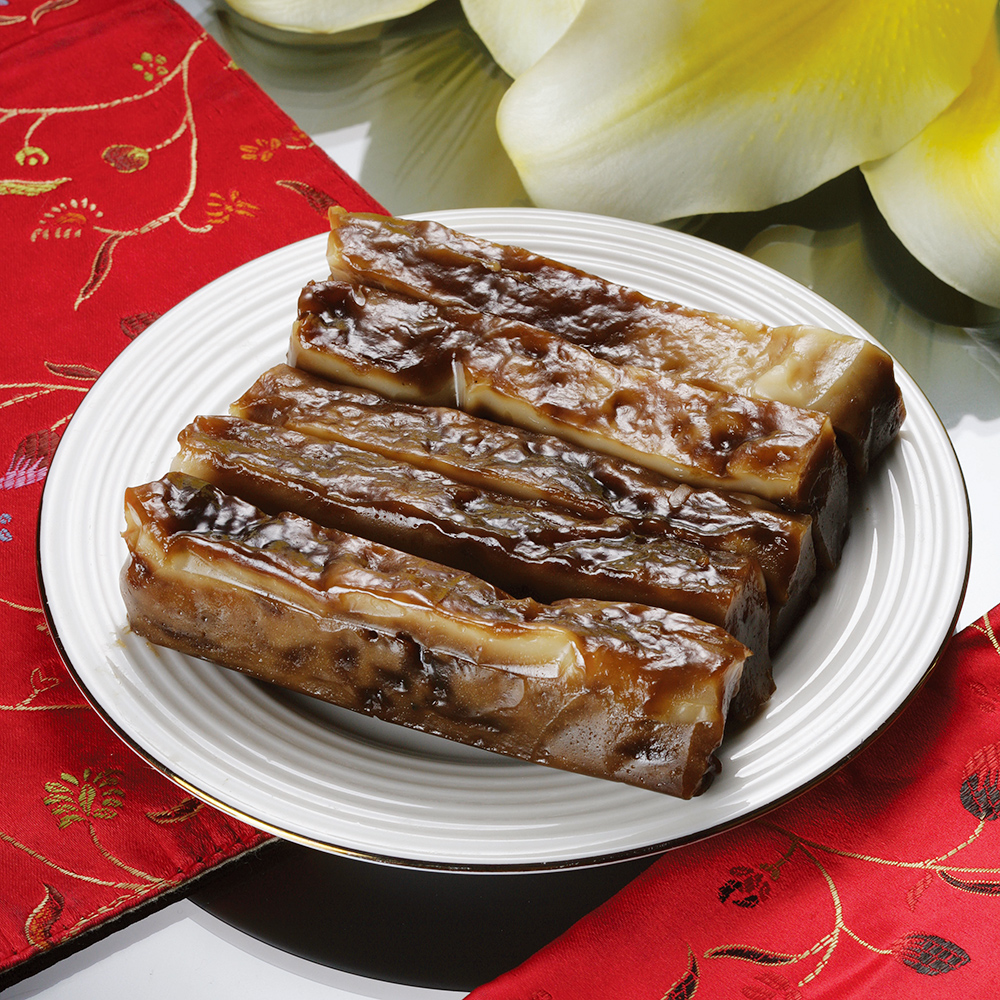
Shuang Gao Run is also called "Shuang Ge Lun" (Double Brother's Wheel), which is rumored to be the dowry prepared by two elder brothers for their beloved younger sister. The process of making Shuang Gao Run involves continuously pounding raw glutinous rice into a rice slurry with a pestle, filtering it with a sieve, re-pounding the rice grains left on the sieve, and then steaming and kneading it to completion. The traditional Shuang Gao Run is divided into two colored layers: white is the original color of the glutinous rice, and the other is colored with brown sugar. Today, a variety of flavors have been developed.
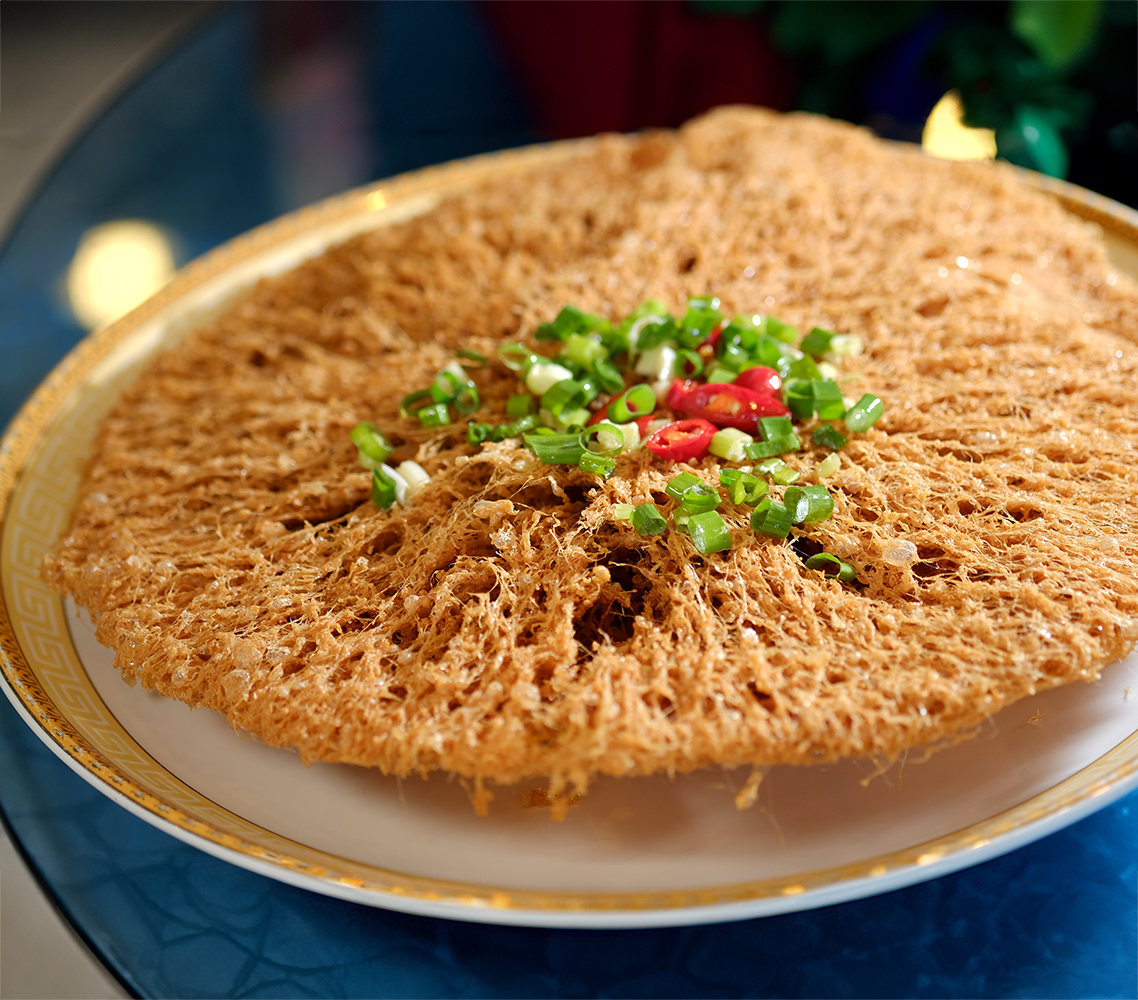
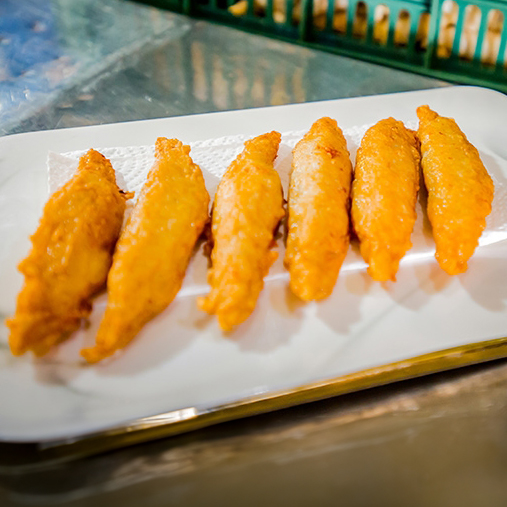
Donggang is close to the sea, offering a wide variety of seafood dishes that are fresh, delicious, and affordably priced, making it a culinary paradise for food enthusiasts. If you want a different kind of snack, the value-for-money Marlin Fish Cake Roll is highly recommended. The preparation method involves stuffing fresh and substantial marlin fish paste around a boiled egg. It is then deep-fried at a low temperature to set its shape, and then fried at a high temperature. The exterior is crispy and golden brown, while the texture is firm and elastic. These aromatic fried goods are made and sold on-site, ensuring high freshness. Moreover, they still taste good even when cooled down.
Pingtung Bluefin Tuna Cultural Tourism Festival
A Gift from the Sea: Delicacies You Can't Miss on a Trip to Donggang!
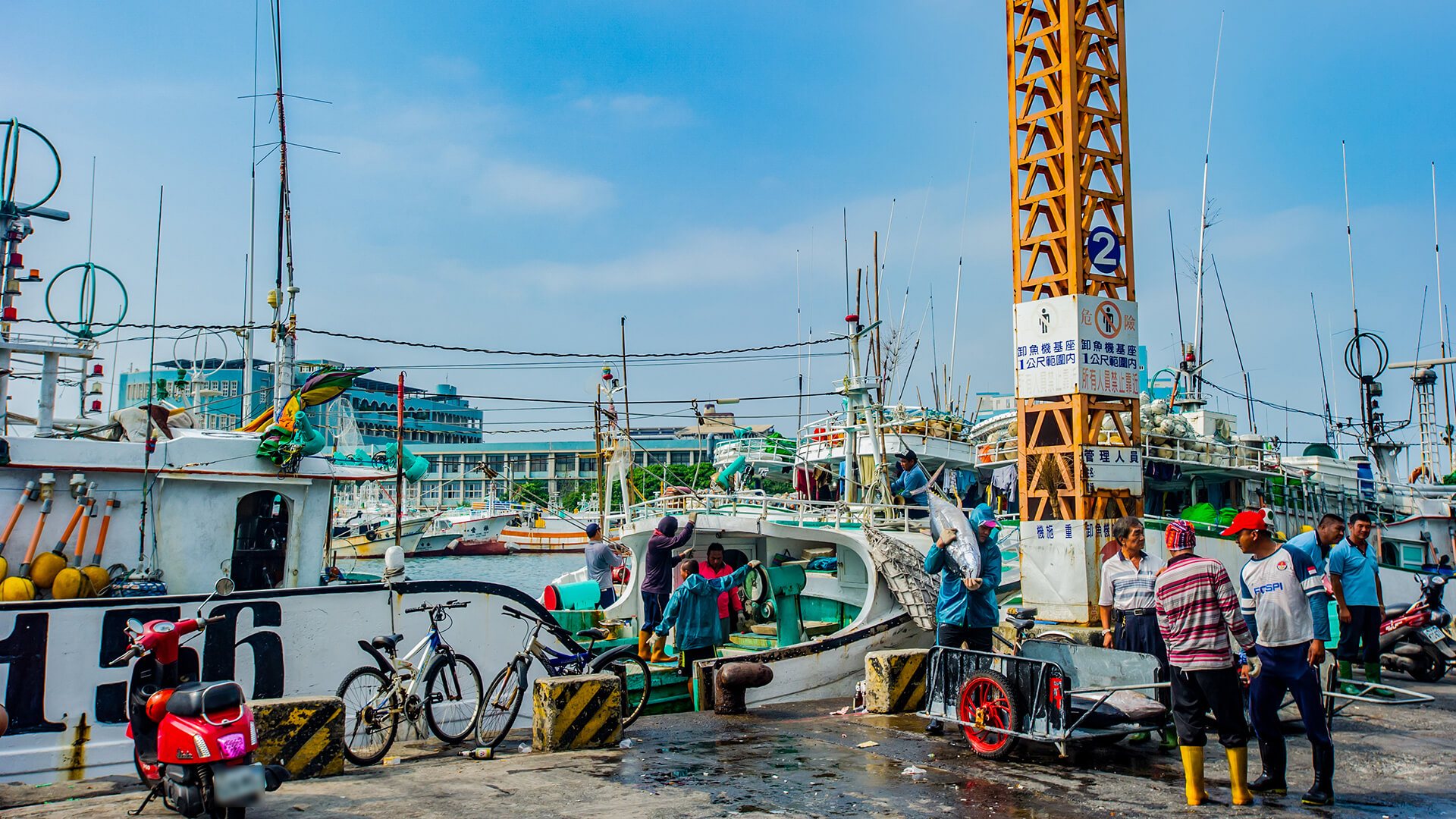
The Bluefin Tuna Cultural Festival was launched by Pingtung County Government in 2001, combining Donggang’s bluefin tuna and tourism on the Hengchun Peninsula and now attracts a large number of visitors every year, lured not just by the tuna but by the other tourism resources of Donggang and its excellent seafood. To many people Donggang is now synonymous with blue fin tuna and delicious seafood.
The three main fish markets of Pingtung are in Donggang. Here fish are bought and sold and visitors can enjoy delicious seafood fresh from the boat. One of the markets, “Huaciao Market,” is not far from the Liuqiu ferry dock. It opens between 2pm and 7pm every day. The fresh, reasonably priced fish and seafood that can be enjoyed here make this a paradise for seafood lovers, especially during the blue fin tuna season.
After the fishing association fee payment station you will see “Fry market”. This gets its nickname because it sells fish caught in coastal waters, smaller than tuna. It opens from 3 am to 7 pm. The most famous market is Donggang Market, also known as big fish market. This is where the ocean going vessels offload their catch. During the toro season cranes can be seen unloading the massive fish, creating an impressive sight as they are transported to the market to be auctioned. Swordfish and sharks are also seen.
When you visit Donggang don’t miss the chance to try the three treasures of Dongang: bluefin tuna, sakura prawn and "oil fish”. These aren’t not just good to eat they also make gifts that are sure to bring a smile to the face of the recipient.
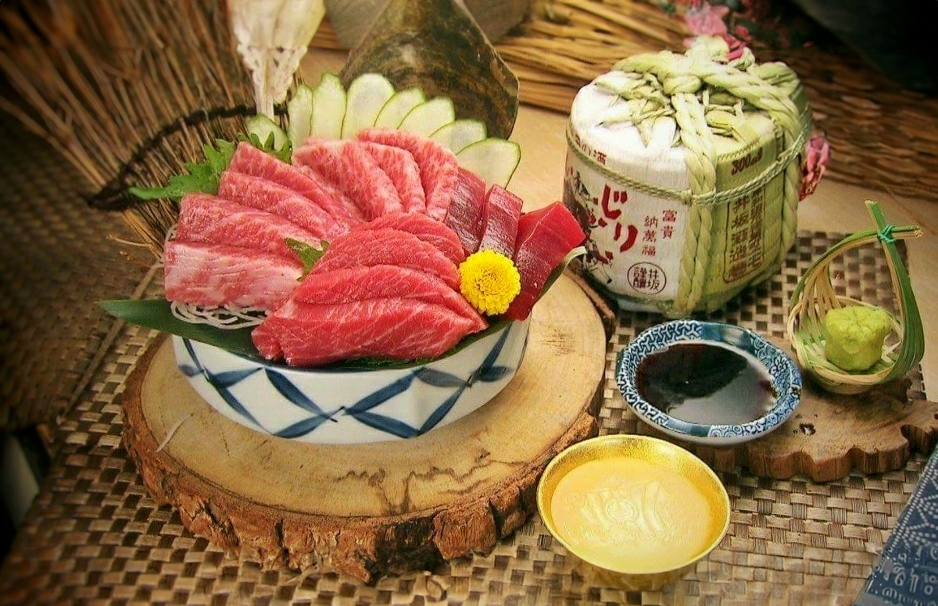
The tuna are most plentiful April to June every year. Practically every part of the fish is good to eat. The meat from the belly is perfect for sashimi and melts in the mouth. The meat from the back has a texture like Kobe beef after it is fried; the lower jaw is good roasted and the head can be used to make soup or steamed. Tuna can swim at speeds of up to 160 kmh. The blood vessels all over its body make its meat red. Its blood is rich in iron and its meat rich in EPA, DHA, nucleic acids vitamins. Toro is regarded by the Japanese as a treasure of the sea and is even more valuable than “black gold” mullet roe.
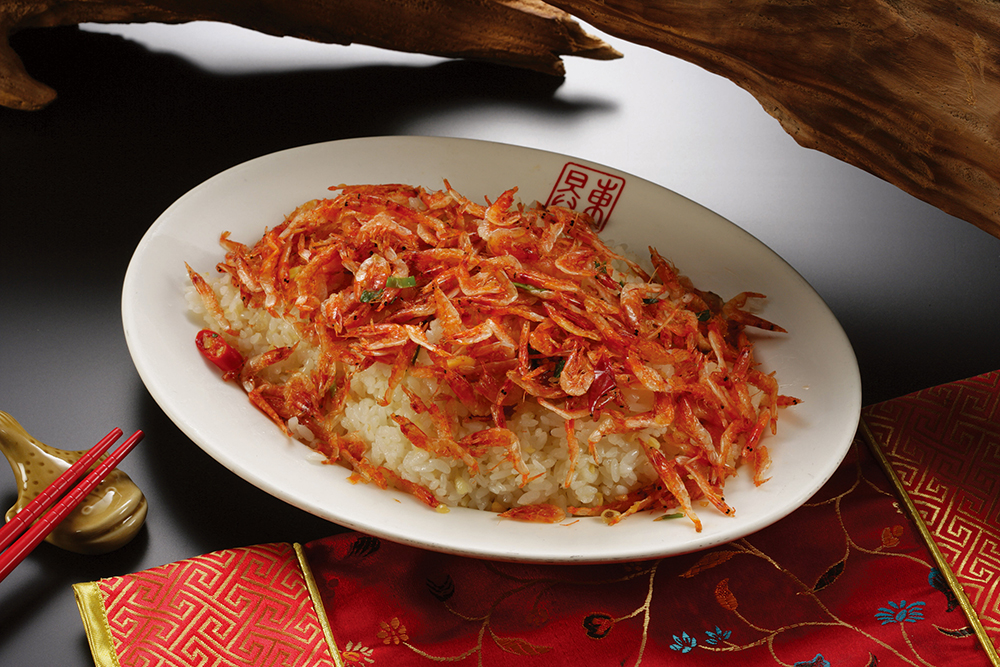
One fishing harbor in Japan and Donggang are the only places in the world that produce these prawns. They were named because of their luminous pink color and small size. These prawns contain 2000 milligrams of calcium for every 100 grams, 200 milligram more than ordinary prawns, good for children or people with weak bones. They can be used in cooking or eaten as snacks and have been turned locally into various derivative products. The prawns are supplied all year round.
This comes from a deep sea fish, rarer than mullet. Its eggs are larger than mullet eggs. Roasted then cut into thin slices and eaten with a slice of garlic and turnip the roe has a salty, delicious taste even better than mullet roe. Be sure sure to try when you go to Donggang!
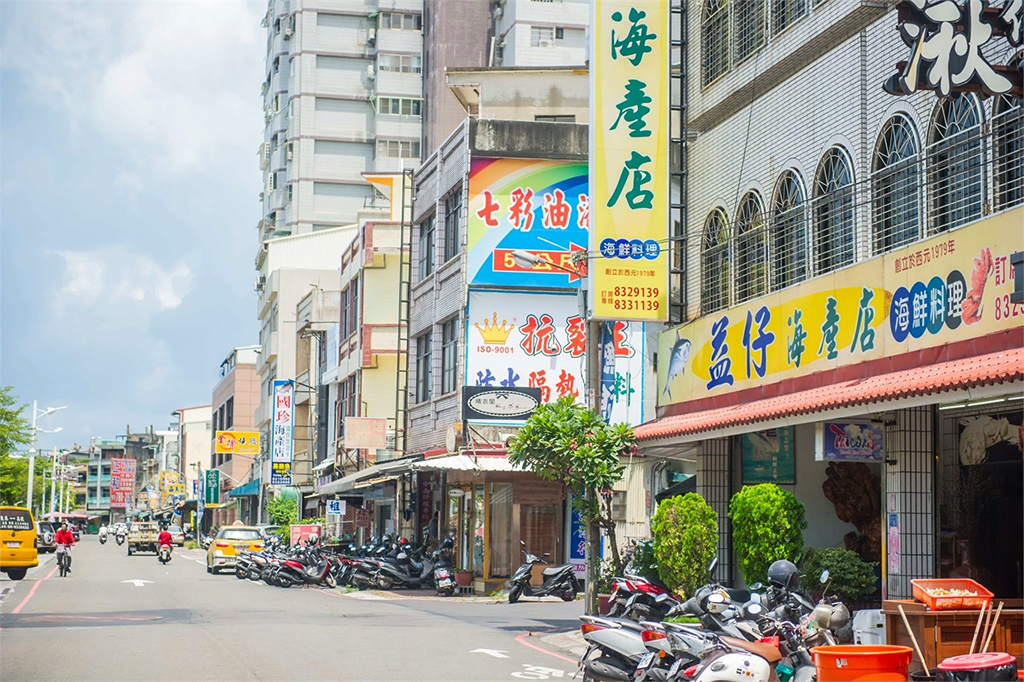
Donggang Seafood Street
Where to eat Bluefin Tuna dishes? The numerous restaurants throughout Donggang Township are all options, especially the clusters of restaurants on both sides of Guangfu Road, known as Seafood Street, which is a favorite for many well-informed food lovers. To attract customers, restaurant owners constantly strive for excellence in their dishes, competing not only by participating in cooking competitions for recognition but also by focusing on overall service quality and improving the dining environment.
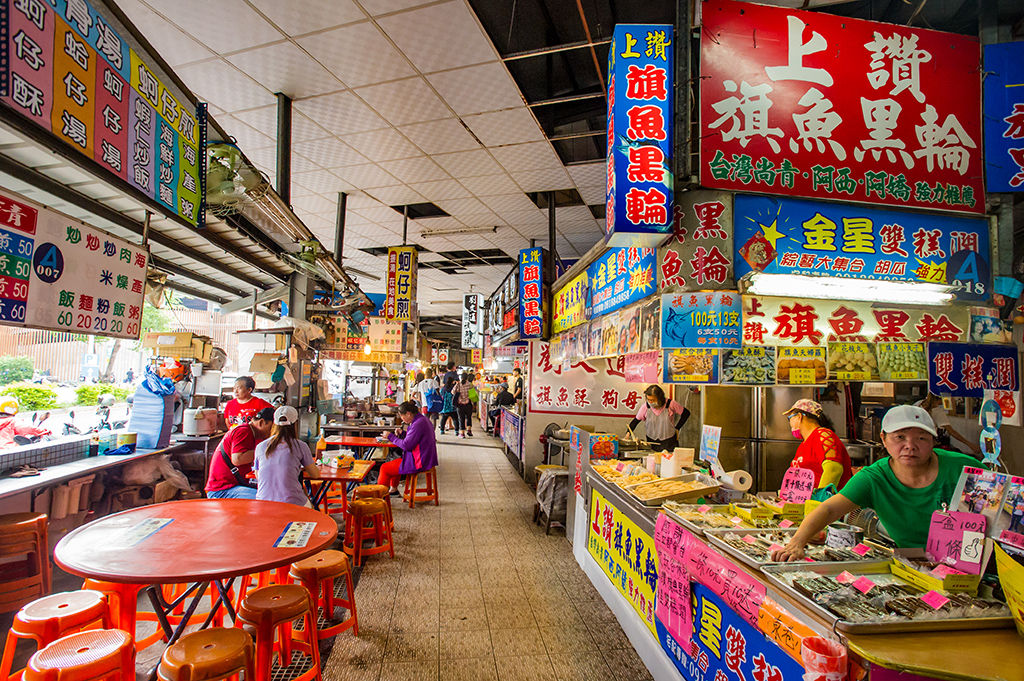
Donggang Fishing Port Fish Product Direct Sales Center (Huaciao Market)
Visitors can choose to purchase retail fresh Bluefin Tuna meat and Bluefin Tuna sashimi at the Donggang Fishing Port Fish Product Direct Sales Center (Huaciao Market). If the Bluefin Tuna Cultural Festival is being held, you can also buy it at the retail stalls near the auction site. Feeling tempted? Come and be a guest in Donggang during this year's Bluefin Tuna Cultural Festival!
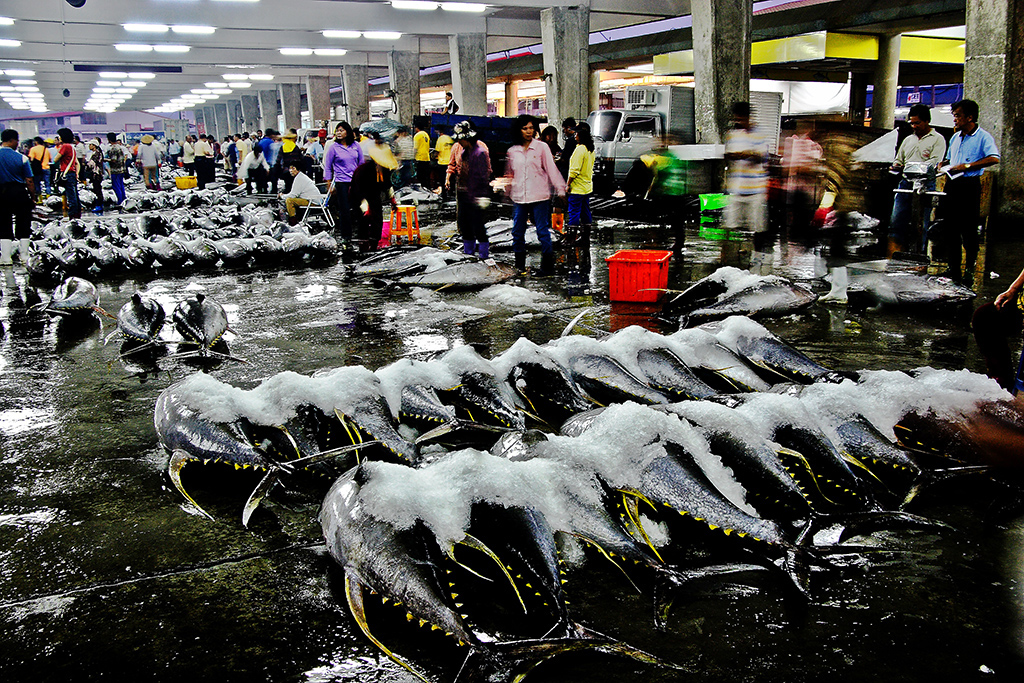
Tuna/Bluefin Tuna Auction Site
Consumers who are interested in watching the auction process for a whole Bluefin Tuna can head nearby to the auction site to experience the unique auction culture of the fishing village. The auction site is close to the Fishermen's Association Building, located on the same side. After passing the parking lot toll booth, look towards the wharf on the left to see the Tuna/Bluefin Tuna Auction Site. It is usually closed on Mondays and Fridays and starts operating around 12:00 PM on business days. Only licensed fish vendors are specially allowed to bid and purchase; it is not available for everyone to buy!