
My Liuchiu! A gallery that tells the story of the local area
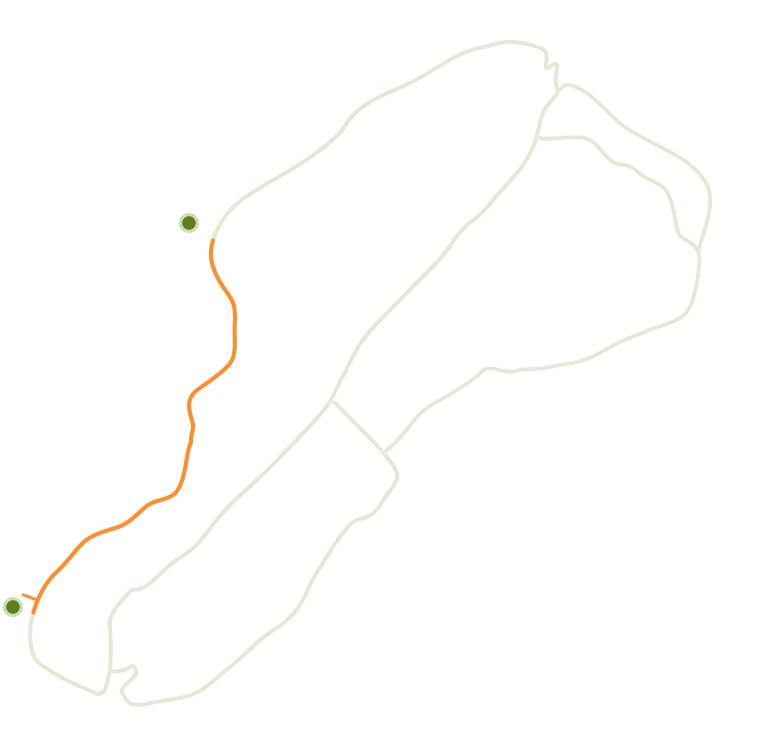
"The Path of Liu Xing" is a new attraction on Liuqiu Island. Starting from the Former Battery Site, it connects the surrounding woods and sea views, passing through Shanfu Fishing Harbor and Habanwan (Clam Shell Bay) to the Prince Deity Temple (Taiziye Temple). It integrates works by various artists and features designated rest platforms. Along the path, there are 3 large-scale installation artworks and 10 smaller, art pieces subtly integrated into the landscape. Through the stories embedded in these art installations, the path leads visitors and local residents to understand and look back upon Liuqiu's fishing village culture.
Strolling along The Path of Liu Xing is choosing a journey that resonates with nature and culture. When you set foot on Liuqiu Island, you might as well follow this route, feel the breath of the ocean and the temperature of the island with your heart, allowing your journey to be a healing and recharging experience for the soul.
 Shanfu Fishing Harbor Prince Deity Temple
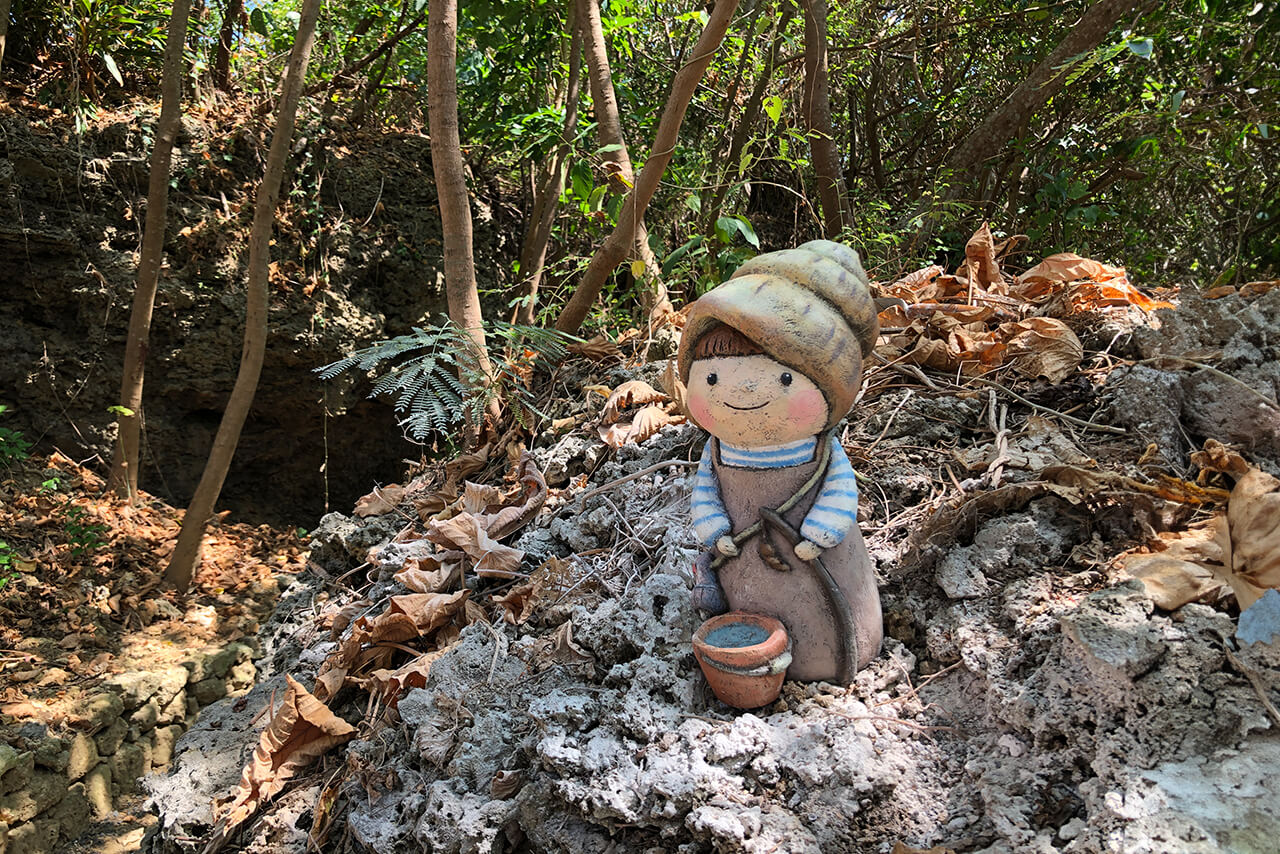
In Liuqiu, hermit crabs are called "Jishengzi" (parasitic young) and were once excellent fishing bait. "Zhaoji Sheng Zi," the activity of hunting for hermit crabs at night with a flashlight, used to be a popular pastime for local children. After dinner, children would venture into the woods together, their flashlight beams flickering. The "thud" sound of a caught hermit crab dropped into a bucket was heard everywhere. This was not just a game, but a competition: whoever had the loudest bucket was the winner of the night's harvest.
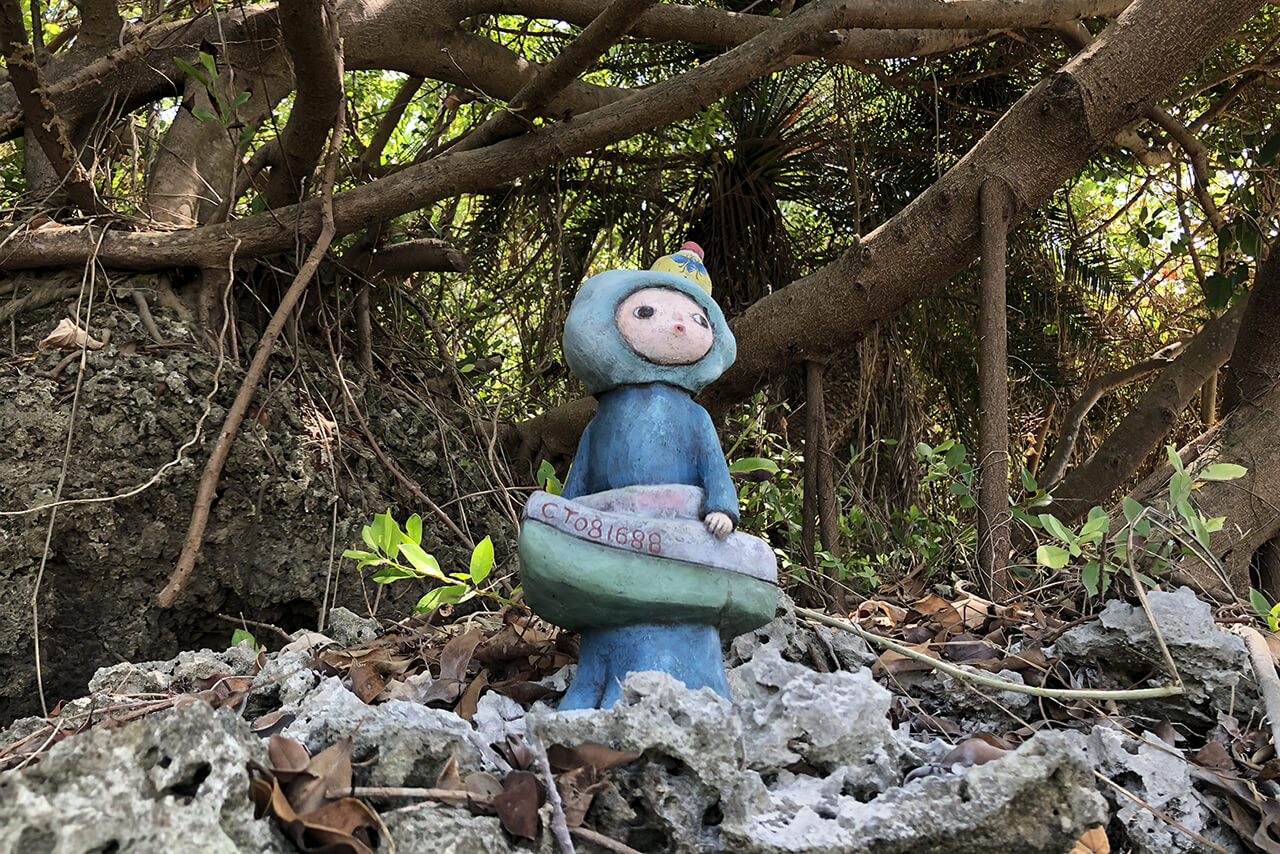
For the early residents of Liuqiu, "Going Abroad" (Chuguo) did not mean tourism, but rather boarding a long-haul fishing vessel to work in Southeast Asia for two to three years. Crew members who could only return home occasionally would always bring back foreign goods as souvenirs. Among them, Indonesian "bee oil" (Minyak Tawon) became the most popular requested gift among relatives and friends due to its effectiveness for bruises and sprains. This unique interaction mode can be seen as an "overseas purchasing agent" culture that thrived on the island decades ago.
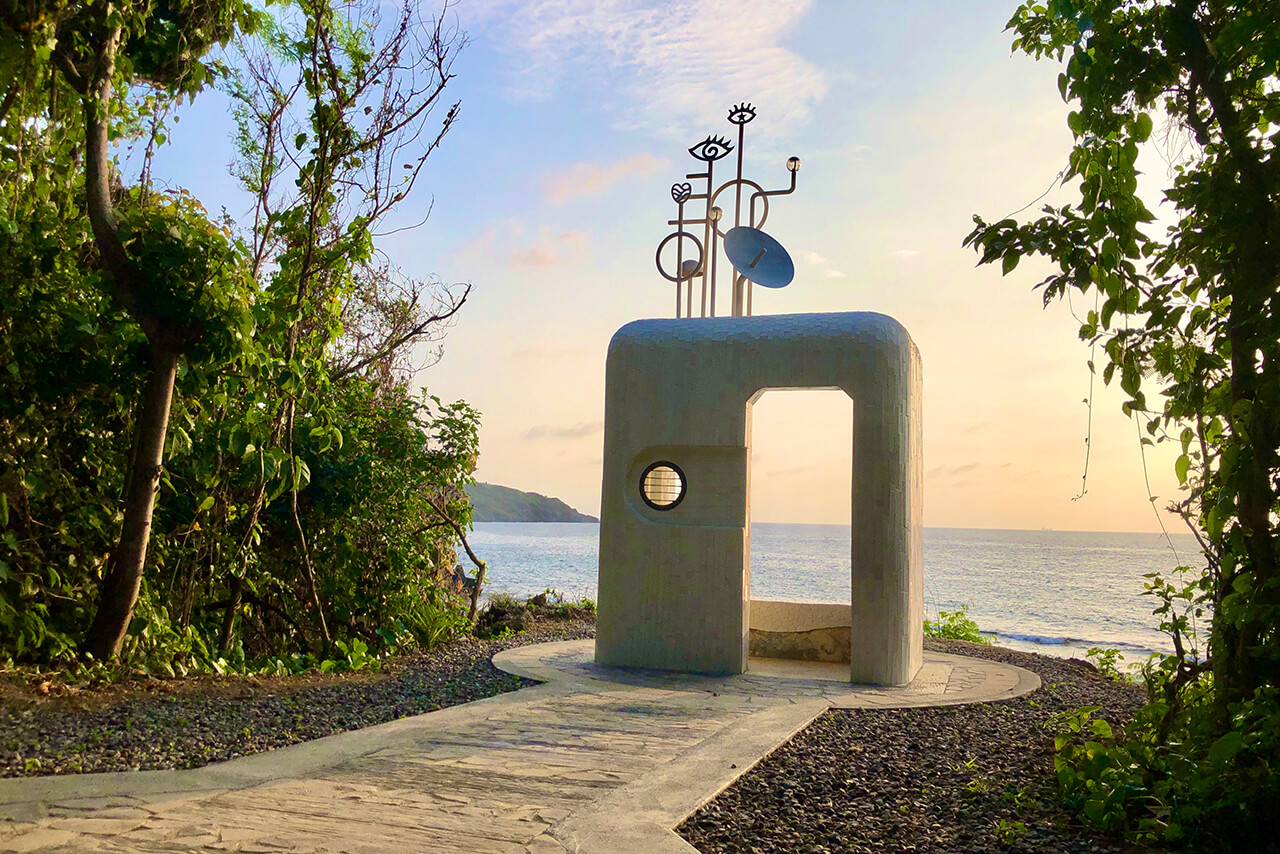
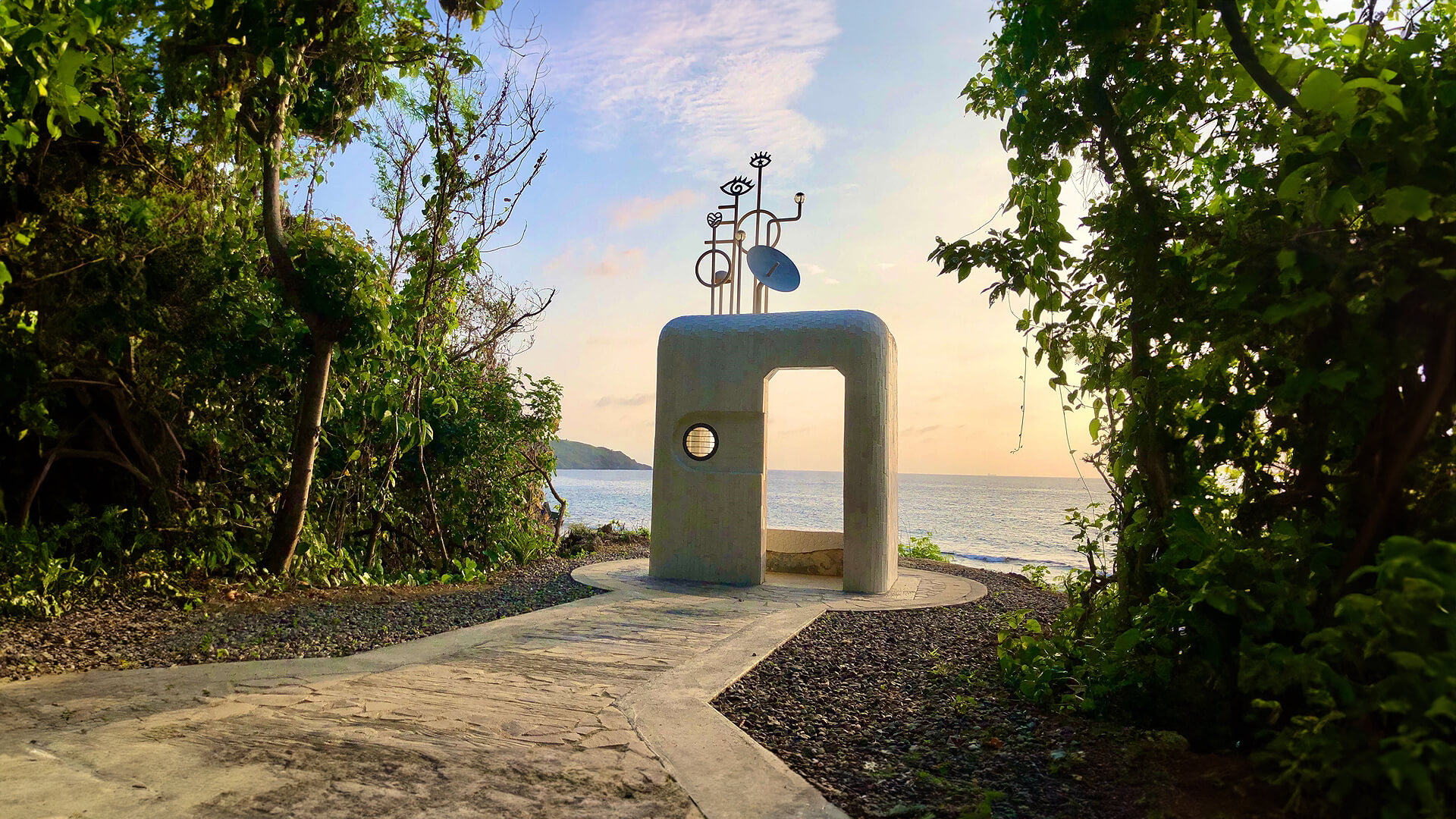
"Looking at the Sea is Not the Sea" is inspired by the complex emotions of Liuqiu islanders when gazing at the ocean. For early men, the sea was a battleground for survival; for women, it meant longing and worry. For those who left their hometown, it was homesickness, and for new residents, it was a yearning for their original home.
Drawing inspiration from abandoned military barracks and long-haul fishing boats, the work transforms symbols like the captain's room, radar, and antennae to create a "Sea-Gazing Cabin" on the rocky shore. This contemplative space visually embodies the profound emotions of "guarding," "longing," "conveying," and "waiting" that the islanders feel, born from their relationship with the sea.
.jpg)
In the past, girls had limited choices: either leave the island to work as factory girls in Taiwan proper or stay and marry a fisherman. The women who remained on the island had to manage the household, raise children alone, and worry day and night about their husbands' safety at sea, leading to immense physical and mental strain.
Today, many foreign spouses have become new residents of the island. They, too, resiliently support their families and are active in the tourism industry, injecting new vitality into Liuqiu.
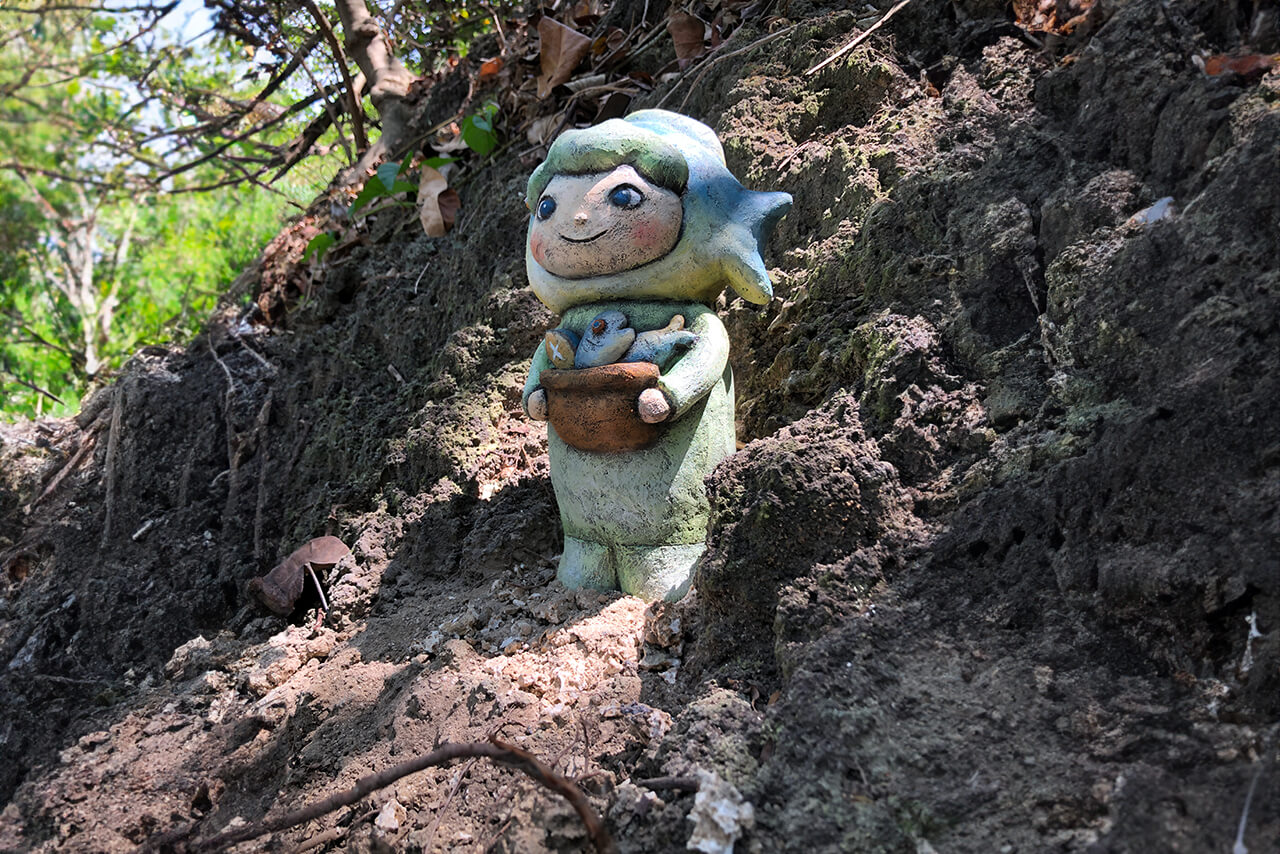
In early Liuqiu, there was a custom of "Fish Distribution." When long-haul fishing vessels returned, the boat owner would distribute the fragmented large fish that couldn't be sold to the crew members' families by lottery. In an era of scarce resources, this was a way to care for the crew's families. Women would carry home baskets full of fish, and relatives and neighbors would mobilize to help process them. Children excitedly served as little helpers for delivery, bustling through the alleys, creating a lively, festive scene. This custom has largely faded but carries a rich sense of human warmth and mutual aid.
.jpg)
In Liuqiu, during auspicious occasions like the launch of a new boat or the completion of a new temple, "Candy Rain" is tossed from a high place to share the good fortune.
In this custom, the candy symbolizes fishing bait, and the excited crowd is likened to fish taking the bait, signifying the auspicious blessing of a "full catch." The most evident display of the fishermen's generosity is that the candy is often thrown down in whole bags, and the standard equipment for islanders is a "cardboard box." Thus, distinguishing between a local and a tourist is simple: just see who is carrying a cardboard box!
.jpg)
Liuqiu once housed a prison managed by the Garrison Command for high-profile criminals, which locals called "Fan Ren Bing Zi" (Convict Soldiers). They left various memories on the island, not only helping to build the round-the-island highway and scenic trails but also being hired as workers for private homes. Notably, the lion and dragon dance troupe they formed was a highlight of the King's Grand Inspection Festival (Ying Wang Festival), becoming a performance islanders still remember, marking a special history interwoven with construction and culture.
.jpg)
Liuqiu's early wooden-hull ferry, the "Yun Ban" (Transporter), was extremely slow, taking nearly an hour for a one-way trip to "Bi Bian" (Taiwan proper). The cabin was filled with the pungent smell of diesel fuel, and the choppy waves often caused severe seasickness, a shared memory among islanders. The "stainless steel basin" provided by the boat crew was standard equipment for passengers.
Many recall that the excitement of boarding the boat as a child instantly turned to regret after it set sail. Therefore, "crossing the harbor" to Taiwan was a formal and serious matter, undertaken only for important business.
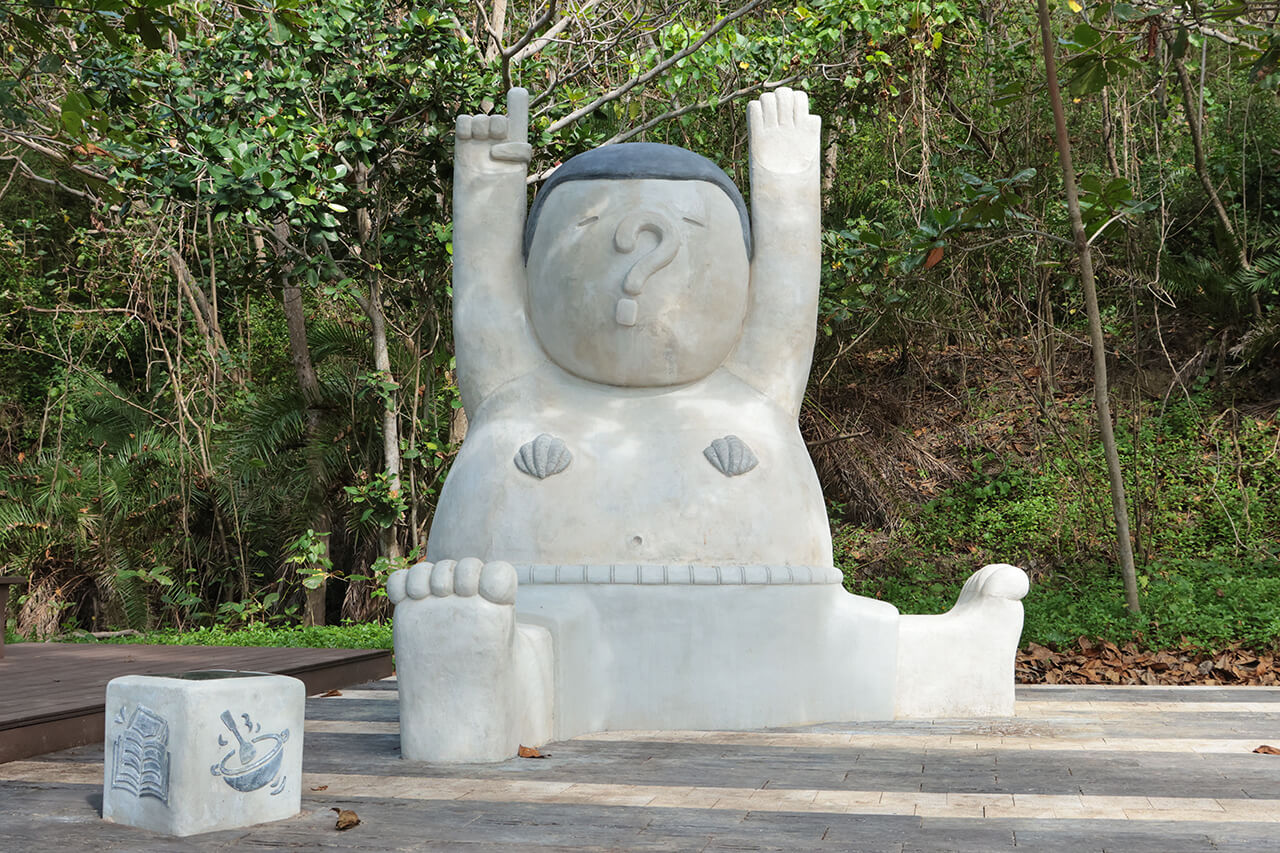
"Warming Up Exercise for Turning into an Adult" aims to express the survival wisdom of early Liuqiu teenagers. Compared to today's children, who play innocently between the ages of thirteen and fifteen, island boys were forced to prematurely "turn into adults" to earn a living. Coupled with the optimistic character of the Liuqiu people, they look upon these heart-wrenching memories with a positive and humorous outlook. Thus, a young boy on the cusp of adulthood, with a look of "life's question mark" on his face, unaware of what he is about to face, hides in the forest doing warm-up exercises. His innocent and naive expression, coupled with the internal pressure to grow up quickly, prepares him to face major life changes and choices, as he rolls the "dice of fate."
.jpg)
Before the underwater pipeline was activated in 1981, Liuqiu residents relied entirely on well water, and fetching water often required long journeys. When digging new wells, people would even go to Biyun Temple to seek divine guidance. Carrying water was an everyday task for adults, and to prevent spillage, a bamboo-woven "Pi Zai" (cover) was placed on the water's surface. Because water was precious, the whole family often shared a basin of water for wiping down. When children accompanied adults to fetch water, they would bring their toiletries and wash up right by the well before heading home, reflecting the hardships and ingenuity of early island life.
.jpg)
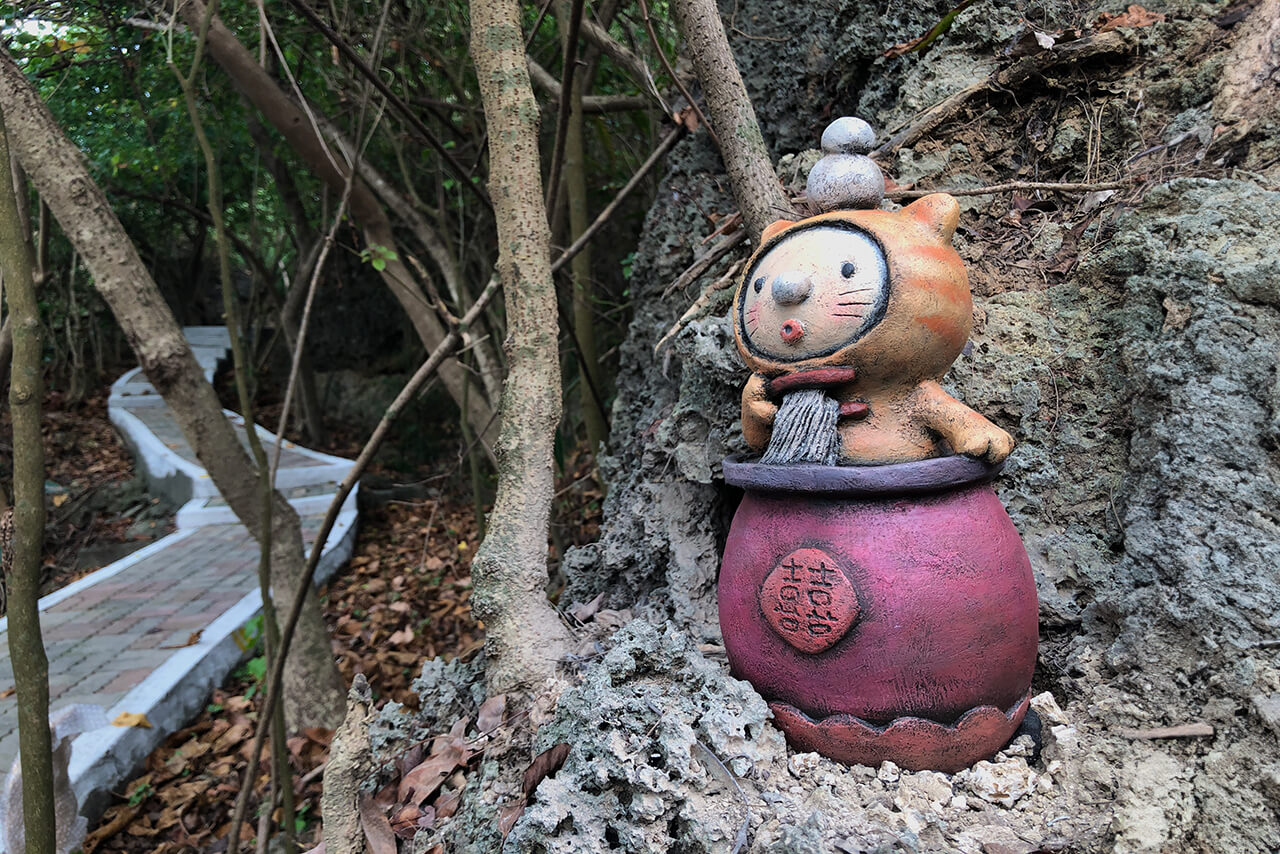
The inspiration for Liuqiu's "Eight Lucky Beasts" comes from the local fishing village tradition of naming for fortune and prosperity. This project adopted a "participatory creation" approach, where local teachers and students conducted fieldwork and interviewed elders, gathering elements from village names, history, environment, and daily life, and guiding children to incorporate their imagination of their hometown into the design. The artist ultimately crafted eight ceramic lucky beasts, which stand on a temporal gateway symbolizing old place names, transforming into auspicious protectors of the island from ancient times to the present.
Liuqiu's banquet wedding feasts are considered among the most generous in Taiwan, traditionally featuring as many as twenty-four courses. Besides a table full of seafood, the most representative dishes are "Pumpkin Rice Vermicelli" (Jingua Mifeng) and various kinds of meatball soup.
In the past, to showcase the hospitality and spirit of the fishermen, and to ensure guests were full, the host would fill a large water vat with stir-fried rice vermicelli and serve it before the banquet officially started. Even with changing times, this banquet culture, rich in human warmth, is still preserved today.
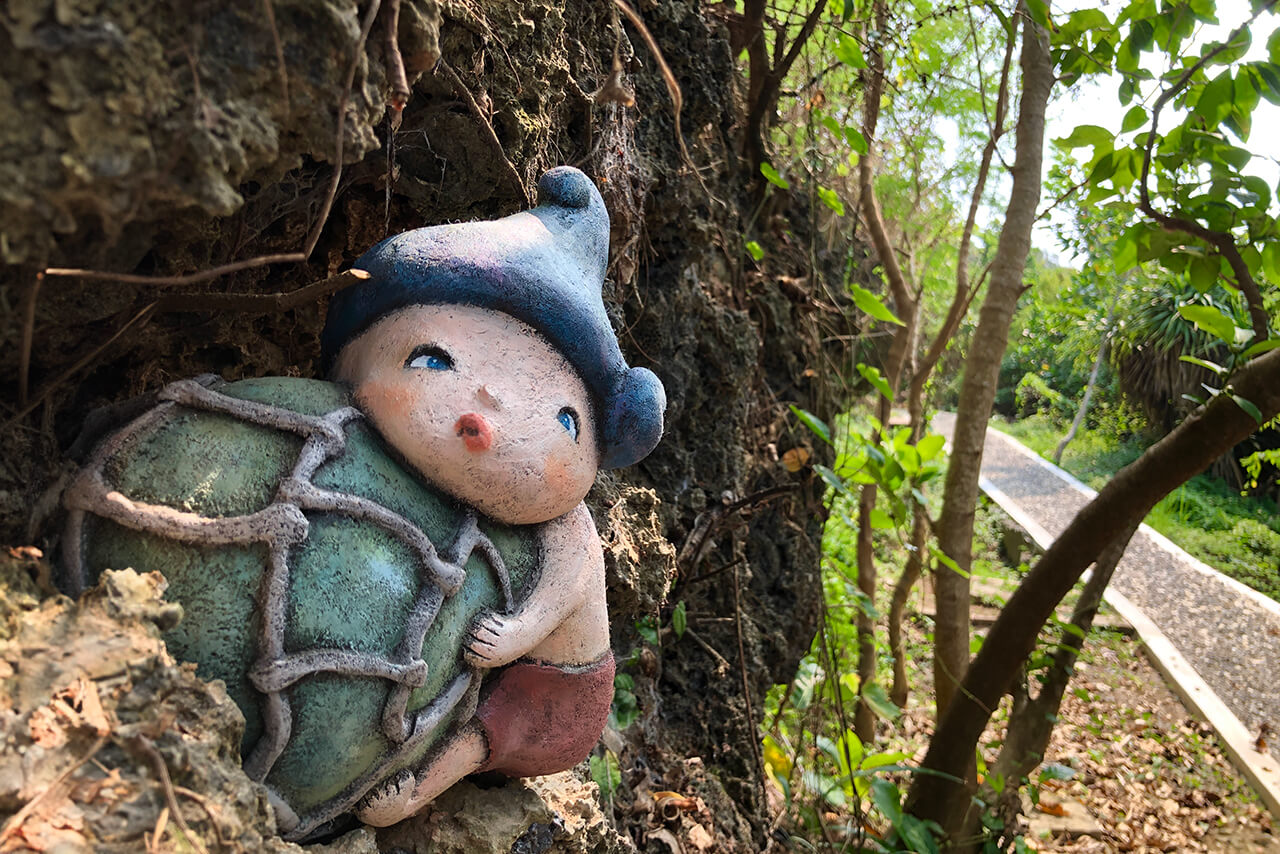
In the era before 3C devices, the sea was Liuqiu children's playground. The unique sea game of the time was called "Gong Hai Yong" (Battling the Waves). Children would hold onto a buoy during high tide, deliberately letting the large waves crash against their bodies, enjoying the thrill of tumbling with the waves, or lying on the buoy to drift and chat. This childhood entertainment, improvised and lived with the sea, is a simple yet deeply joyful memory for many older Liuqiu residents.
A long, long time ago
When the land, the ocean, and the starry sky were still connected
People would look up at the stars every night and make wishes
Praying for blessings for their beloved hometown
When the sun rose
These wishes turned into tiny drops of water
Slowly ascending into the starry sky
Forming four Cloud Isles
Each of these Cloud Isles possessed mysterious blessed energy
The four Cloud Isles are inhabited by different Isle Masters
Responsible for classifying and managing people's wishes
Reporting regularly to the Star People
The Star People are the Almighty Secretaries of the Thousand-Year Lord (Qiansuiye)
Non-stop reporting the wishes of the Cloud Isles to the Thousand-Year Lord day and night
After listening to wishes for over three hundred years
The Star People were filled with all sorts of fantasies about the Cloud Isles, the land, and the ocean
The Star People, who had never rested
Were finally granted a long vacation
And decided to visit the Cloud Isle Masters
Embarking on a long-awaited little journey
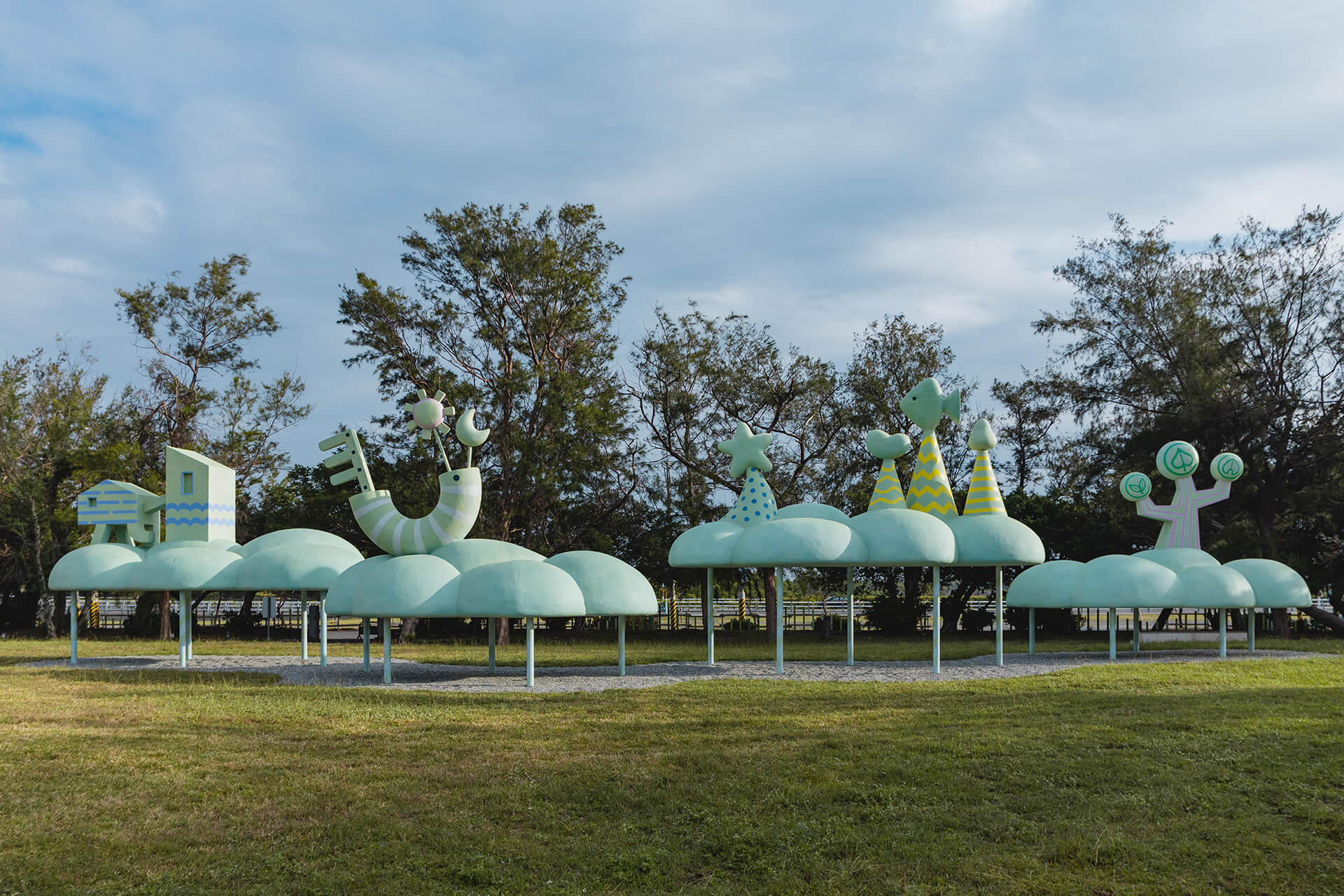
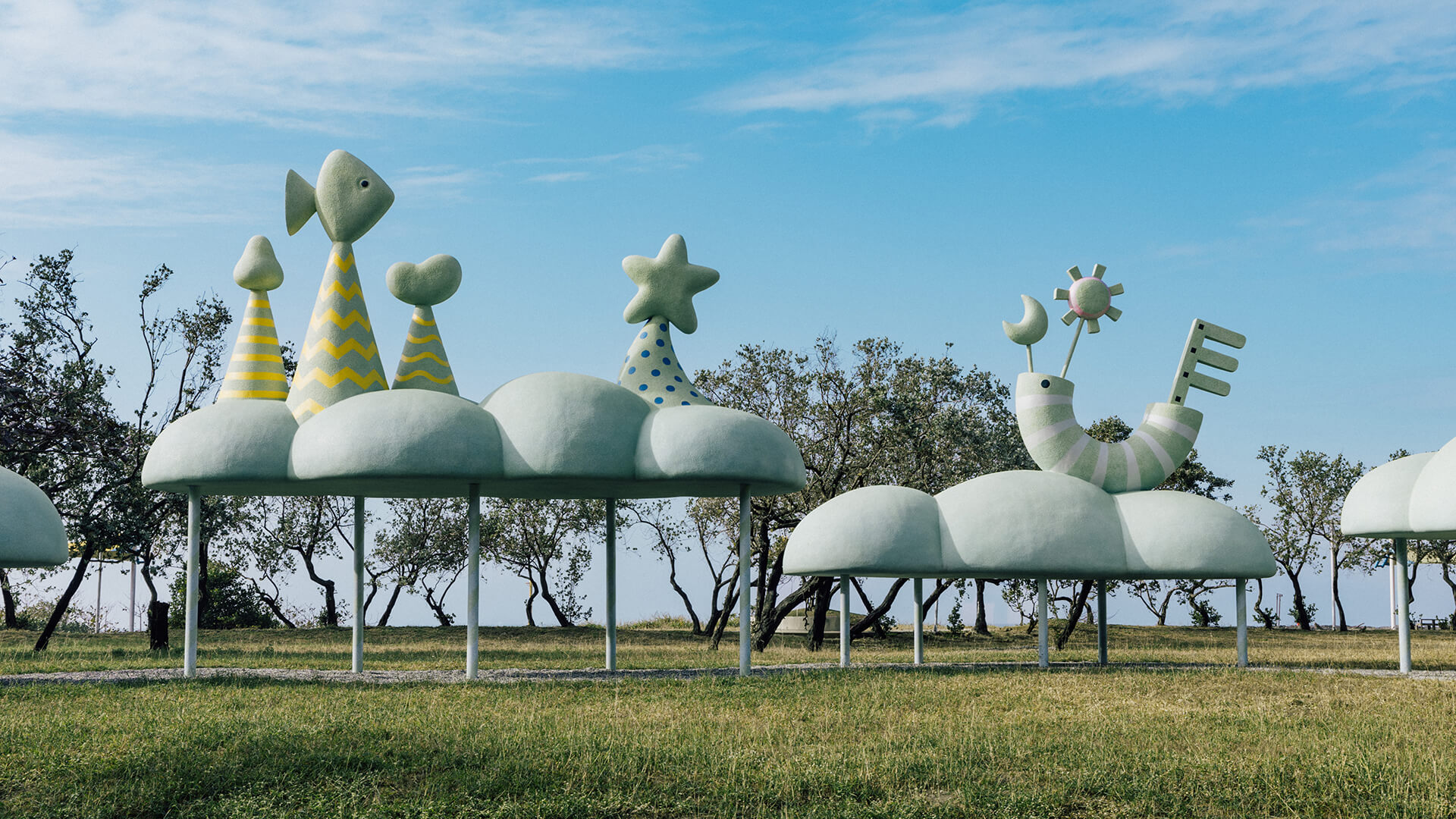
"Cloud Isle" is inspired by the "Welcoming the Royal Lord Peace Festival" (Ying Wang Ping An Ji Dian) held every three years in Donglong Temple, Donggang. It begins with the cultural theme of people "praying for their hometown," introduces local characteristics and the concept of sustainability, and extends into a virtual, whimsical story and characters. Through public art, it conveys the intention of the story, transmitting the expectation and blessing for the future "co-existence and mutual benefit" (gong hao) between people and the environment.
In terms of story script and design direction, "Cloud Isle" is set with four "cloud-like" carrier islands, each with its own "Isle Master." The themes and characters are inspired by the animal characteristics of the Chinese zodiac signs corresponding to the cyclical years of the grand festival—"Chou, Chen, Wei, Xu" (Ox, Dragon, Sheep, Dog). Layered with symbolic elements of Donggang's landscape, daily life scenes, and agricultural/fishing industries, the creation is done through straightforward, concrete simplification and personification. The story is directed towards introducing Donggang and inviting everyone to visit and explore, while also implicitly suggesting that the people of Donggang are deeply committed to deep-dive tourism, marine conservation, sustainable fisheries, and eco-friendly agriculture.
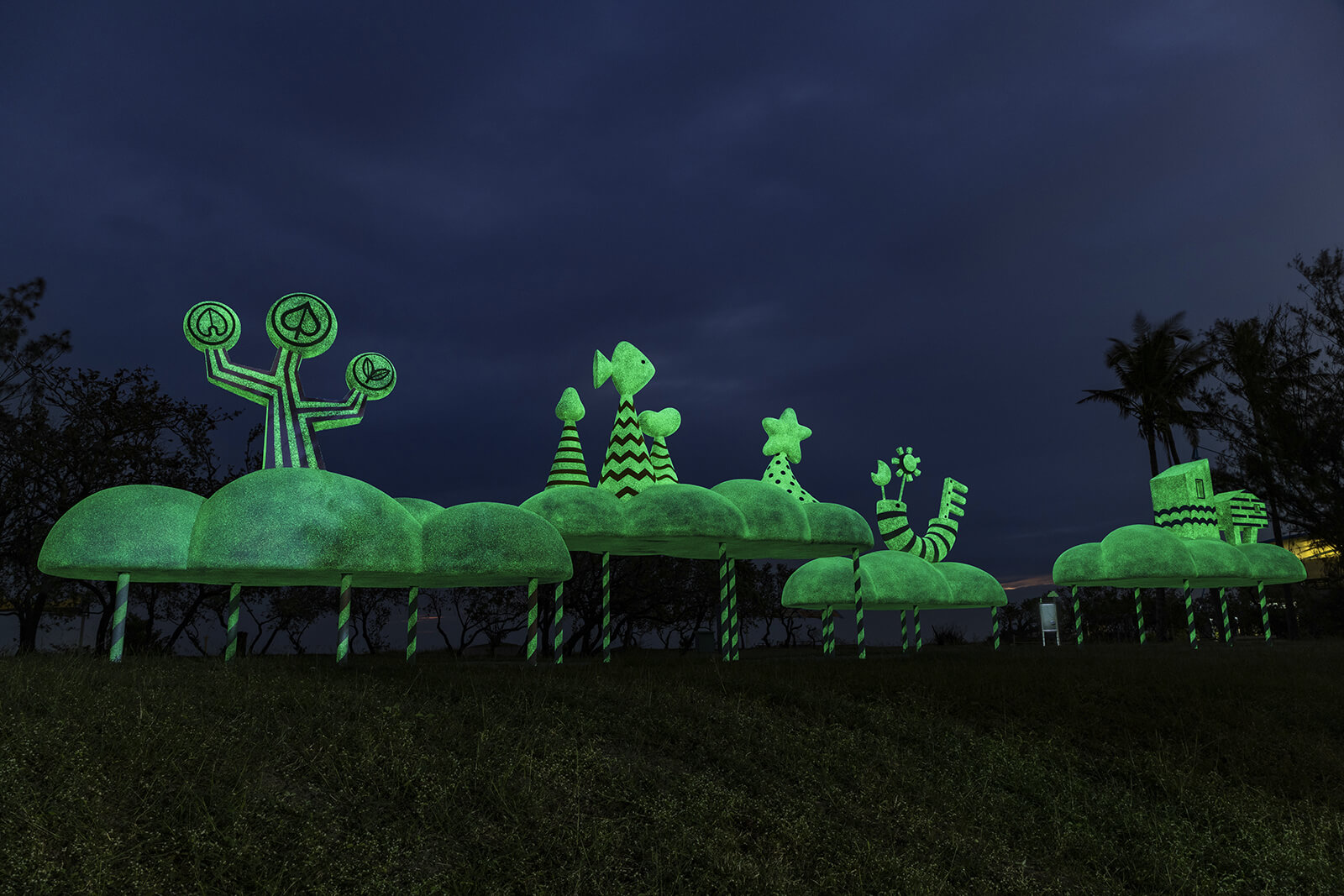
In the story, the wishes people have long prayed for to the starry sky turn into small water droplets that slowly gather to form the four "Cloud Isles." The Almighty Secretary of the Thousand-Year Lord, "Star Man," serves as the protagonist, leading everyone to the four Cloud Isles to explore the local area with the Isle Masters. The four Cloud Isles and their Masters include: "Isle of Beauty - Golden and Silver Triplets" (advocating for local deep-dive tourism), "Isle of Guardians - Ocean Woof Woof Wharf" (continuing local marine conservation actions), "The Topsy-Turvy Fishing Vessel" (contemplating sustainable fisheries), and "The Three Vital Treasures Tree" (representing the spirit of "local land" agriculture in Donggang). The corresponding designs incorporate and interpret related symbols such as: the outline of Donggang's tropical fish shape as seen from the sky, the old place name of Xiao Liuchiu "Poufushan Yu," Linbian's "wax apples" (lianwu) and its old place name "Linzaibian," Dawu Mountain, the old "ice storage" (bingwu) buildings at the port, sakura shrimp, deep-sea fishing boats, and the leaves of red bean and melon crops.
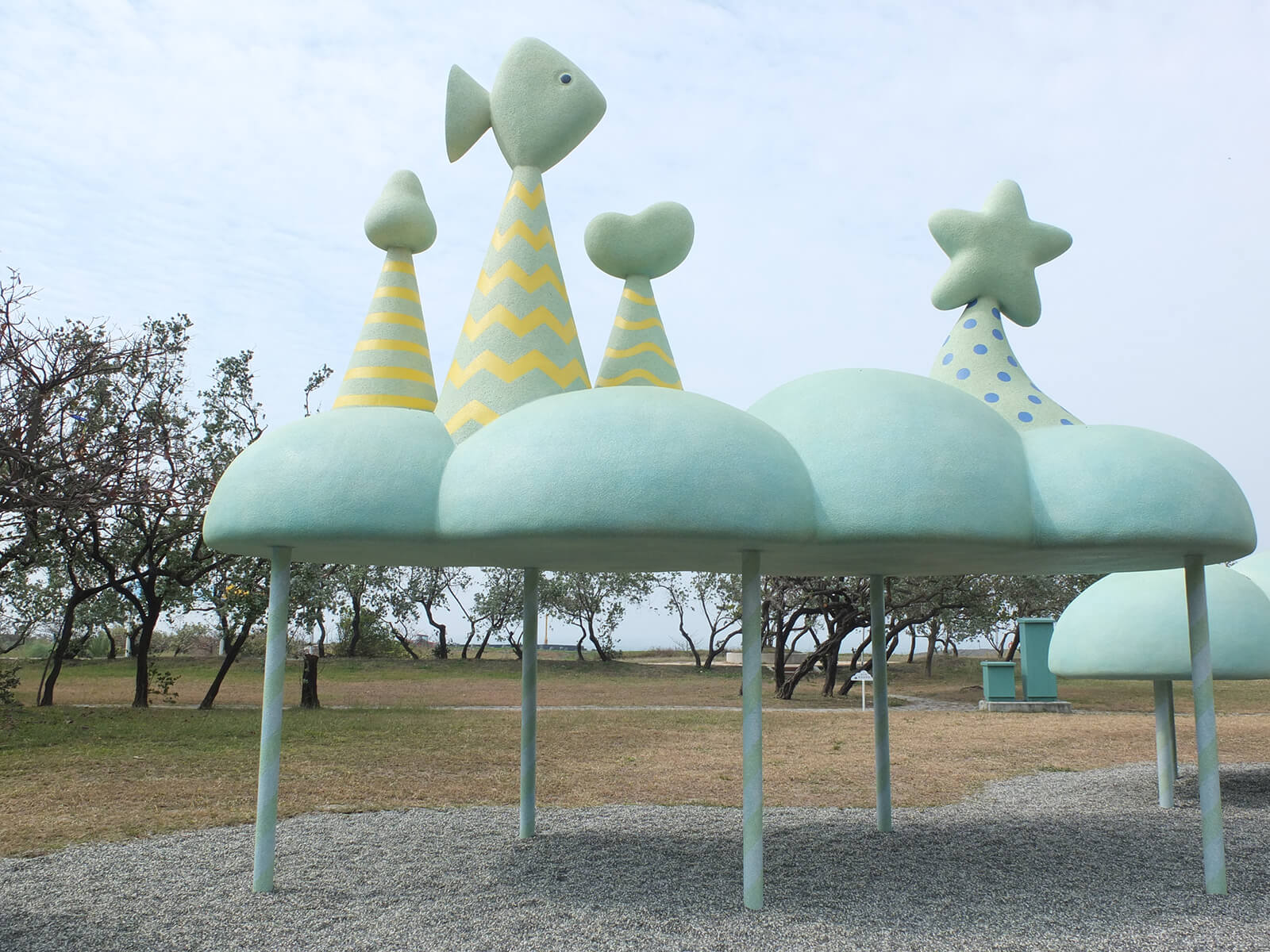
Isle of Beauty - Golden and Silver Triplets
The "Isle of Beauty" is named based on the extension of the "beauty/goodness" (meihao) symbolism of the "Wei" (Sheep) cycle year of the Welcoming the Royal Lord Festival. It represents the three local tourism features of Donggang's "Royal Lord Welcoming Culture," Xiao Liuchiu's "Eco-tourism," and Linbian's "Agricultural and Fishing Village Experience," and also symbolizes Donggang, Xiao Liuchiu, and Linbian as one big family. The area promotes "sustainable tourism" and has developed diversified itineraries, hoping that everyone will stay for a few extra days for a deep-dive experience, as this is a "beautiful and lovely" small town and countryside.
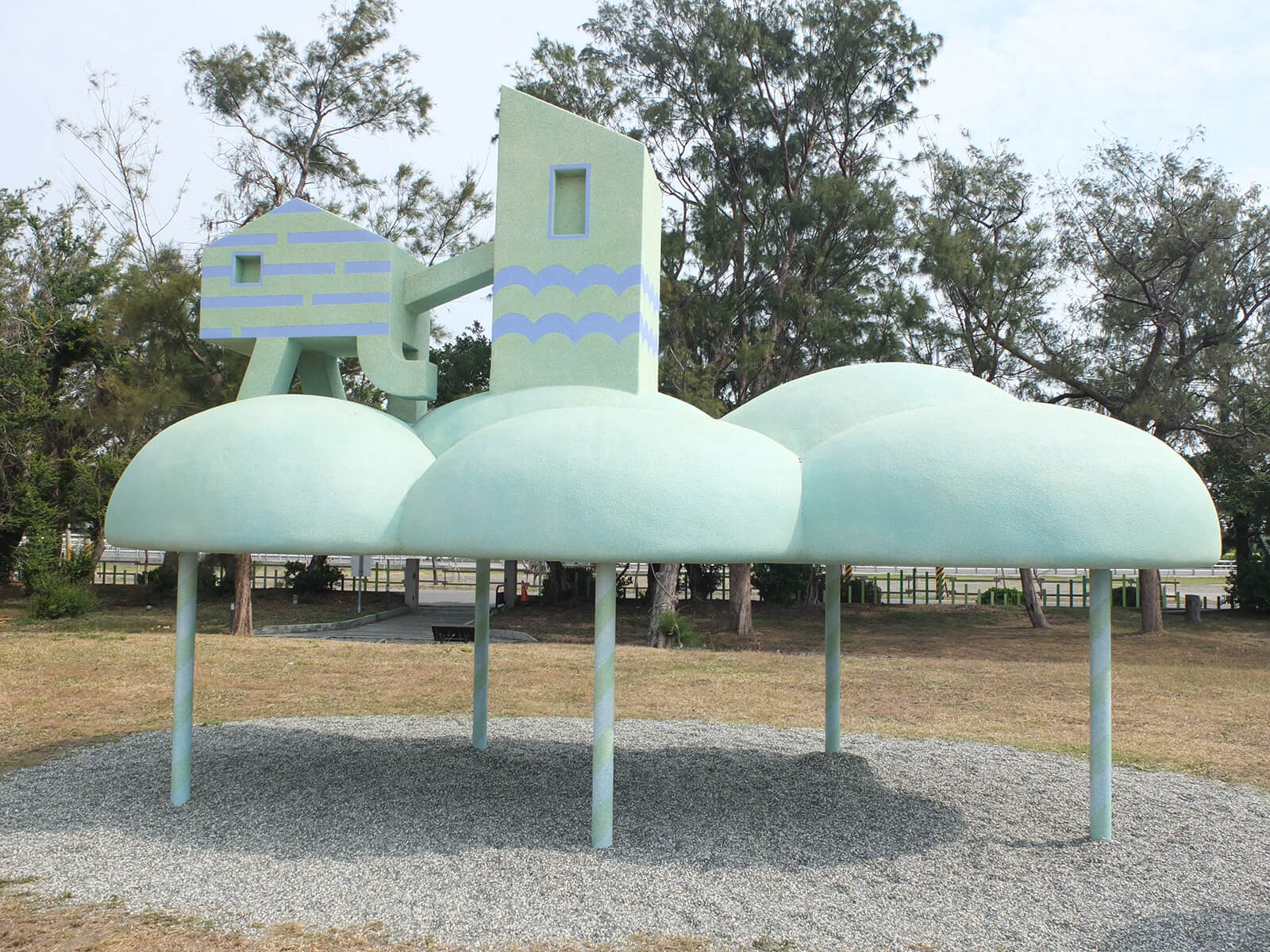
The Isle Master of the "Isle of Guardians" is shaped after the architecture of the "ice factory and wooden ice storage building" (製冰廠和木造冰塢) by the Donggang pier during the Japanese rule. To echo the action capability of marine conservation, the ice factory is transformed into the story's "Big Factory," paired with wave patterns, symbolizing that marine trash and pollution are processed into various current or future solutions for ocean protection. The "Wooden Ice Storage," which connects the ice factory's transport rails, is transformed into "Woof Woof Wharf" to emphasize personification, giving the stilt house limbs to bring out the lively and humorous characteristics of a "dog." The vertical stripes extended from the rain-screen siding (雨淋板) imagery symbolize that marine conservation actions are blossoming across Donggang town and must continue endlessly.
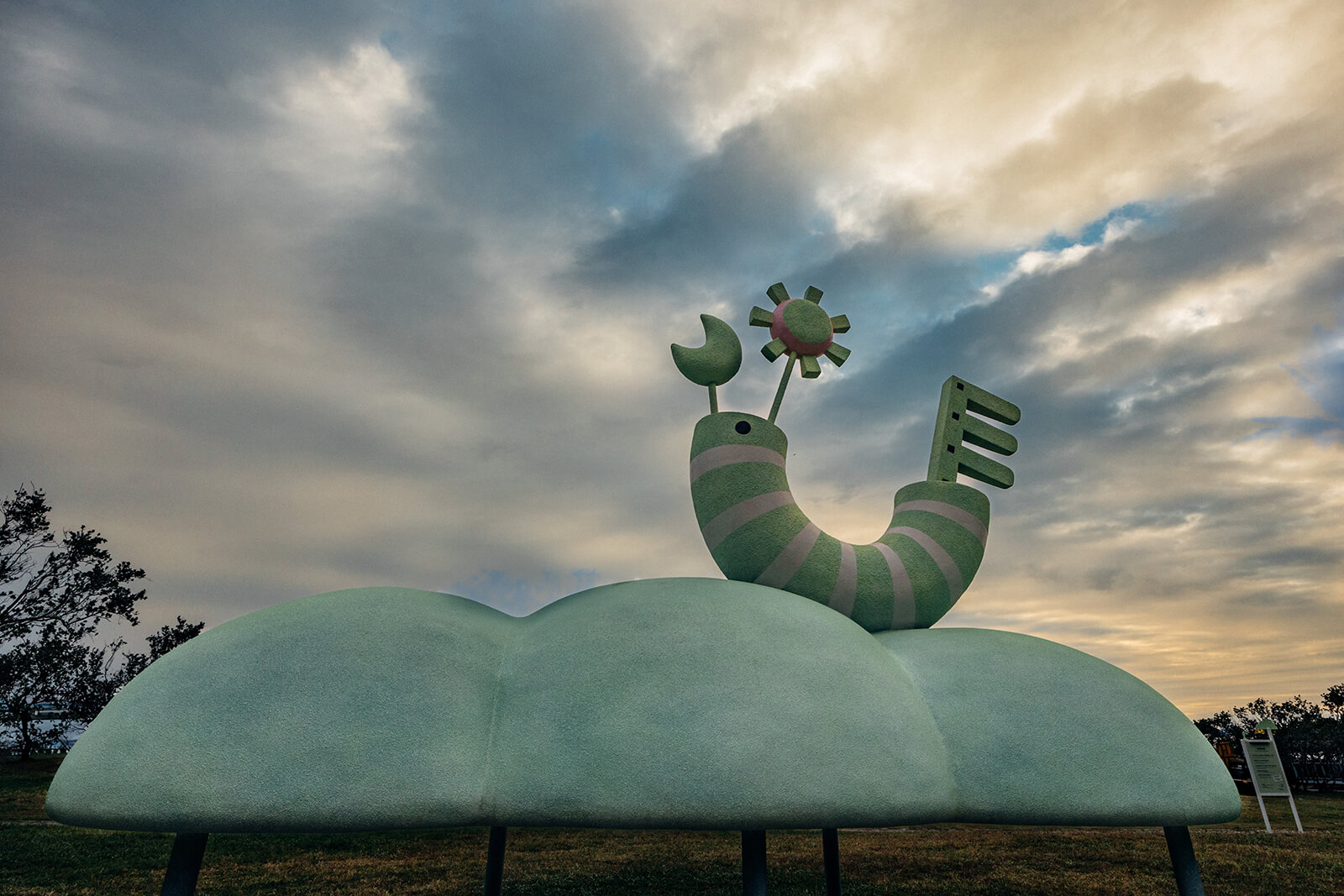
Isle of Abundance - The Topsy-Turvy Fishing Vessel
The Isle Master of the "Isle of Abundance" is shaped by transforming a "shrimp" into a "vessel." The bow of the vessel, resembling the shrimp's antennae, features sun and moon symbols, representing that sakura shrimp and many other fish harvests require setting sail at night and returning by noon, necessitating continuous day and night operation. This symbolizes gratitude for the hard work of the fishermen, allowing everyone to taste fresh seafood. The fork-shaped stern resembles both a shrimp tail and a pennant flag. In addition to paying tribute to the smooth sailing of ocean-going vessels, it also symbolizes that the magnificent cuisine of Donggang comes from the sea, calling on everyone at the dinner table to enjoy the delicious food while understanding the importance of sustainable fisheries.
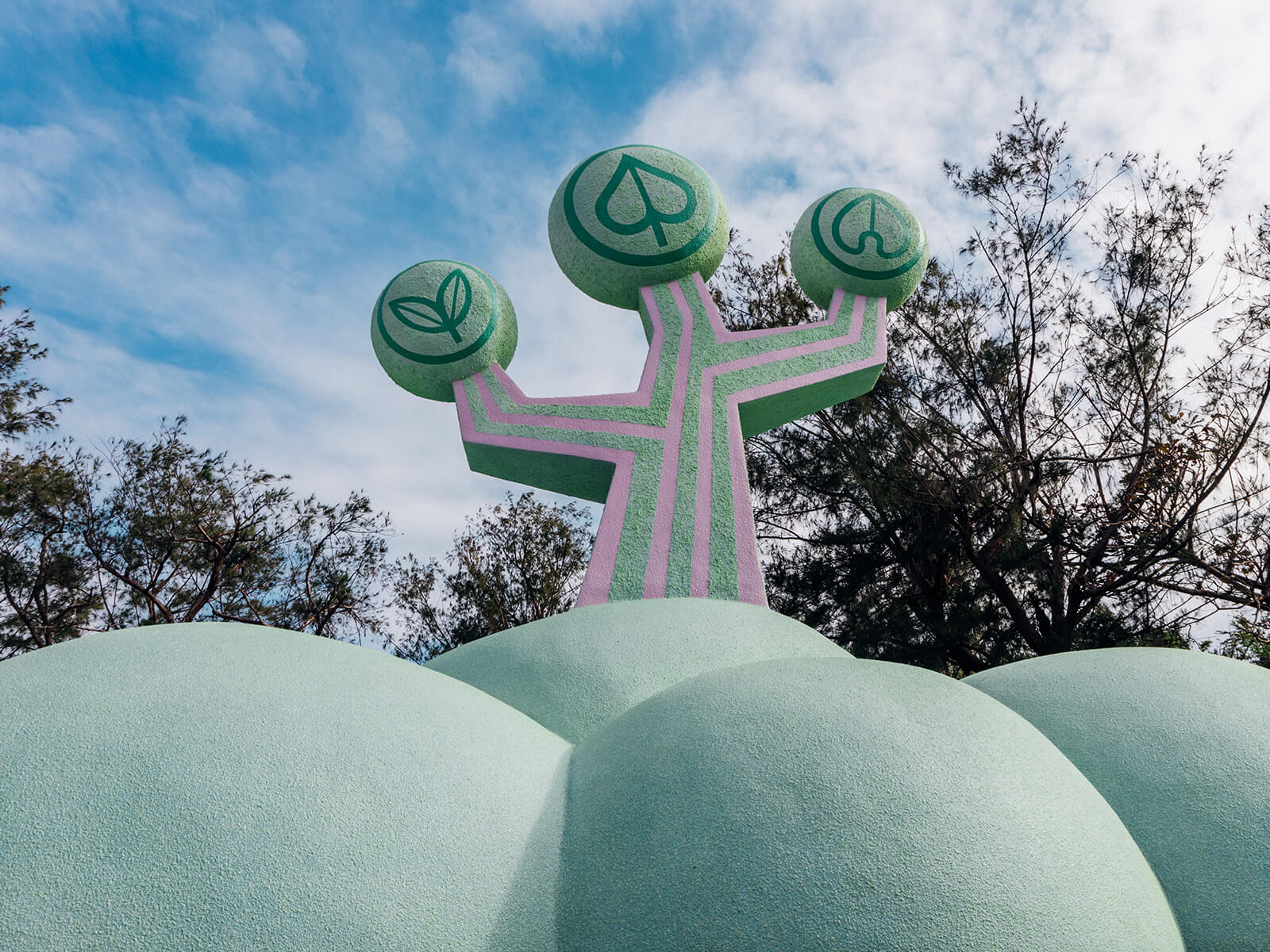
The Isle Master of the "Isle of Vitality" is shaped as a "tree with a head, hands, and feet," symbolizing regional agriculture. The lines on the trunk represent transport pipes, delivering water, nutrients, and the loving care of meticulous tending. The three fruits on the tree symbolize the Three Treasures of Donggang's agriculture, with the leaves of the crops specifically chosen as representative symbols to add to the fun of guessing which crops they represent. The moral of the story emphasizes that the Donggang and Linbian we know are not just harbors, fish markets, or wax apples; over ninety percent of the area is agricultural land, where a group of farmers continuously cultivates the soil. We urge everyone to support the local farmers of Donggang and Linbian and their agricultural products.
Earth Woker are like the earth mother
Whose legs draw nourishment
Whose arms give form to all things
Whose body contains a gate
Whence life leaps out into the day
We are all our own Earth Woker
And we have within us the genes to broaden our lives
When the gate of life opens to our dreams
And our feet plant deeply into the ground
And our hands labor in the soil of our lives
The beginning of our dreams
All along, “You were the center of your own world”
The harvest of your dream
Is not some grand exploit or great honor or the end of happiness
Rather, it is “proof that you can muster the courage to change”
To you who are now or about to broaden your life
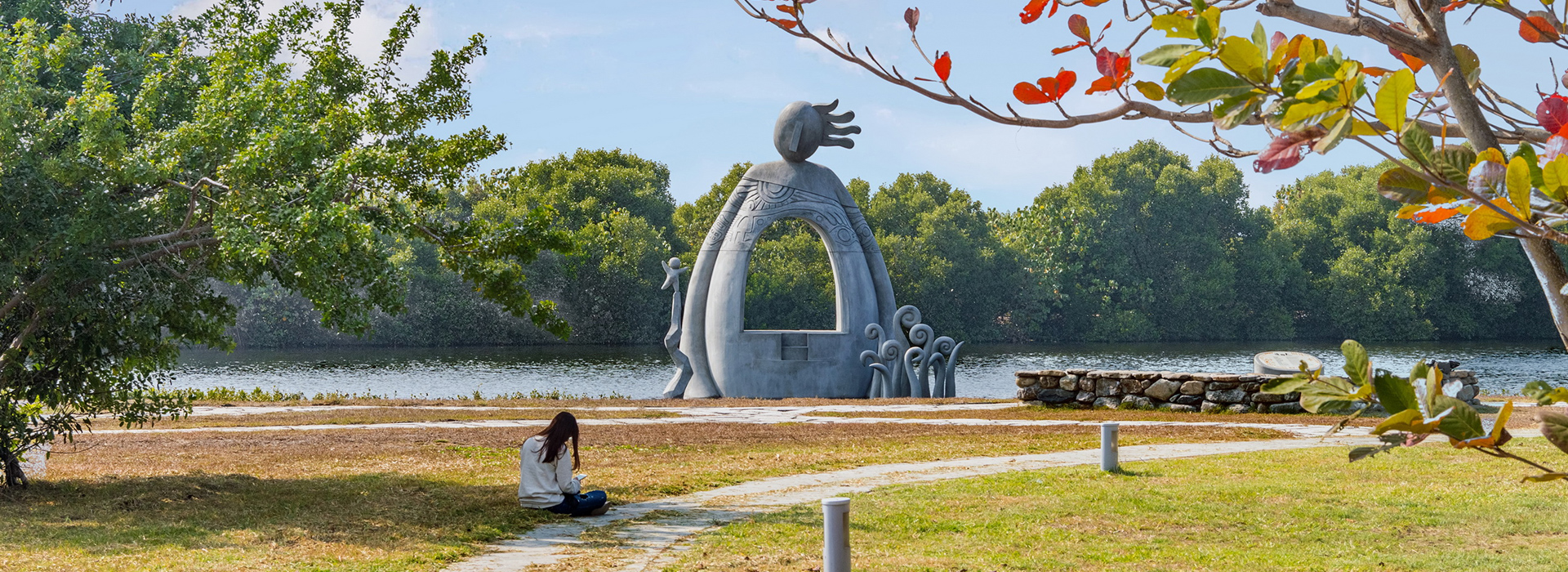
One day, The Earth Worker was forcefully blowing out the sky and earth
Accidentally blowing an extra breath
Causing a piece of land and two fissures to be missing from the southern end of the island
The gap 【Note 1】 allowed seawater to rush in, turning it into a marsh
The fissures 【Note 2】 became streams
Coincidentally, mischievous creatures 【Note 3】 ran out of the gate of life
Becoming the earliest inhabitants 【Note 4】 of this place
To nurture them
The Earth Worker's Hand bestowed wisdom and provisions
Including creatures like fish, deer, and fowl, as well as five grains and fruit trees
As the sun and moon rotated
Migrants 【Note 5】 began to settle 【Note 6】 on the island
The marsh turned into a lagoon and land
The land gradually formed settlements
The Kuroshio Current of the ocean created a new paradise 【Note 7】
Unfortunately, The Crafter's Hand used colors 【Note 8】 too heavily
The island underwent multiple civilizational changes 【Note 9】
Turning the small gap into the current Dapeng Bay 【Note 10】
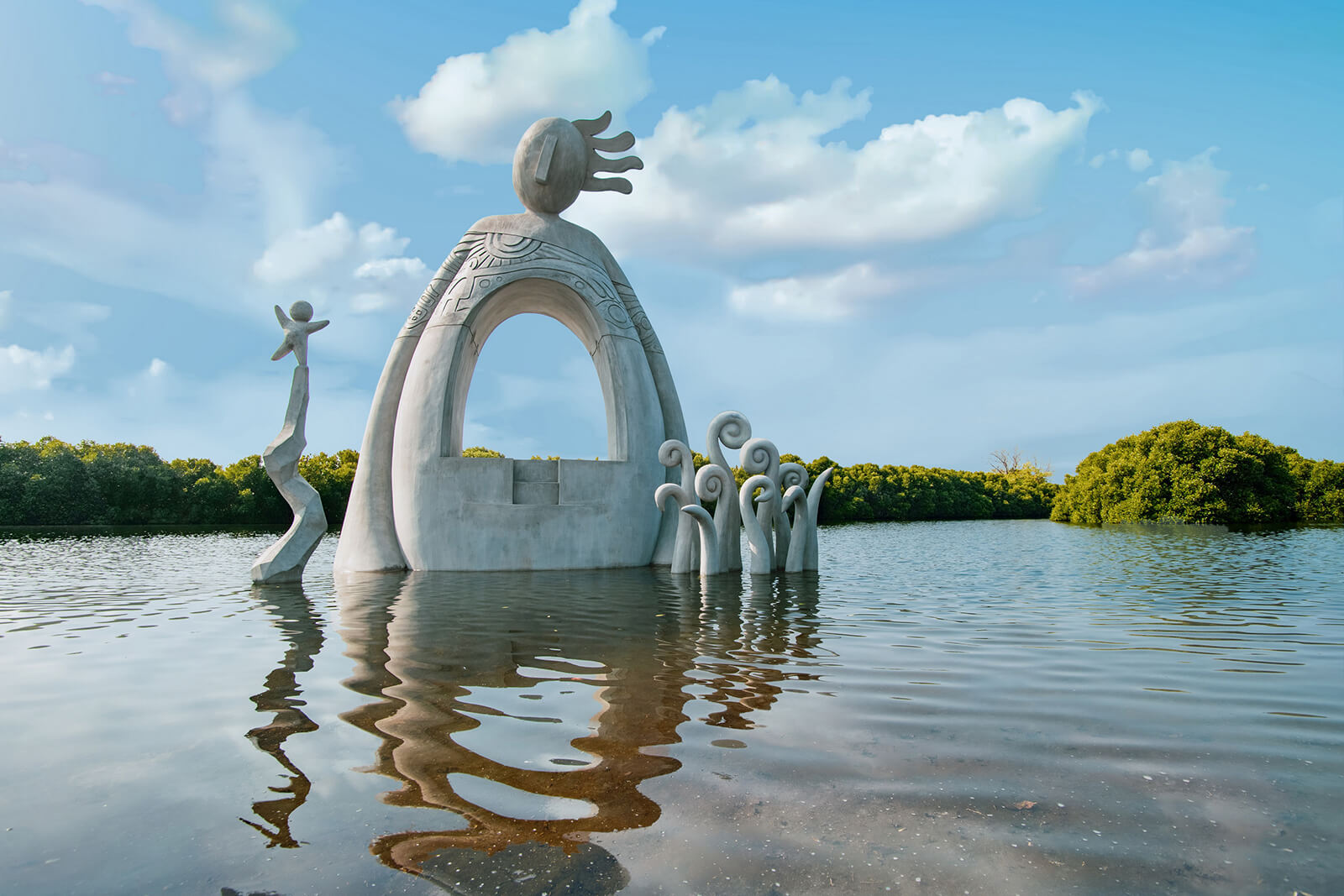
- 【Note 1】Gap: Represents the predecessor of the Dapeng Bay Lagoon.
- 【Note 2】Fissures: Represent the Linbian Stream and Donggang Stream.
- 【Note 3】Mischievous creatures: Represent humans.
- 【Note 4】Earliest inhabitants: Represent the "Fengshan Eight Communities" indigenous people of the Pingtung area, or earlier ancestors.
- 【Note 5】Migrants: Include the documented Dutch, Han people, immigrants from the Qing Dynasty, Hakka groups, and modern Japanese and the KMT government, etc.
- 【Note 6】Settling/Pioneering: Foreign colonizers brought advanced survival methods of the era, such as farming, religion, crafts, aquaculture, and construction technology, changing the existing culture and lifestyle of the indigenous people. Behind this seemingly positive change lay the retreat of traditional territories and cultural weakening.
- 【Note 7】New paradise: Refers to the coastal area of Linbian and Donggang, which has been a rich fishing ground and once a port since ancient times. Many Han immigrants cultivated large areas of fish farms, and during the Japanese rule, Dapeng Bay was positioned as a key development area for a "water park."
- 【Note 8】Colors: Represent the opposition between races, ethnic groups, and factions.
- 【Note 9】Changes: Represent the history of colonization and world wars experienced here, having served as a military seaplane base and base during the Japanese rule until the KMT government period, eventually opening as a National Scenic Area.
- 【Note 10】Dapeng Bay: One of the old names for the Dapeng Bay Lagoon (meaning "Great Pond").
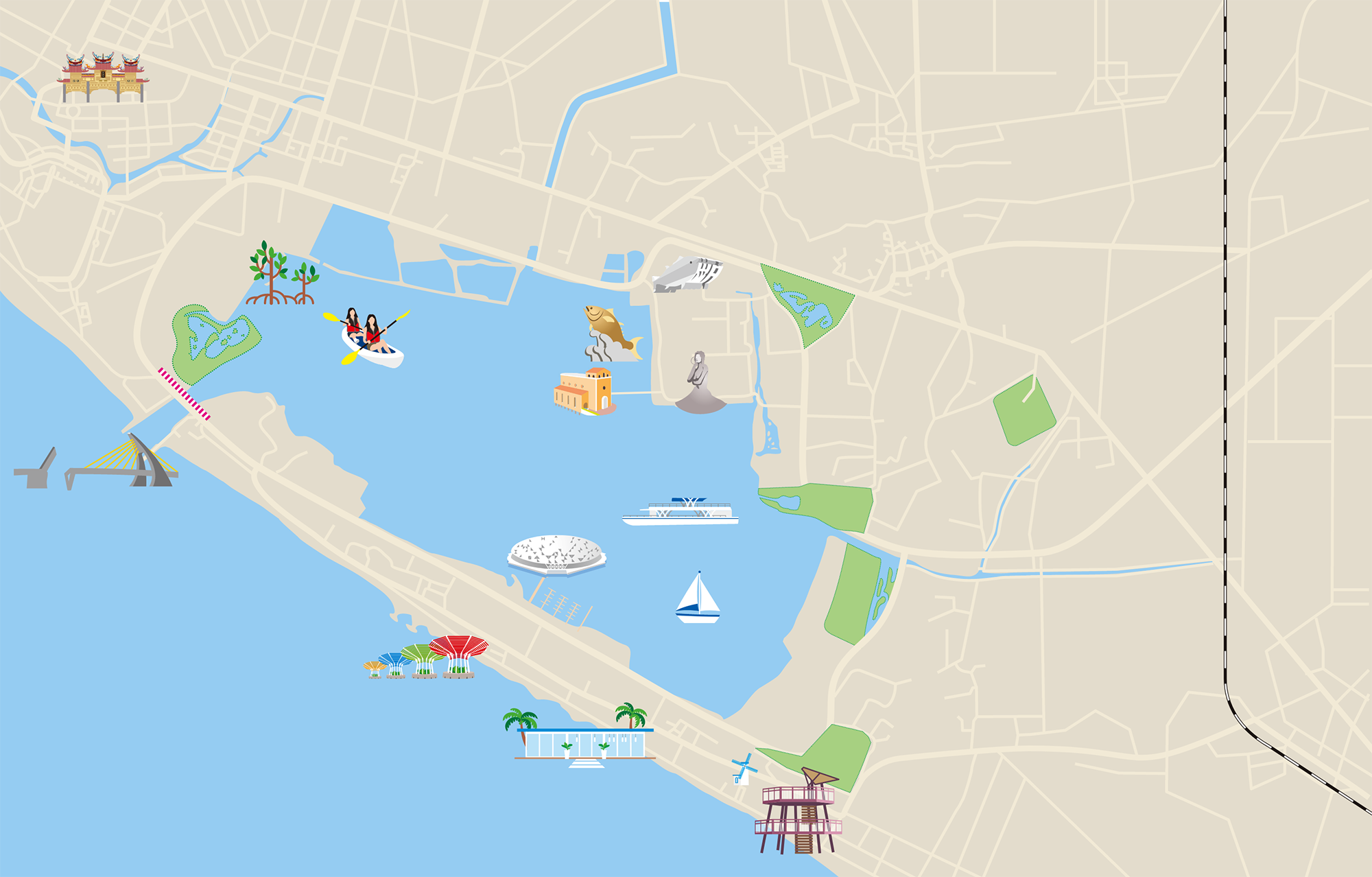
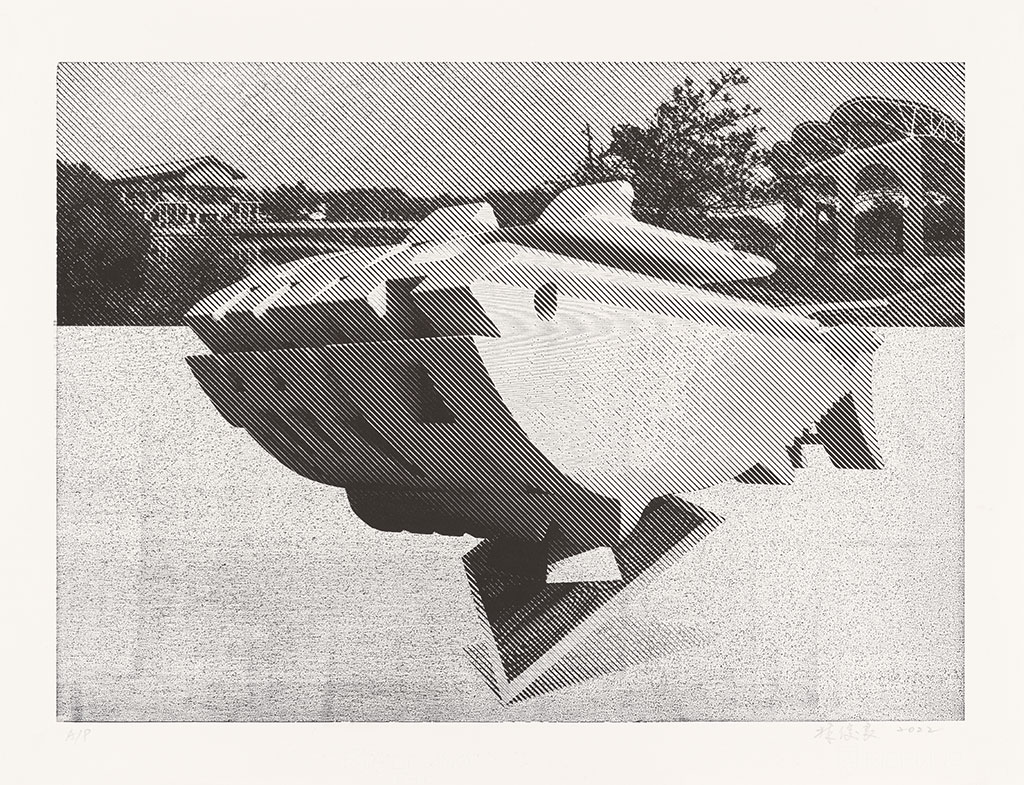
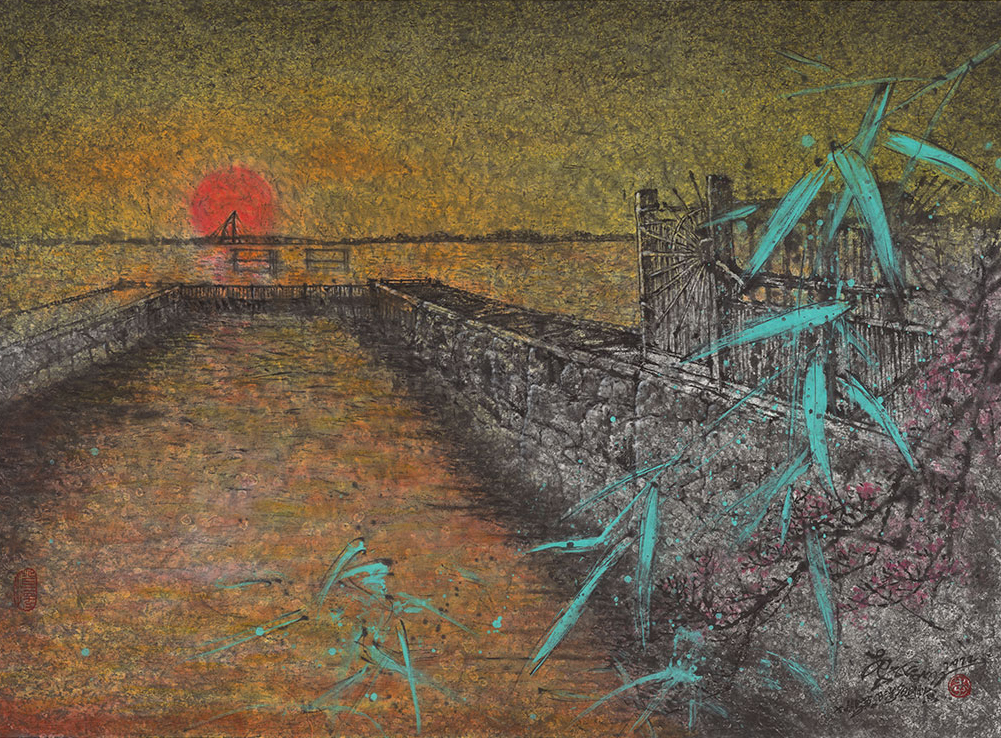
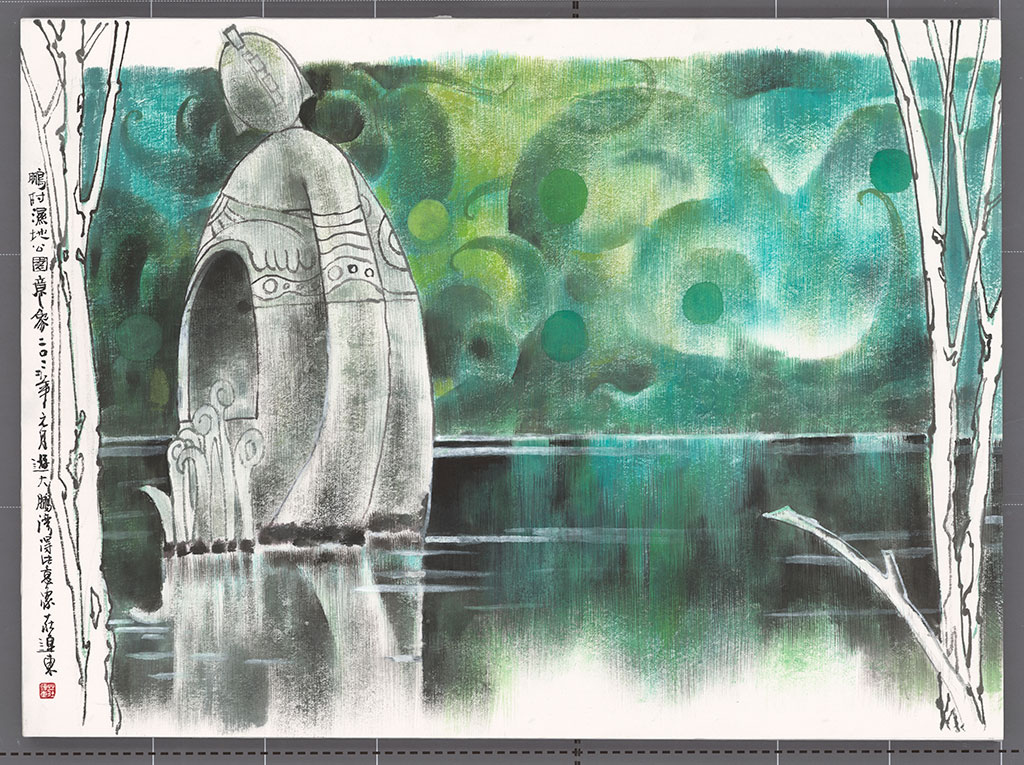
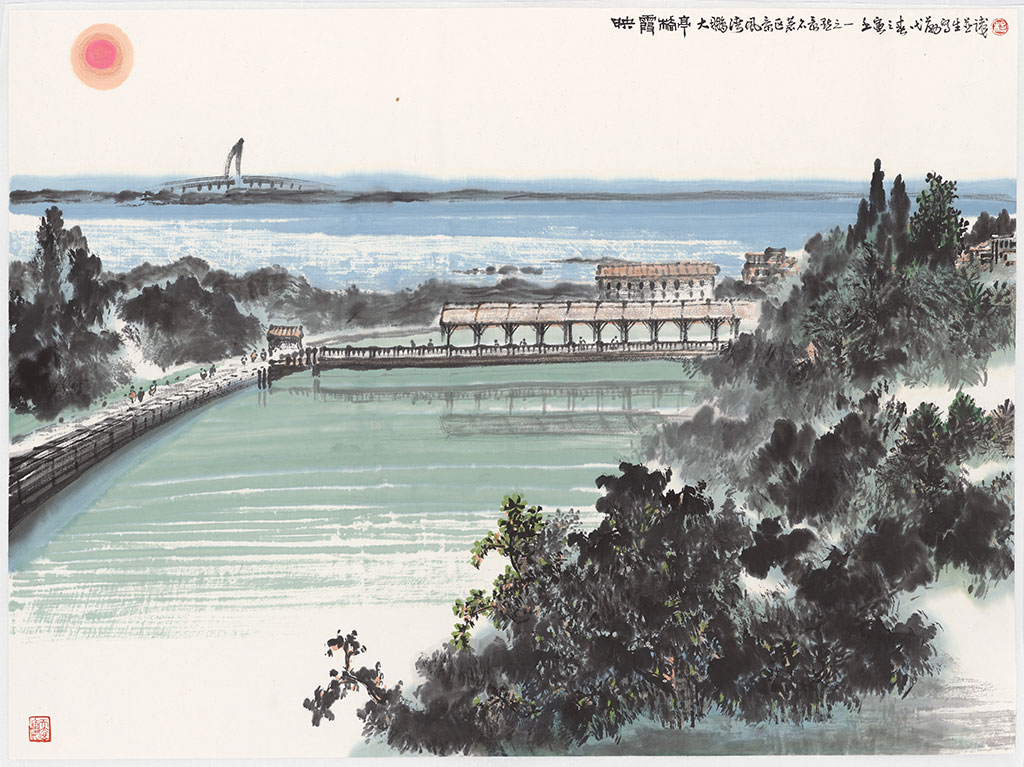
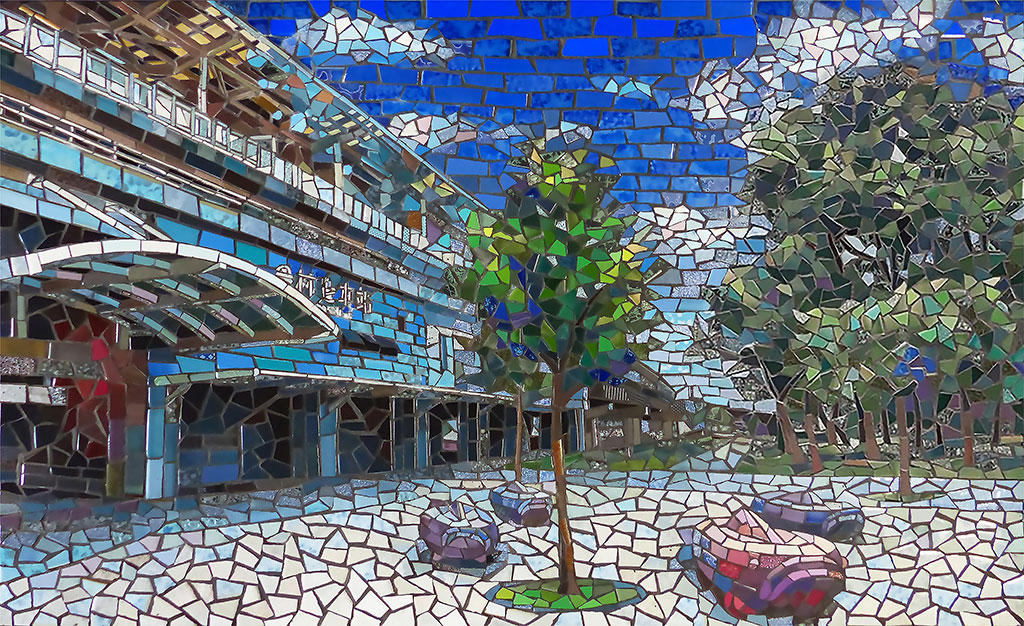
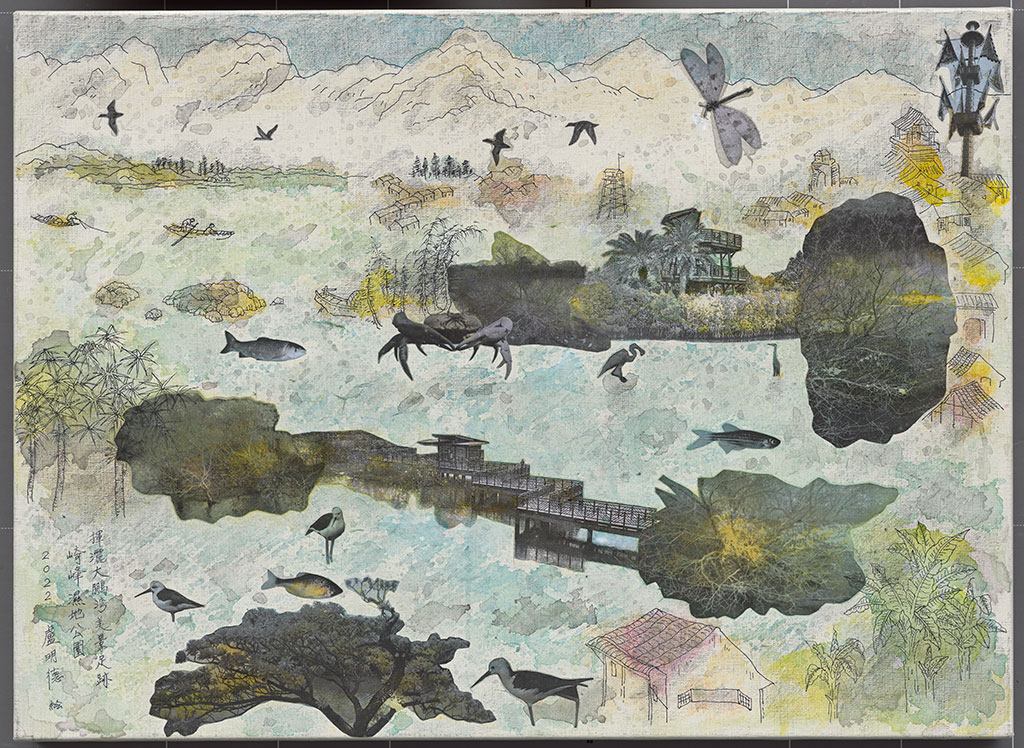
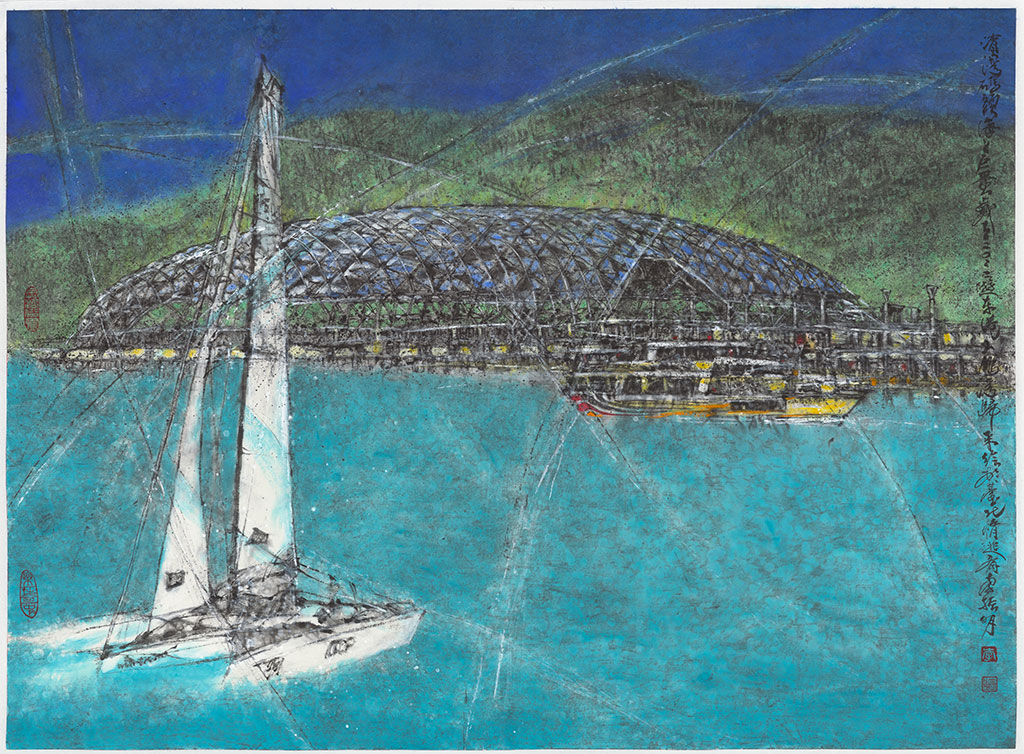
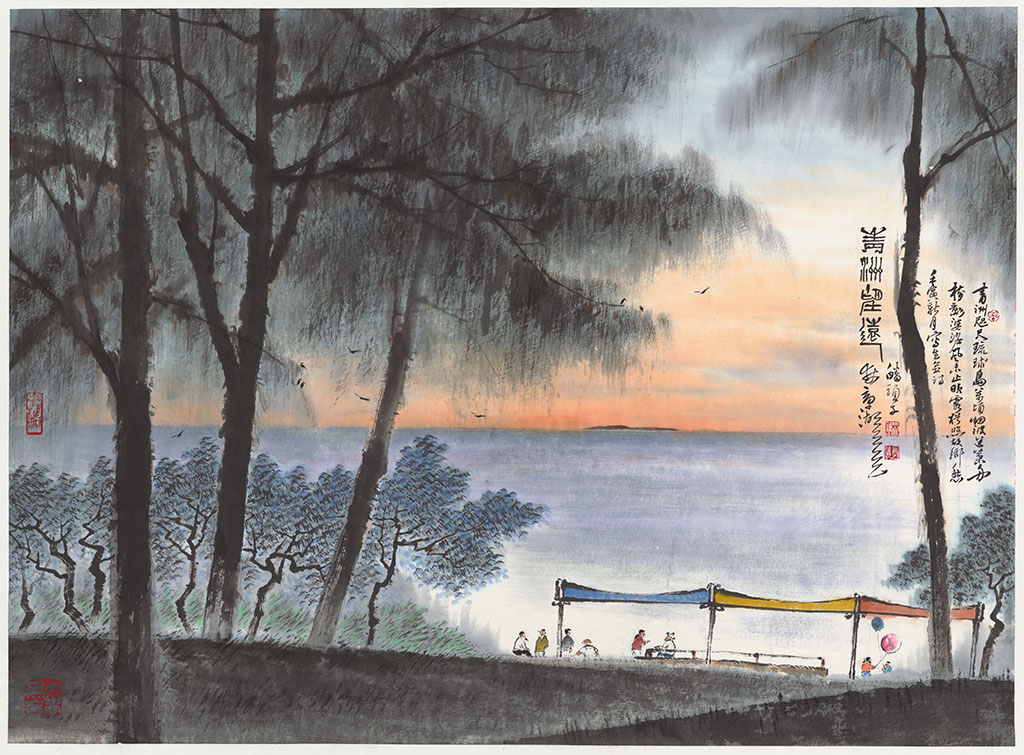
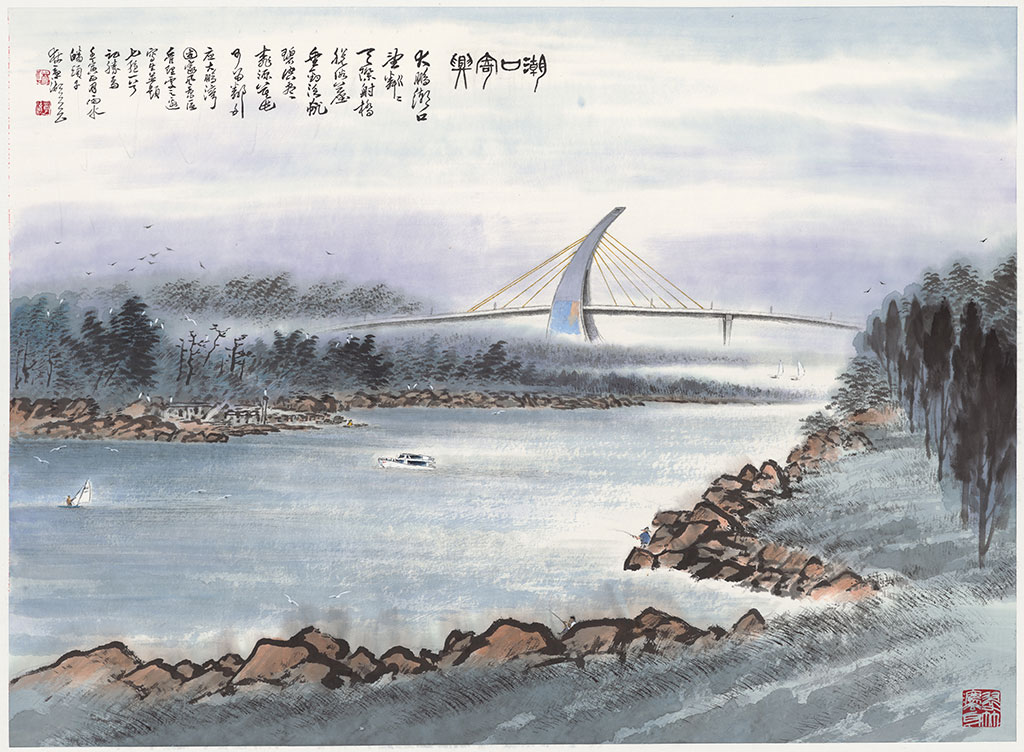
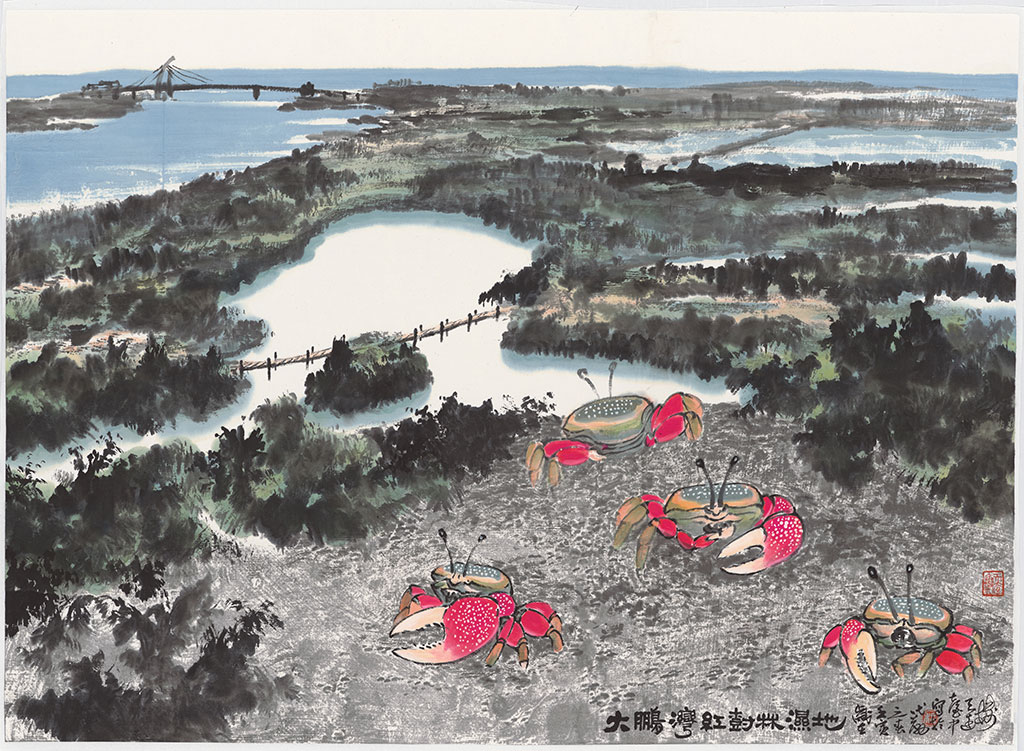
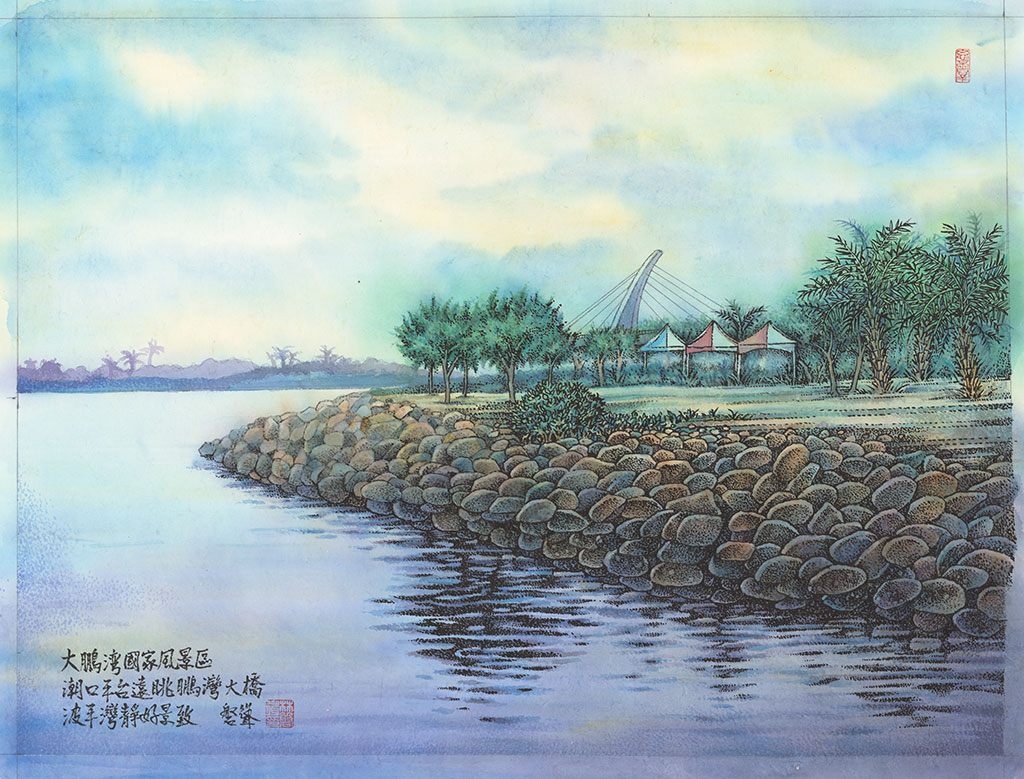
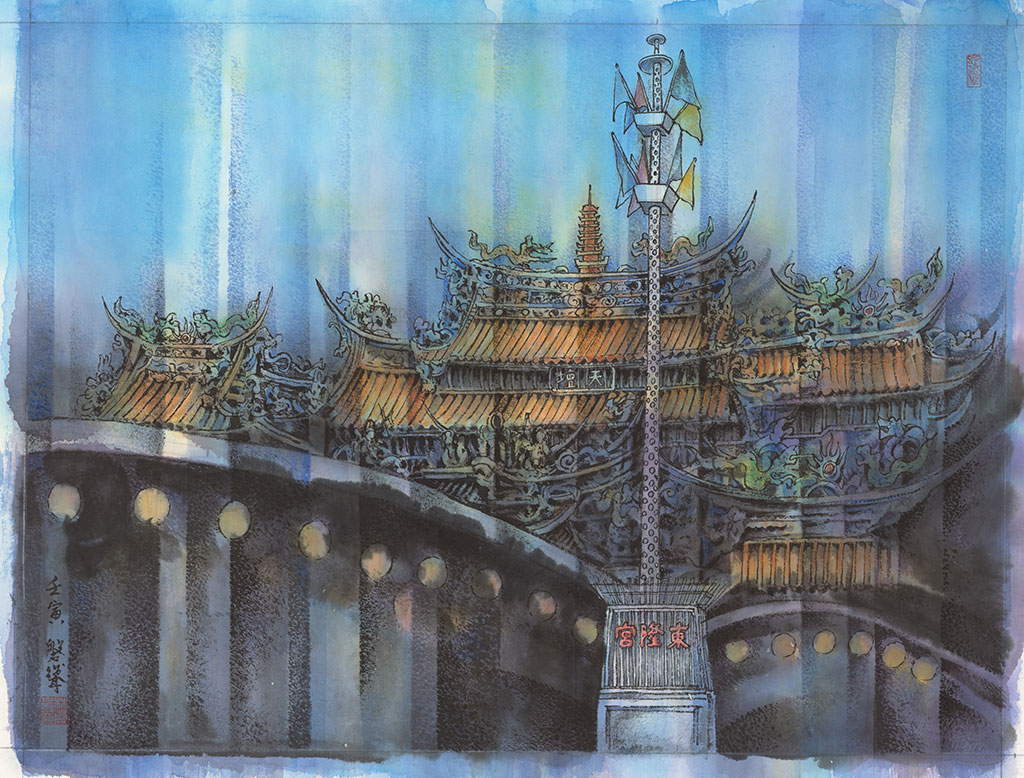
To promote and showcase the beauty of Dapeng Bay, the Dapeng Bay National Scenic Area Administration of the Tourism Administration, MOTC, specially planned the "Painting the Beauty and Footprints of Dapeng Bay Project." They invited eight renowned artists to create works using different media, depicting the scenery of Dapeng Bay from various angles with their brushes. This project presents the beauty of Dapeng Bay through painted works, leaving a moment of eternity for the area. In addition to creating and preserving the beautiful scenery of Dapeng Bay, the project also planned 12 scenic check-in points to attract tourists to appreciate the views and take photos. Visitors can enjoy the beautiful creations of famous artists, feel the diverse beauty exclusive to Dapeng Bay under the influence of art, and also align with modern trends by combining social media applications such as Instagram and Facebook. Through diversified marketing methods, the project vigorously promotes Dapeng Bay and its surrounding unique landscapes, aiming to enhance the benefits of the nearby tourism industry.
You can click on the scenic spot numbers to view the paintings of different artists:
Swipe left and right to see the complete map
Scroll the bar below to see the complete map