
A century-old religious event passed down through generations; divine power parades to pray for peace, uniting the community to welcome the arrival of Wangye.
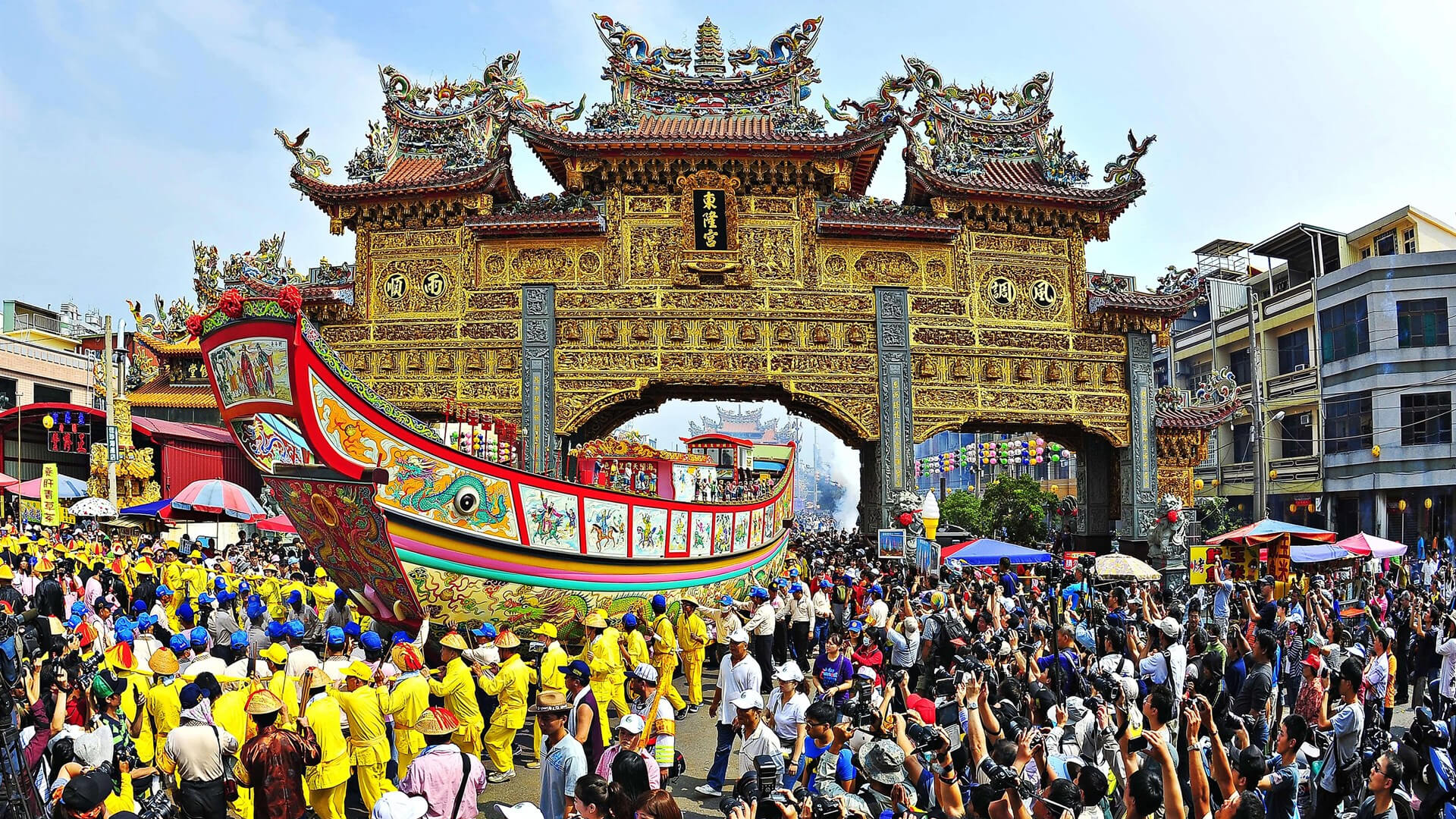
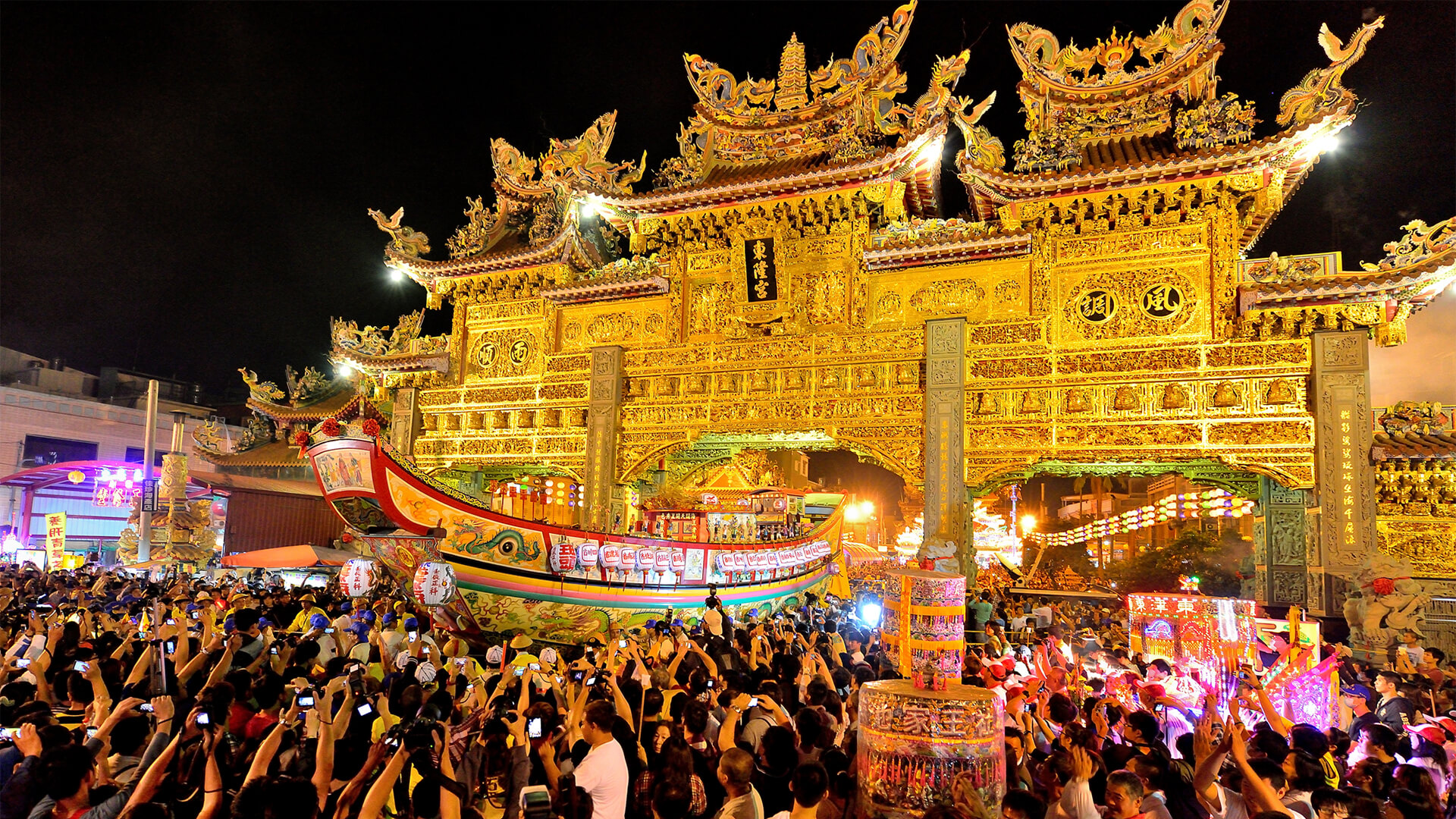
Wangye Worshipping Ceremony is a major cultural event of Donggang and Liuqiu. In Taiwan’s “Wangye” culture, which is a folk belief, this event is highly important. The believers follow ancient rules, carrying sedan chairs with deity statues to parade through the town and finally burn “celestial boats” to send the deities back to the Sky. If you happen to travel in Donggang or Liuqiu during the Wangye Worshipping Ceremony time, be sure to participate in this occasion and feel its charm.
Starting in the Qing Dynasty, Donggang’s Wangye Welcoming Ceremony had its beginnings from a collaborating practice between local headsmen, Tangshan, rituals brought in by traveling priests, and local residents’ faith in the widely worshipped Wen Wangye. As a ritual passed down from many generations, the Wangye Worshipping Ceremony aims to invite Wangye to become a sworn brother of the locals and come to Donggang to prevent the spread of plagues and pray for peace and blessings on behalf of heaven.
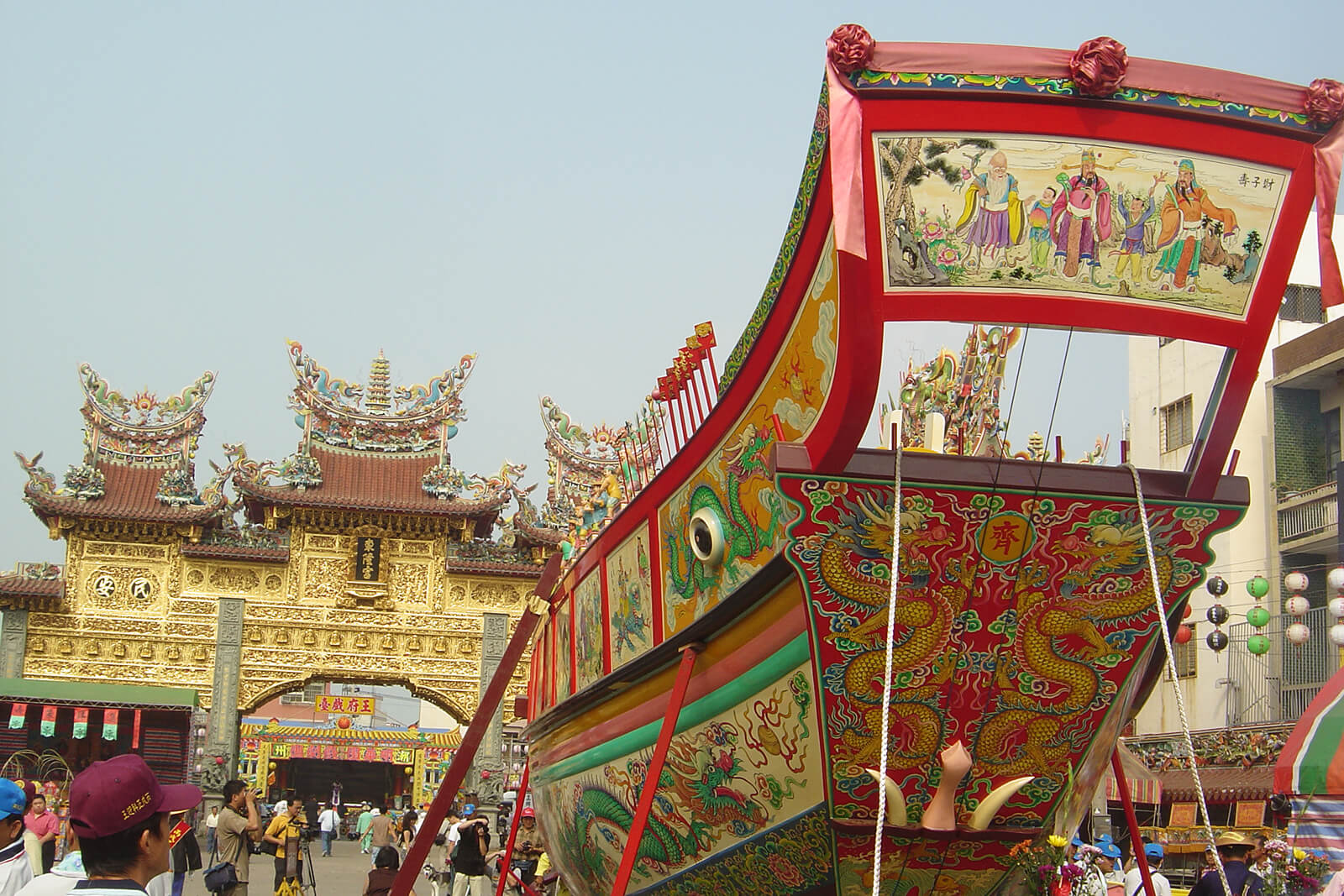
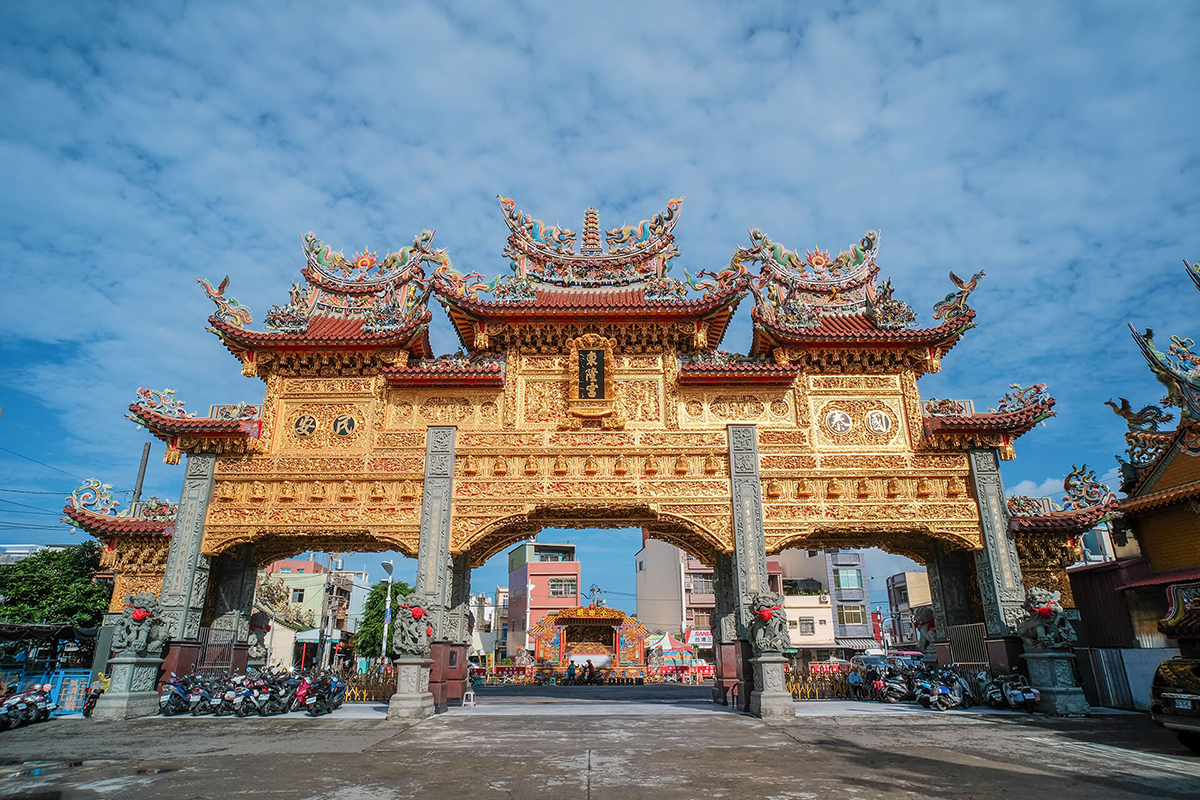
Donggang Donglong Temple
During the 23rd year of the reign of Emperor Kangxi in the Qing Dynasty, growth in the Donggang area attracted a large number of migrants from Quanzhou and Zhangzhou in Fujian province. Feeling homesick and in fear of catching epidemic diseases in a new land, migrants who came to Taiwan from across the ocean had no choice but to rely on the blessings of Wen Wangye, the plague god who carried out inspections on behalf of heaven.
Donggang Donglong Temple is dedicated to Wen Wangye (Lord Wen). Originally a scholar in the Tang Dynasty, Lord Wen died in a shipwreck while patrolling on imperial orders. After his deification, he often patrolled the coasts of Fujian and Zhejiang, protecting passing vessels. Immigrants from Zhangzhou and Quanzhou settled in Donggang during the Qing Dynasty. In 1706 (the 45th year of Kangxi), a large amount of timber from Fujian washed up overnight on the beach of Lunziding (now Zhenhai Village), inscribed with the words "Donggang Wen." Believers followed the divine will to build a temple to worship Lord Wen. In 1894 (the 20th year of Guangxu), a tsunami occurred, and Donglong Temple was submerged by the waves. Wangye gave instructions to build a new temple at the "Floating Water Lotus" site, which is the current location of Donglong Temple. In 1763 (the 28th year of Qianlong), a traveling Taoist priest from Fujian came to Donggang. Seeing the residents suffering from plagues, he taught them the rituals of inviting gods to send away plagues, which gradually evolved into the Wangye Worshipping Ceremony of Donglong Temple.
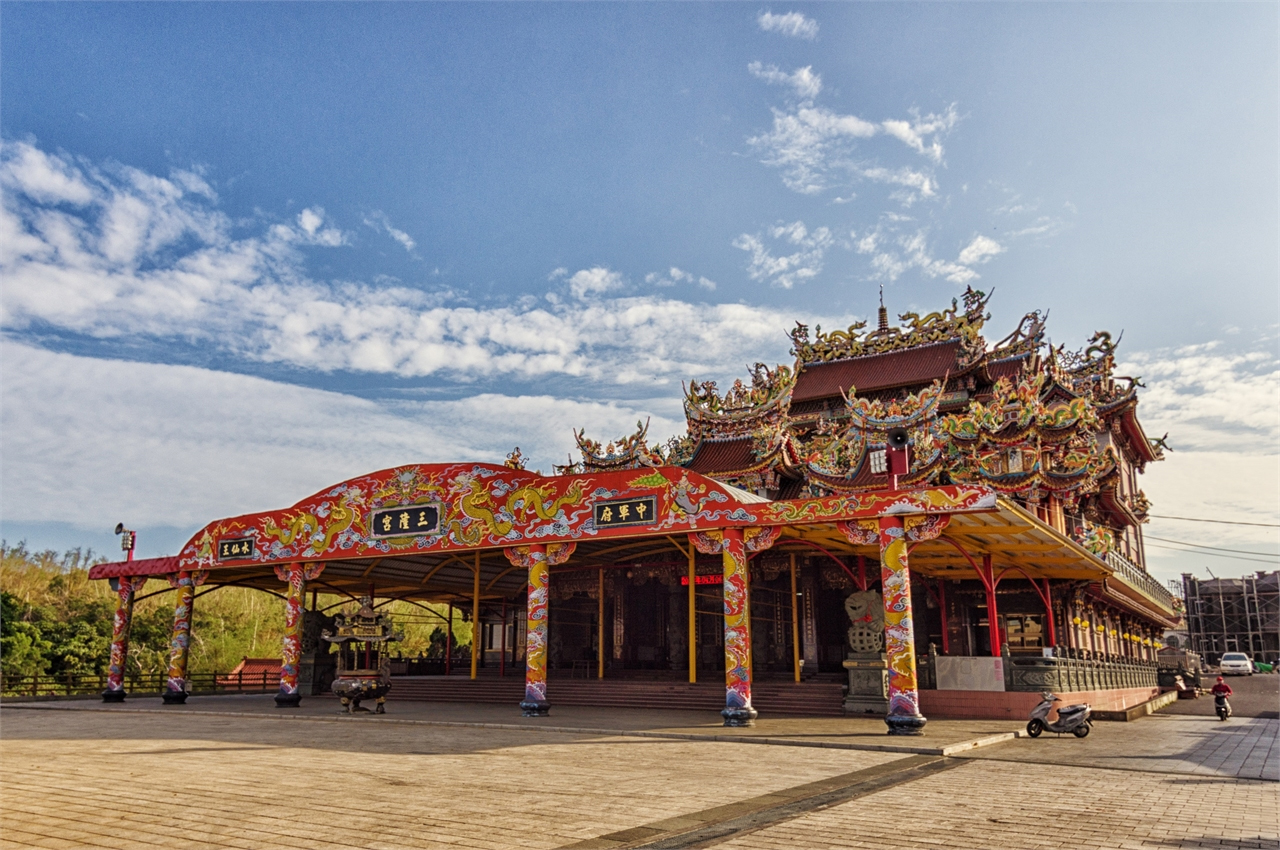
Sanlong Temple is located at the southern end of Benfu Village in Xiaoliuqiu. It worships the three Wangyes surnamed Chi, Wu, and Zhu, commonly known as the "Three Lords" (Sanfu Qiansui). The origin of Sanlong Temple dates back to the early Qianlong period of the Qing Dynasty when Chen Mingshan from Fujian Province arrived in Xiaoliuqiu by small boat, carrying the three Wangye deities he worshipped. He built a straw hut, and the residents found the deities very responsive to their prayers. The incense offerings have flourished ever since, and to this day, fishermen still pray here for blessings before going out to sea. The Wangye Worshipping Ceremony is an extremely important festival for the people of Liuqiu. No matter where they have moved or how long they have been away, they return to Xiaoliuqiu with a sincere heart to participate in this triennial grand event.
Wangye Worshipping Ceremony runs for eight days and seven nights in a row and it is held once every three years, on the Years of the Bull, Dragon, Goat and Dog. The exact dates of the ceremony is only announced after consulting celestial gods. Usually the ceremony is held in September of the lunar calendar.
“Reception of Wangye” is held by Donglong Temple of Donggang, Sanlong Temple of Liuqiu, and Daitian Temple of Xizhou in Nanzhou. No matter the organizer, the content of the rite is roughly the same, including 13 sub-rites.
1.Duty Rotation of Headsman
The Wangye parade of Donglong Temple, Donggang is hosted by seven “Jiao Tou” sedan eams. The teams make a draw three days after the annual rite is over, just to decide which team will carry which sedan chair for which celestial lord in the next year. (The team leaders pick the draws.) Such is not practiced at Sanlong Temple of Liuqiu, however. Each team carries the sedan for the same lord annually.
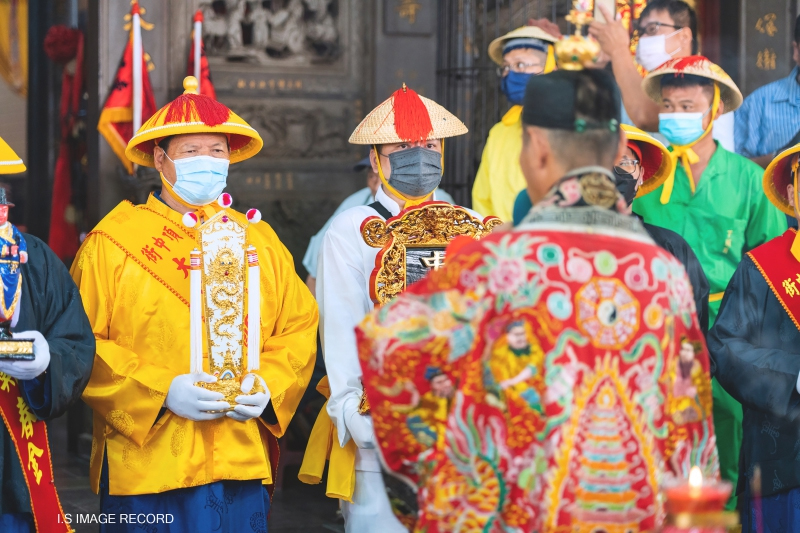
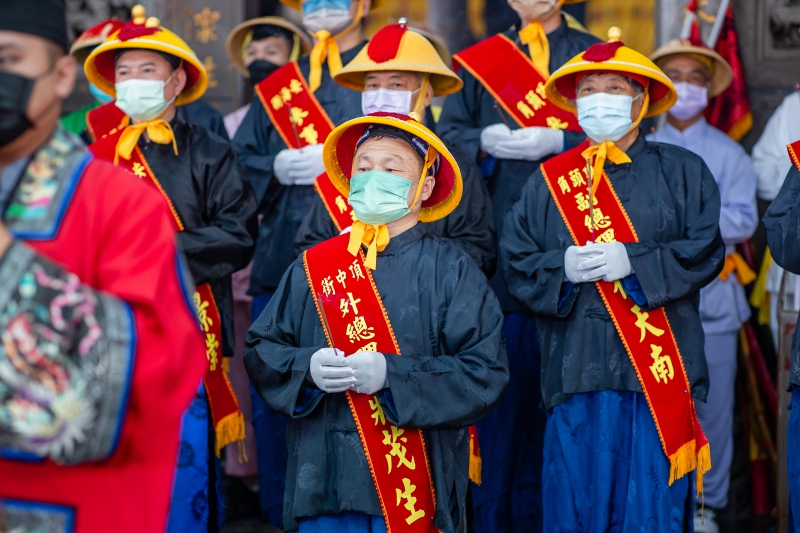
During the Reception of Wangye, members of the seven “Jiao Tou” teams carry sedans for the celestial lords. The members wear traditional colorful garments and “Lu Li” hats of the Qing Dynasty. Some children put on these clothes to join the rite, too.
Five celestial lords who patrol the human world are presented during the Reception of Wangye of Donglong Temple. Two more thousand-year-old deities, Zhongjun and Wen, also attend the event. In total, seven celestial lords sit on sedan chairs for a town parade, accompanied by their Wangye Boats. Each lord is escorted by a “Jiao Tou” team, represented by a specific color. Yellow: Great Wangye; pink: Second Wangye, black: Third Wangye; green: Fourth Wangye; greyish purple: Fifth Wangye; white: Zhongjun Wangye; blue: Wen Wangye.
2.Construction of the Wangye boat
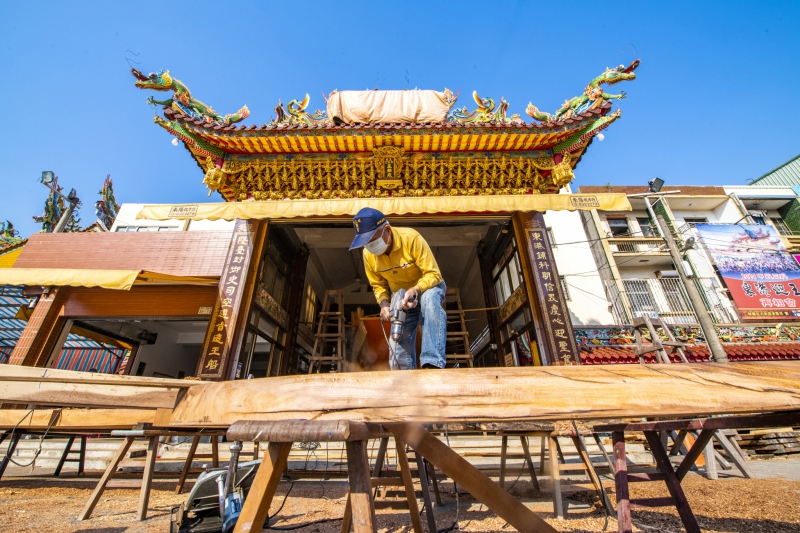
Construction of Wangye Boats, two years prior to the Reception of Wangye.
3.Enshrining Zhongjunfu (the Heavenly Vanguard Troop)
“Arrival of Zhongjun Wangye” indicates the start of the preparation of the ceremonies of the celestial gods. Two years ahead of the Reception of Wangye, Wangye Boats are built. The believers ask Zongjin Wangye to stay on the site, so as to oversee the construction of Wangye Boats.
4.Jinbiao (submitting prayers to God)
The blessing ceremony held at Donglong Temple retains a crucial rite of the Qing Dynasty, “Jin Biao (presenting letters).” It is held in lunar June of the Year of the Reception of Wangye. “Jin Biao” means that, in front of a “celestial desk,” the chief secretary and deputy secretaries of the town’s temple kneel down on behalf of the locals, sending a celestial letter to invite the thousand-year-old Daitian Shunshou Wangye of Tianhe Temple to purify the place and chase away plague when the rite is held.
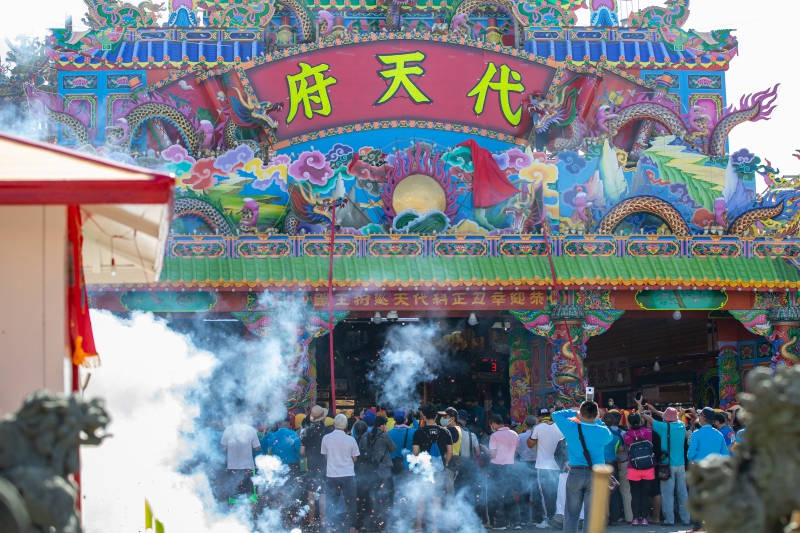
5.Preparations at Daitianfu
The residence of Daitian Shunshou Wangye during patrol in the human world is called Daitian Hall. The hall is built three days ahead of the Reception of Wangye. Two Daitian Halls are installed, respectively within the main halls of Donglong and Sanlong Temples. Silk banners which say “Daitian Shunshou” are hung high up. Only the temple clerks responsible for this part of the rite may enter the site, not any other unrelated people.
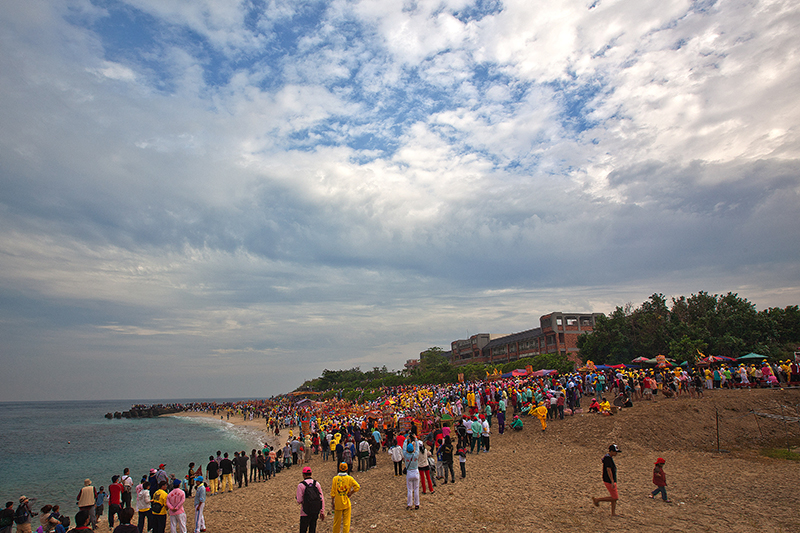
6.Qing Wang (inviting Wangye)
“Qing Wang (inviting Wangye)” marks the official start of the Reception of Wangye. Since the thousand-year-old Daitian Shunshou Wangye arrives and departs on a boat, all ceremonies are held at the shores. Sedan teams, street parade teams, etc. all gather up there. The leaders of “Jiao Tou” then make a draw to learn the arrival time of each celestial god. Upon their arrivals, firecrackers are set off and gongs and drums are beaten, as a way to welcome the lords.
On the day of “Water Invitation,” after confirming which Wangye it is, the name of the Wangye is written to the “general’s flag.” The flag of Daitian Shunshou Wangye is set in the very back of the long parade team, after the celestial sedan. Upon seeing the tall “general’s flag,” one can be sure that the sedan belongs to the Great Qiansui.
Liuqiu is known for its unique Wangye Reception rites. On the day of the event, 50 fishing boats carrying celestial sedans gather up at Dafu Fishery Port and Baisha Tourist port. Then, they sail around the island to ask for safety along the area’s coasts and ports, in addition to waiting for the arrival of Daitian Shunshou Wangye.
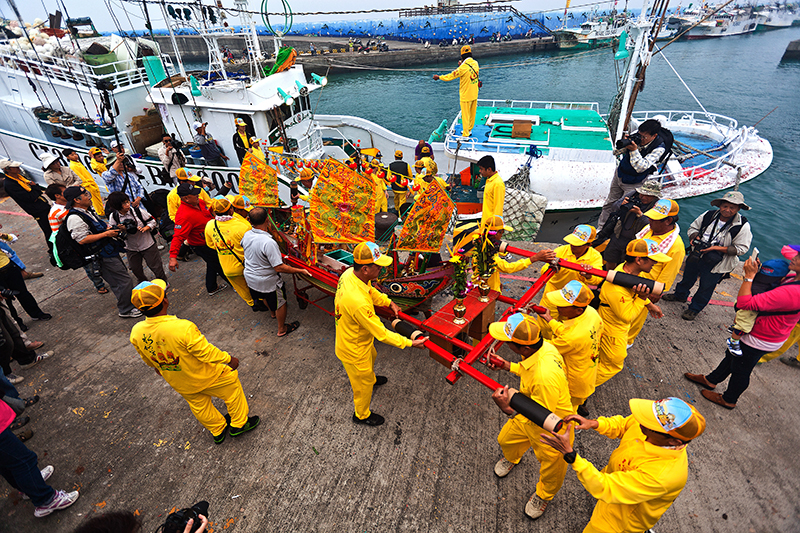
7.Inspection Procession
A celestial parade is held to manifest the power of Daitian Shunshou Wangye, as well as to expel evil and anything that’s unclean. When the Wangye of Sanlong Temple goes out for a patrol, believers kneel down by the roads to get his blessings. During the parade, it is said that dead people who feel wronged during their lifetime can ask for justice from Wangye as long as a sign that says “receiving complaints” is held.
Each household along the parade route would prepare soft drinks and snacks for members of the sedan teams, to quench their thirst and keep them from getting hungry. But the food must not be taken home, as a way to respect to Wangye. What a unique folk practice of Liuqiu this is!
During the parade, some people would stop the sedan which carries Wangye to appeal for justice. Wangye would stop by the road to handle the case right away.
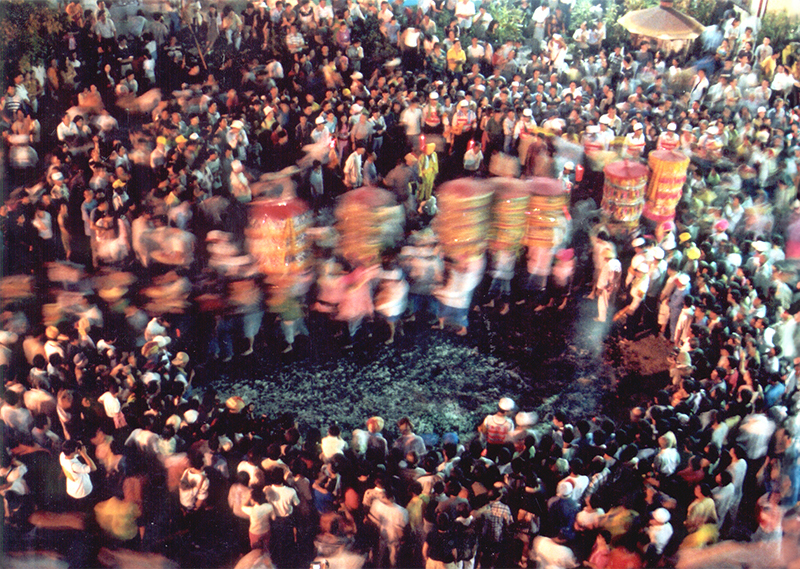
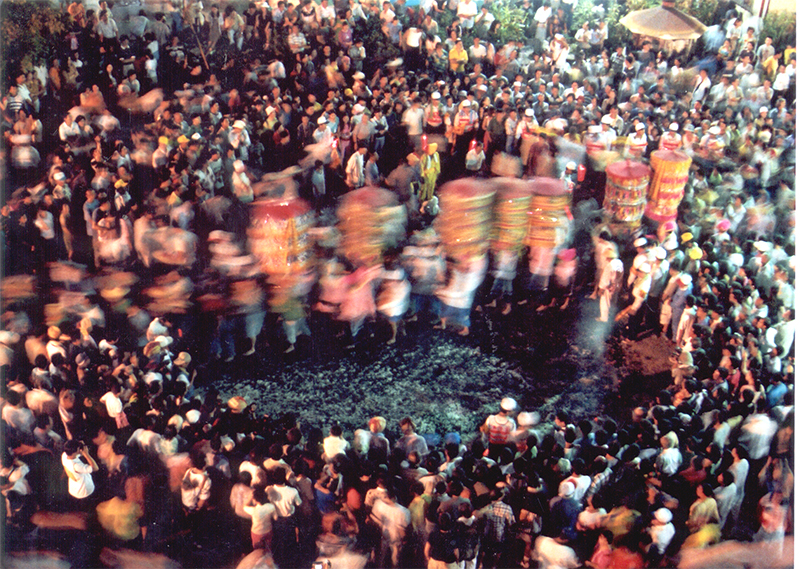
8.Walking over Fire
After “Wangye Invitation,” Daitian Shunshou Wanye patrols the town first before going to Daitian Hall. Before entering the hall, the celestial lords must “pass the fire” first. Wood is stacked and burned in five positions, and the sedans carrying Wangye must pass the fire, as a way to purge. Because there are five Wangye in total, the fire is called “the fire of five lords.” After the sacred fire turns wood into charcoal, the charcoal is flattened and covered with salt and rice. A chief folk priest invokes blessings from gods for the sedan teams and believers. Then, the sedan teams carry the statues of the five celestial lords to pass the charcoal piles, which are still warm, and send the statues into the hall.
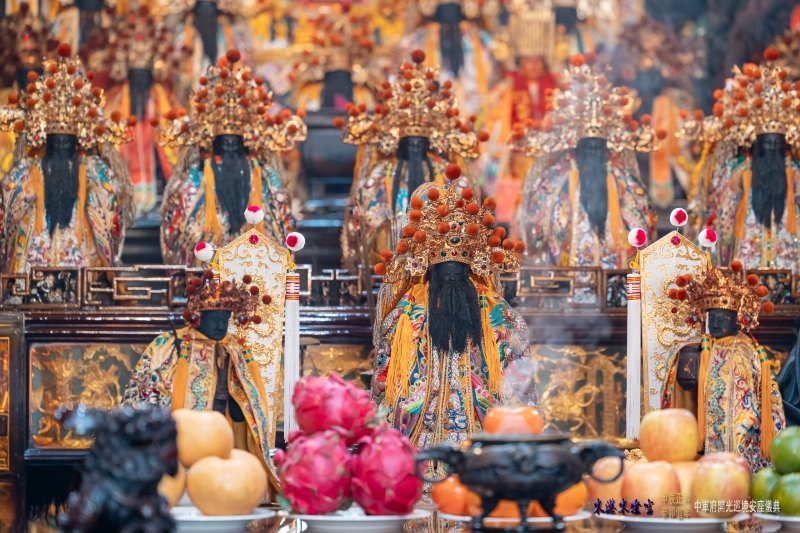
9.Worshipping Wangye
Vegetarian feasts are held to worship Wangye during the Reception. Since the celestial lords arrive, two feasts are held daily, one in the morning and the other at night. This is carried out until the gods return to the sky, to show people’s respect and trust to Daitian Shunshou Wangye.
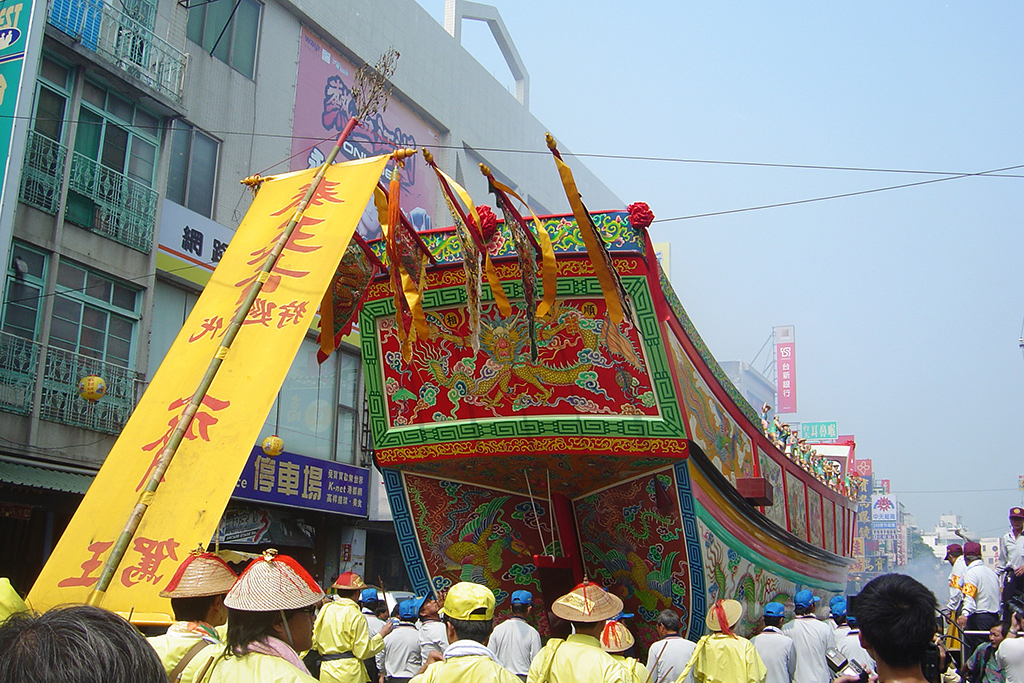
10.Wangye Boat Ceremony
The afternoon before sending celestial lords back to the sky, “Sailing of Wangye Boats” is held. Its goal is to catch evil spirits of diseases and disasters, especially plague, along the way, and take them away when Reception of Wangye is over. As Wangye Boats sail through the town, people thank Daitian Shunshou Wangye and his guards for patrolling and protecting the town with sacrifices and incense. Some households also prepare paper dolls which represent themselves. They ask folk priests to move their own bad luck to the dolls which are then taken away by the celestial gods during Sailing of Wangye Boats.
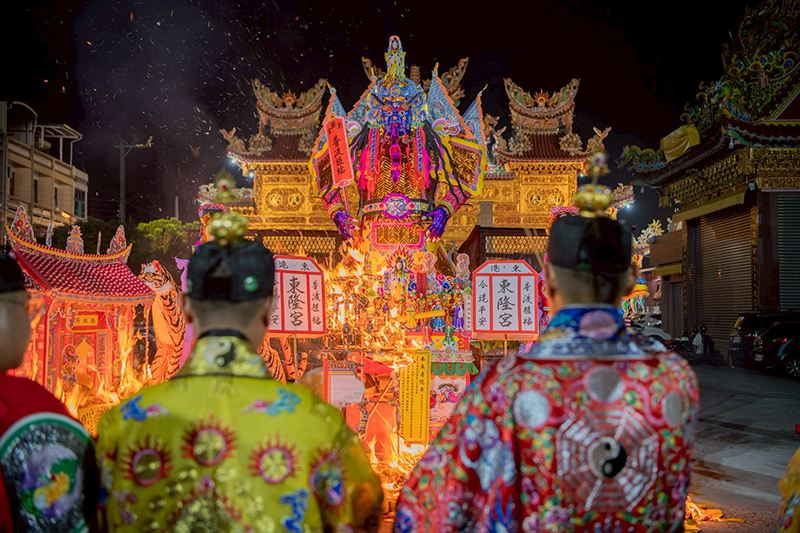
11.Moving Wangye boat out for Inspection Procession
During the Reception of Wangye, Daitian Shunshou Wangye patrols in the town to catch spirits of plague. At the Wanye Boat ceremony held on the night before Wangye returns to the sky, an aggressive rite called “suppressing spirits of plague” is held. This is to make sure that all evil spirits are kept away from the town no matter they are fierce or not. Through the rite, folk priests get these fierce spirits to Wanye Boats, so that the spirits return to the sky with the celestial lords, making the town safe again. This is the ultimate goal of the Reception of Wangye.
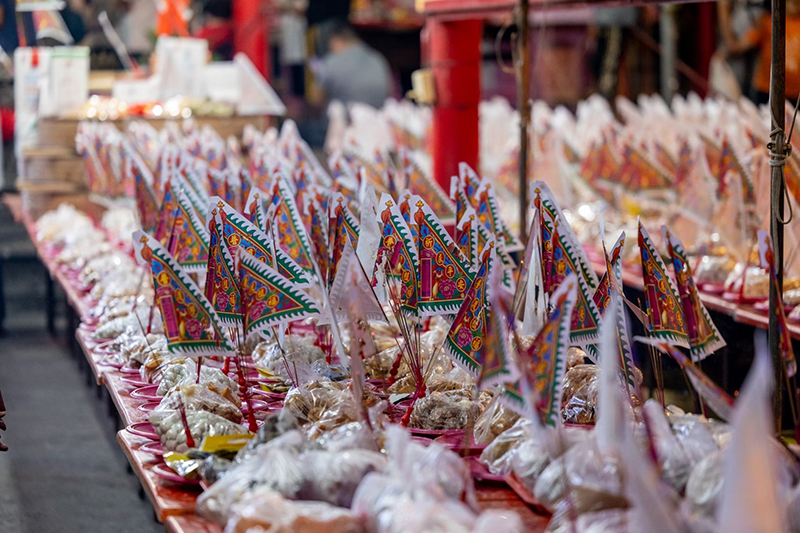
12.Feasting Wangye
The night before sending the celestial gods back, in Daitian Hall, a full-course feast is held for them to enjoy and express gratitude.
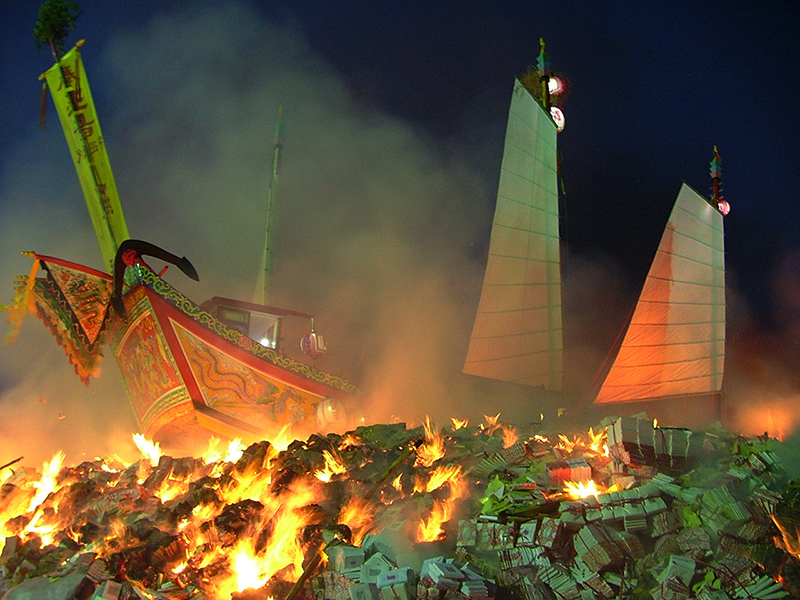
13.Sending off Wangye
The next day, in the early morning, the temple secretaries send the lords to their sedans, and go to the shores to see them off with Wangye Boats. When the boats arrive by the seas, the seven Jiao Tou sedan teams and members of Donglong Temple use several bags of worship paper to make the boats look tall and magnificent. When everything is set, a waterway is inaugurated. Representatives of the Big Wangye then express gratitude to the believers. When the right time comes, anchors are removed and cannons are fired. The boats are burnt and the celestial lords travel back to the sky.
“Supplementation” refers to making sure that Wangye enjoys all three meals of a day while returning to the Celestial Court to make a report of the human world. Through this rite, people also hope to get blessings and a bountiful life for the next three years.
The Lanterns of 36 Provinces are hung on both sides of a stage dedicated to Wangye during the Reception of Wangye. These lanterns indicate that Wangye’s power is all over Taiwan.
Hengchun Ancient City International Pole Climbing Festival
Hengchun’s Annual Celebration: Joining Together for Qianggu to Celebrate the Ghost Festival
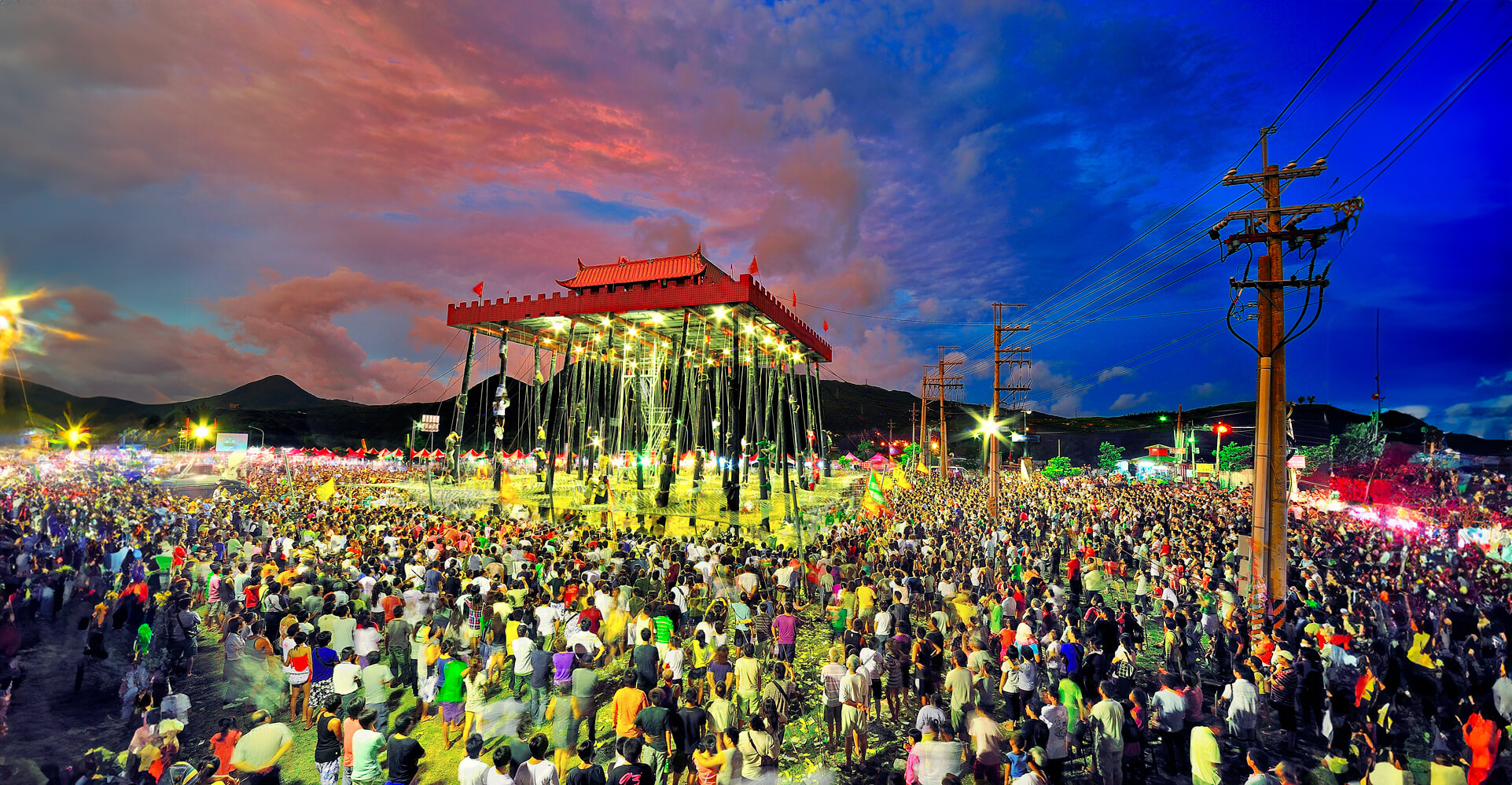
Hengchun's "Qianggu" (Grappling with the Ghosts) and "Shu Gu Peng" (Pole Climbing) are unique folk cultural activities held during the Ghost Festival (Zhongyuan Festival). Originally, it was intended to aid the poor by distributing the abundant offerings from the Pudu ritual to needy families through the method of "Qianggu" and "Pole Climbing."
This tradition has a history of over 100 years. Today, as living standards have improved, the Hengchun Township Office has refined this historically significant folk culture, transforming it into a cultural event that is interesting, challenging, and promotes tourism in the ancient city of Hengchun. The event sometimes includes parades, photography contests, and children's pole climbing activities.
Organizer: Pingtung County Hengchun Township Office +886-8-8881311
For relevant information, please visit the Pingtung County Hengchun Township Office Facebook fan page.
Pole Climbing (Shu Gu Peng)
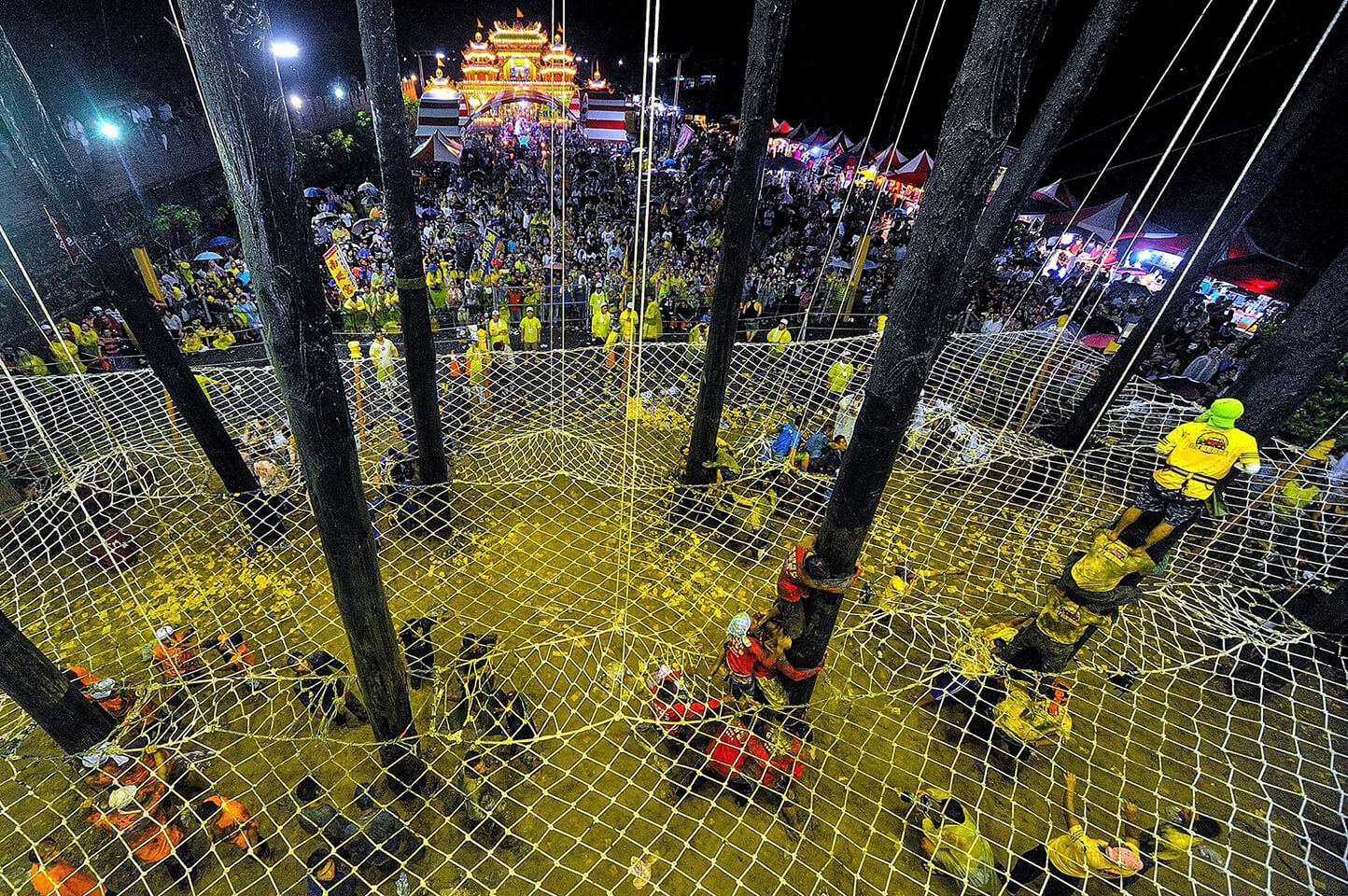
The main spirit of the "Pole Climbing" activity is to "continue the ancestors' excellent tradition of empathy and compassion." The goal is to "cultivate devout, humble, and physically strong men." The event is scheduled for the auspicious time on the night of the Ghost Festival (July 15th of the lunar calendar) every year. The location is the open ground outside the East Gate of Hengchun Ancient City. Heroes from all walks of life are free to form teams to participate; participants must be at least 18 years old. Details such as the number of team members, the limit on the total number of competing teams, competition rules, and prize distribution change annually and follow the organizer's regulations.
The structure of the climbing poles (Gu Peng) today is different from that of early years. The early method involved erecting four logs, each about 10 meters long, representing the four ancient gates of Hengchun City. The logs were coated with slippery grease, and protective nets and sand were placed below to prevent accidents. A platform was built on top of the logs, and a flag was placed at the very top. The first person to snatch the flag was the winner.
Nowadays, the four logs have been changed to 36 pillars, allowing more teams to participate. The Township Office issues invitations to experts from outside Hengchun to join the event, and even international teams have come to compete, significantly enhancing the event's visibility and news value. Pole Climbing tests teamwork, tacit understanding, climbing skills, and physical stamina. Victory requires both brains and brawn. (Image courtesy of the 2020 Hengchun Ancient City International Pole Climbing Festival Facebook Fan Page)
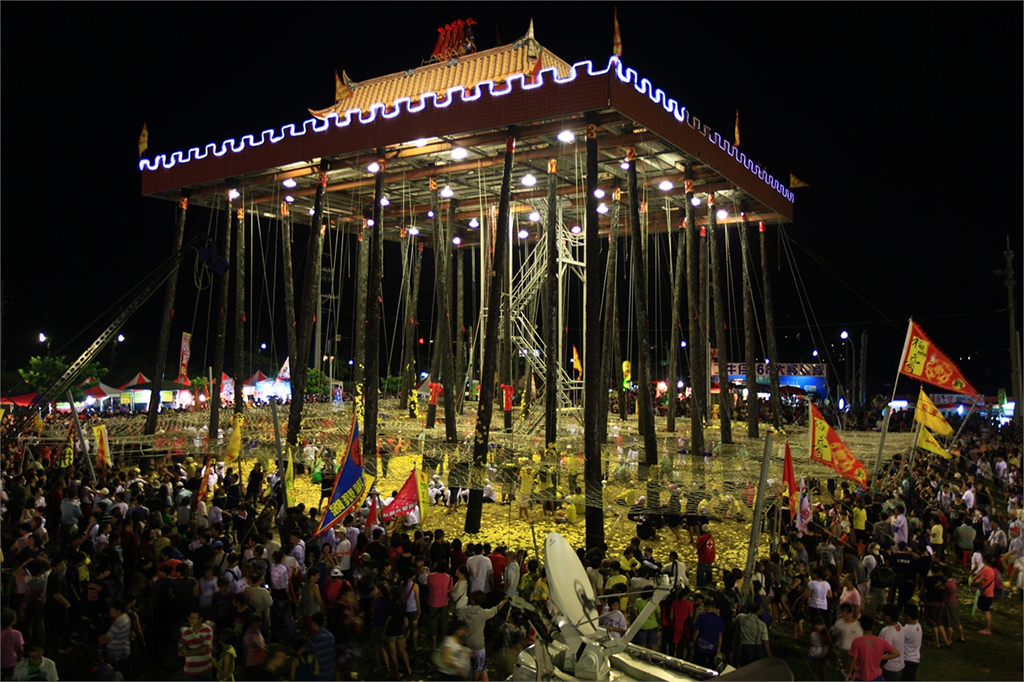
Compared to "Pole Climbing," "Qianggu" is much more relaxed. Individuals can easily complete it without prior registration. Participants can pick up offerings provided by the organizer during the event time and then exchange the vouchers for items at the redemption center.
The modern, improved method of Qianggu involves writing the names of Pudu offerings on slips of paper, rolling them into plastic tubes/capsules, and scattering them from a high place for the public to scramble for. This improved method avoids injuries caused by fighting over physical offerings and ensures that food is not trampled or wasted by the crowd.
Dapeng Bay: A former military stronghold, bearing witness to the changing eras and historical footprints.
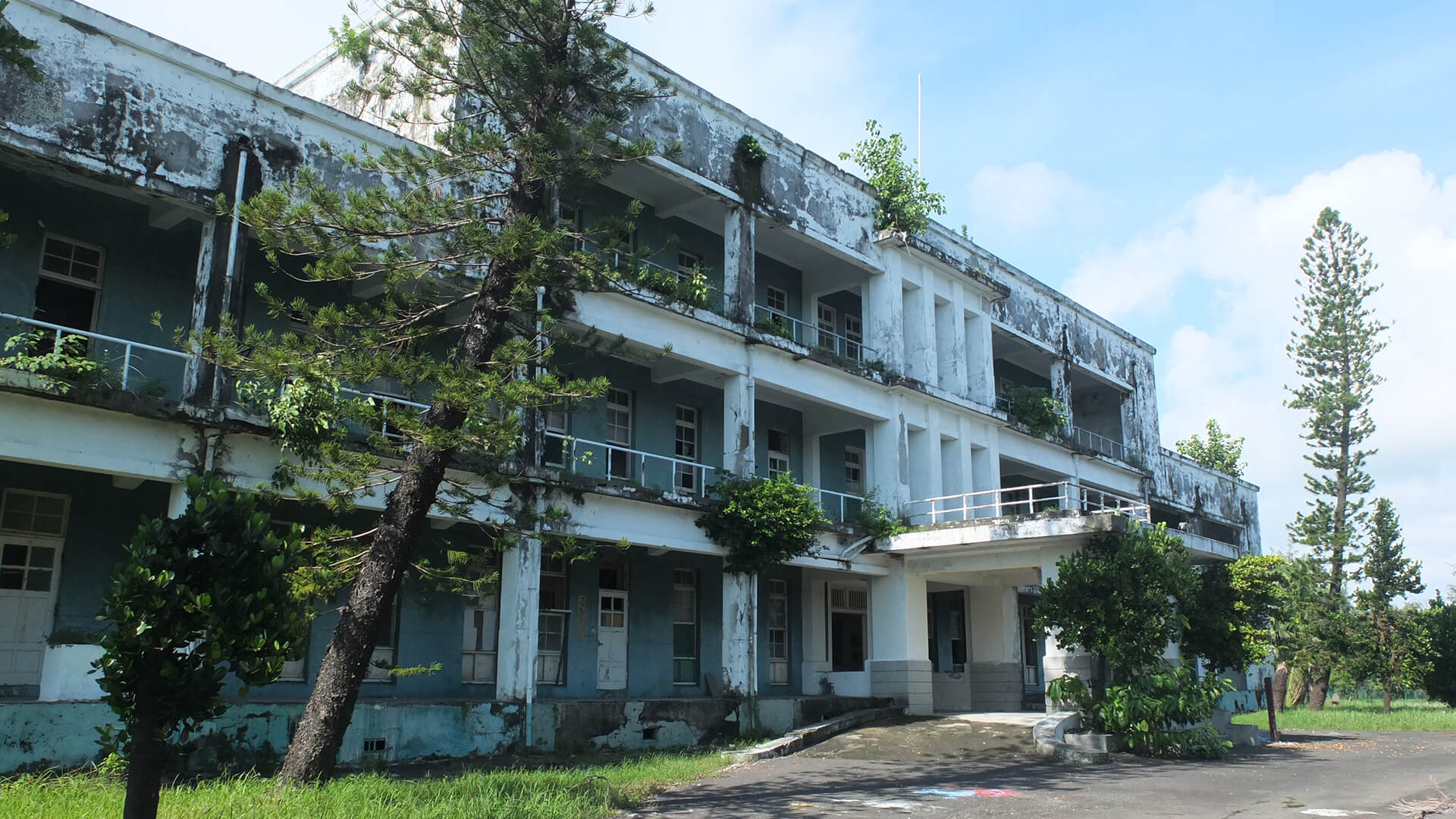
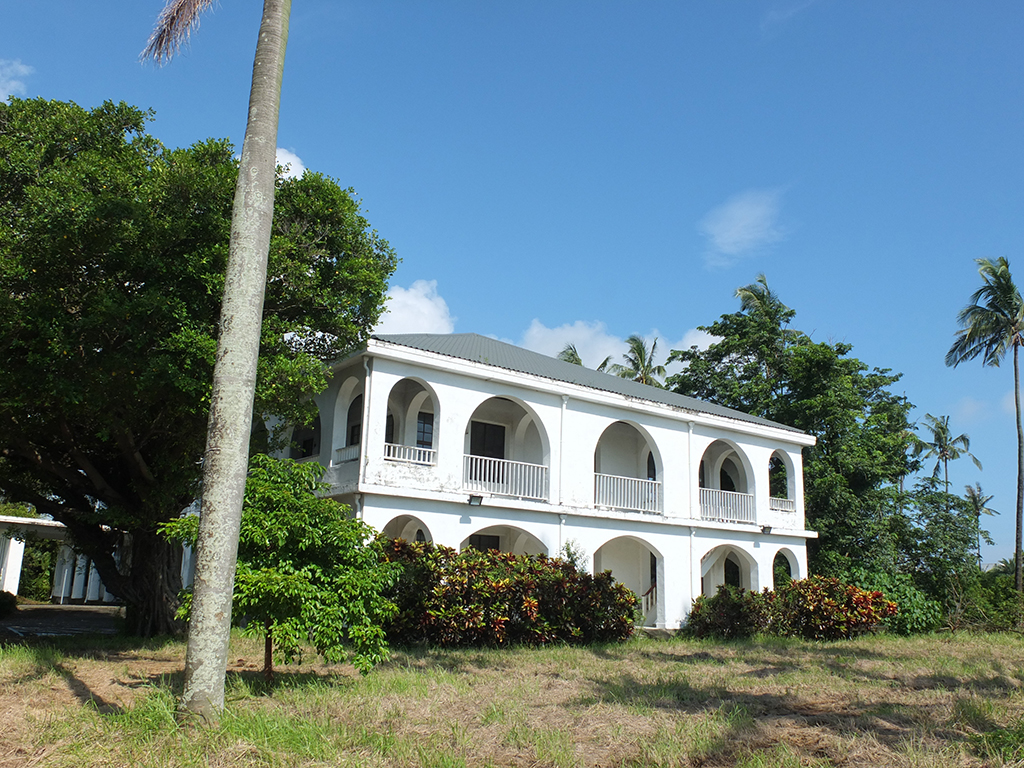
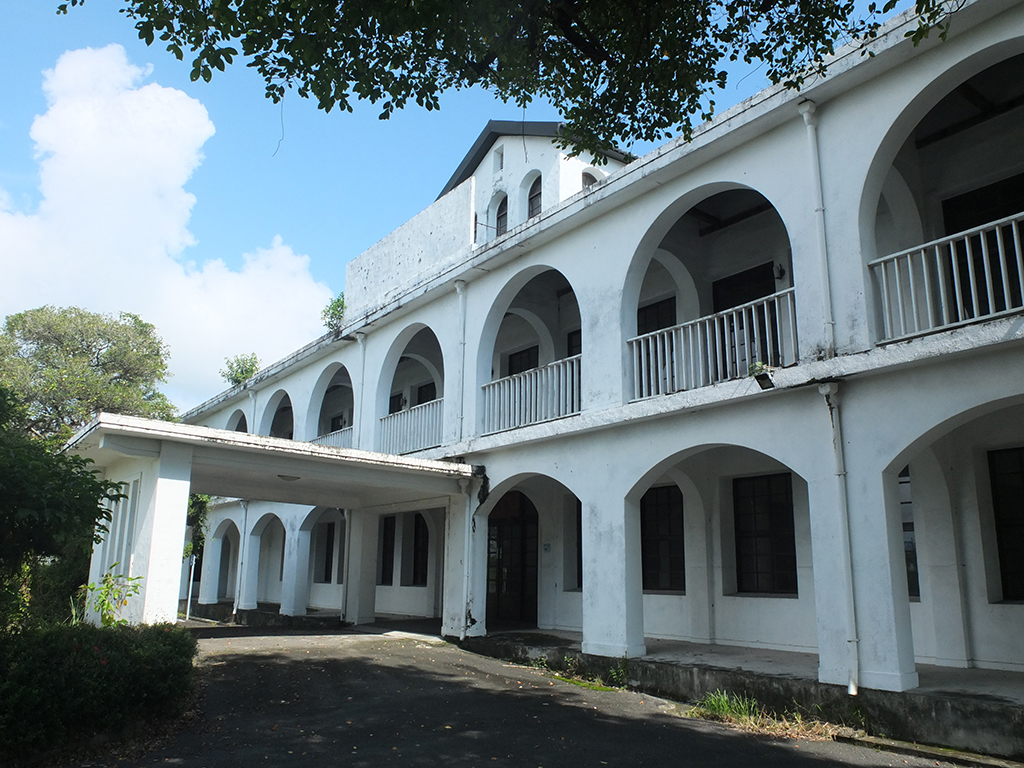
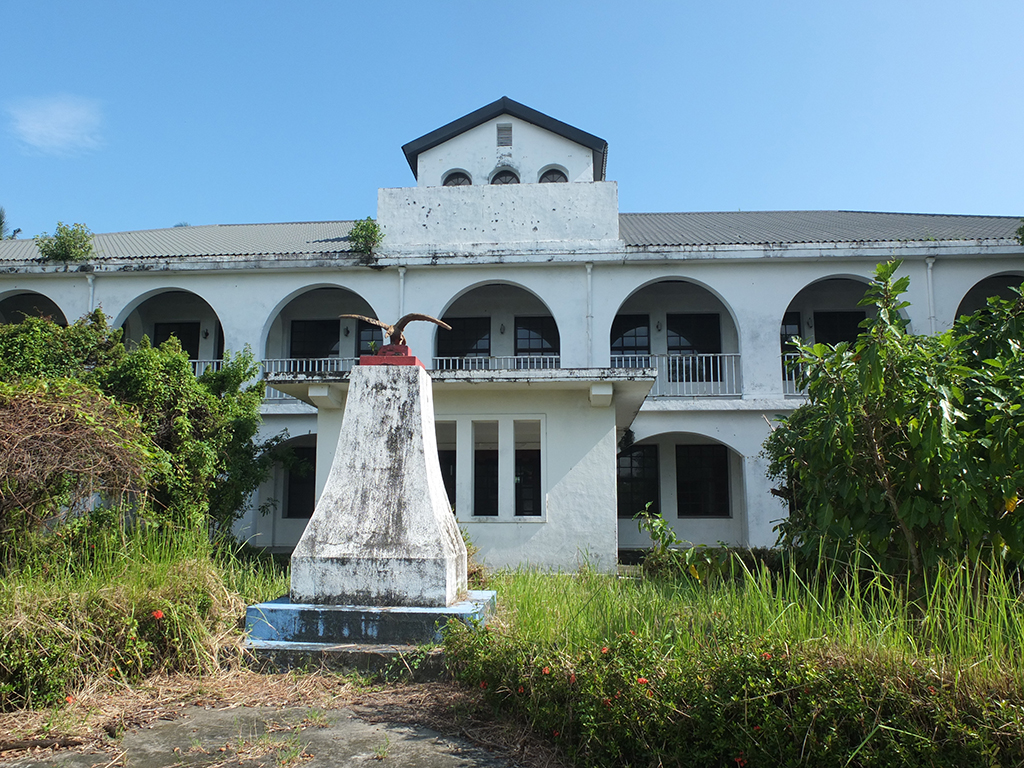
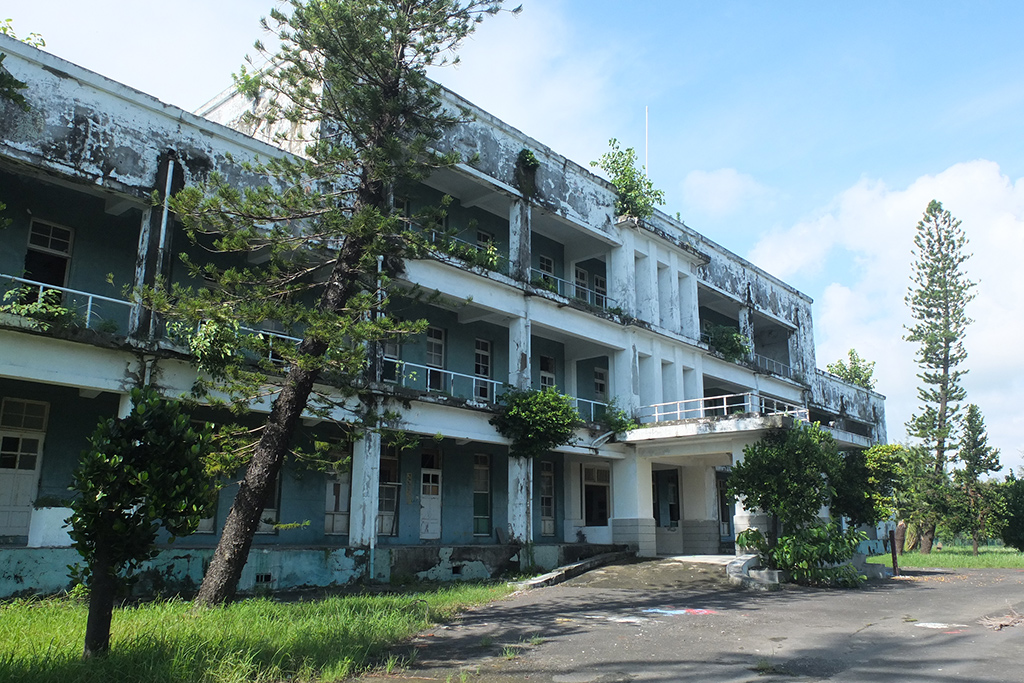
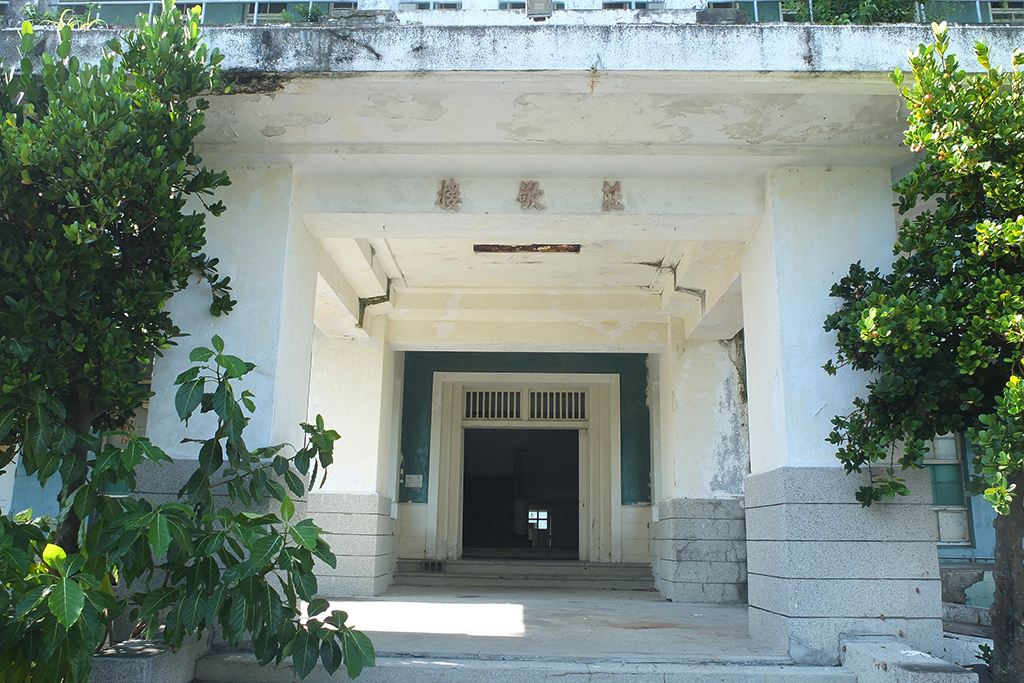
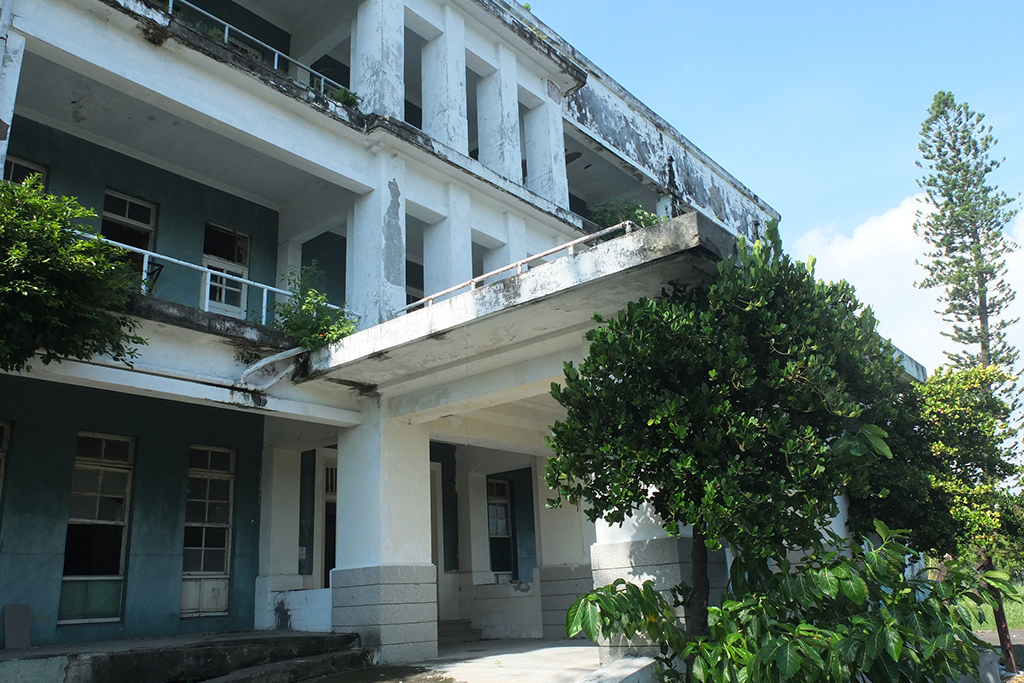
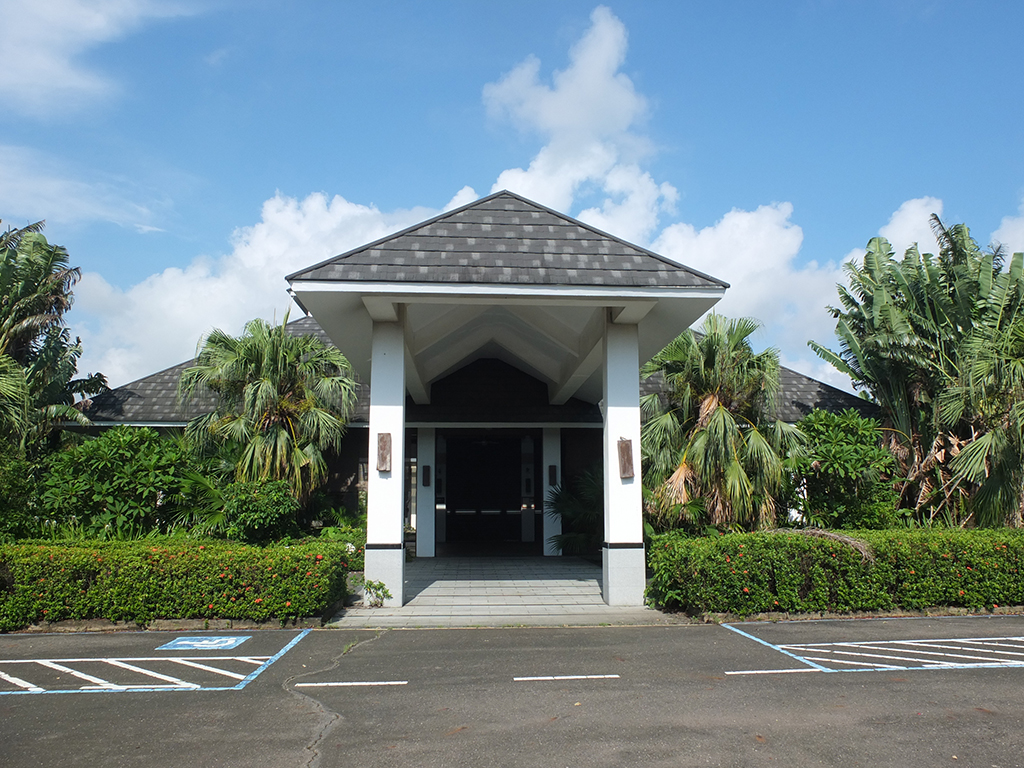
This area has been a military zone since the late Japanese colonial period. The military buildings within the park have spanned both the Japanese colonial era and the ROC military garrison period. From the barracks, roof tiles, and tunnels to the towers and guard posts, careful observation reveals the distinct styles of these two different eras. The Old Mess Hall features a unique Cypress wood structure, which is rarely found among the many buildings from the Japanese occupation era. It has been well preserved and combines with the nearby sea and airspace to form a unique landscape.
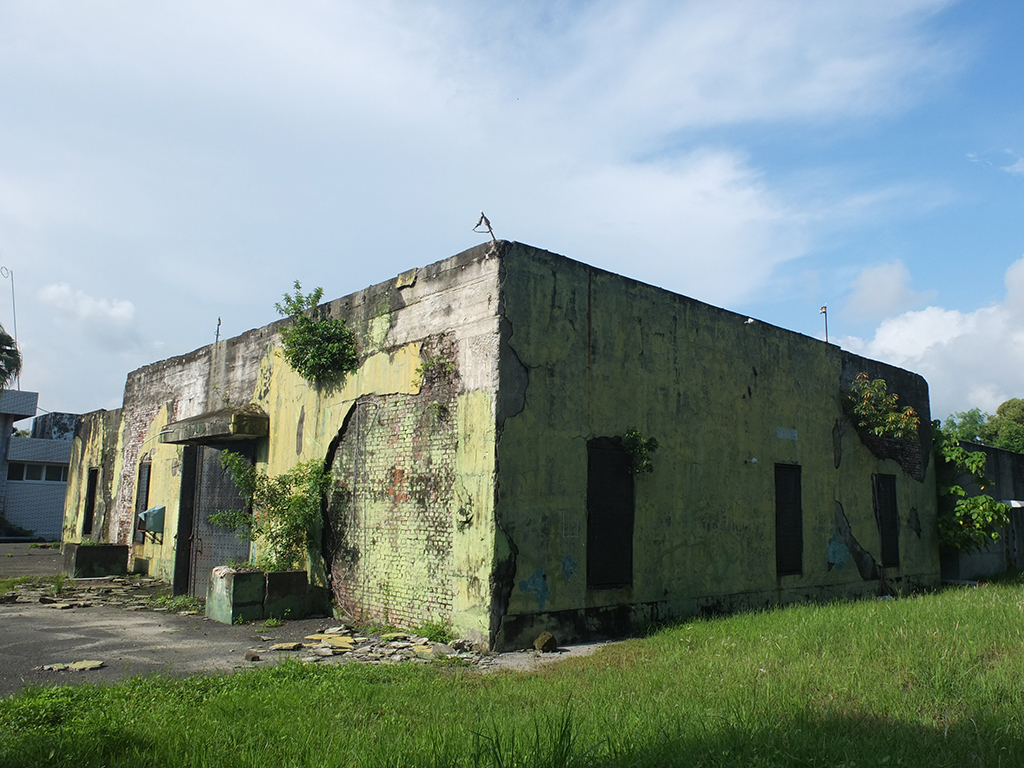
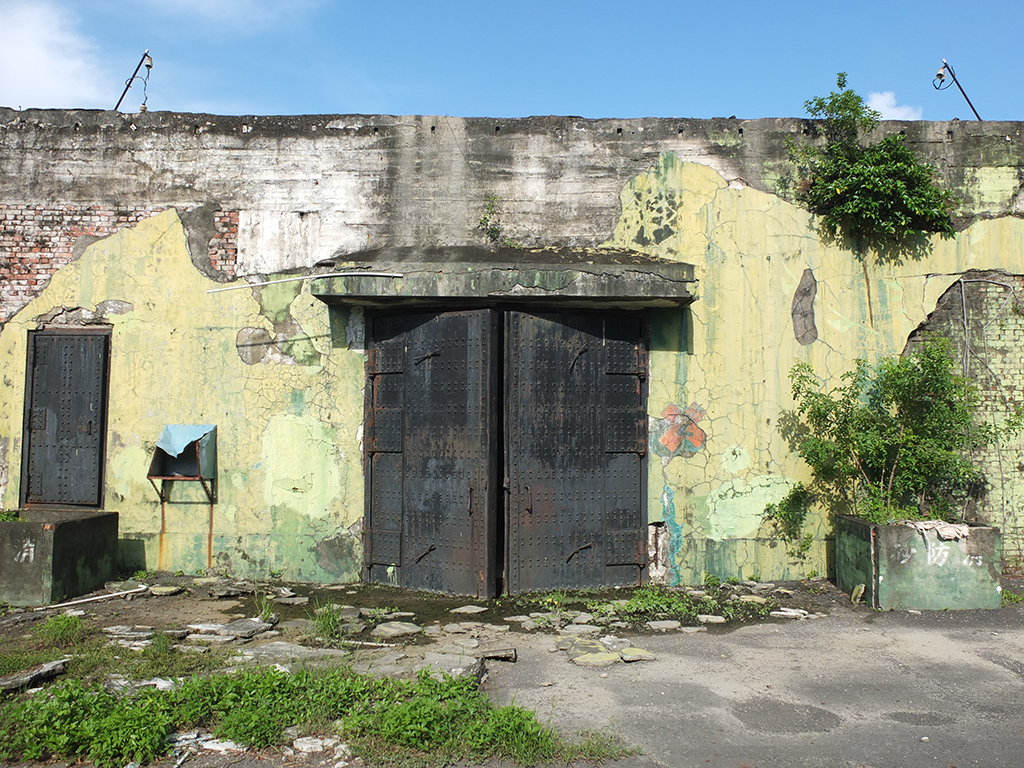
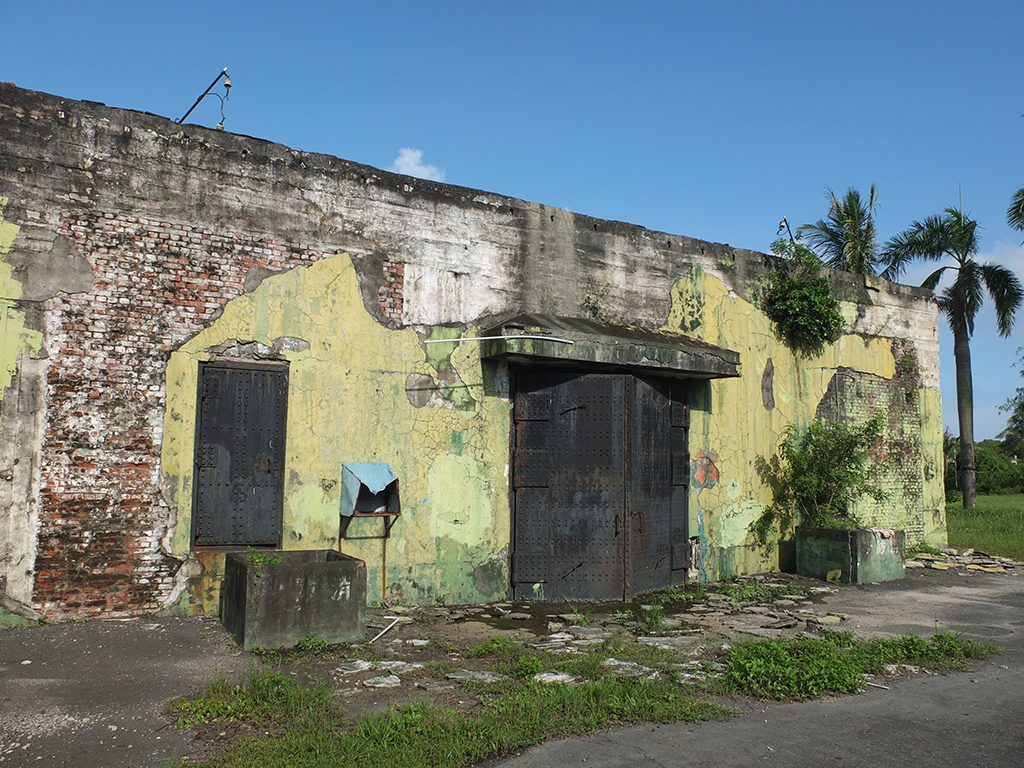
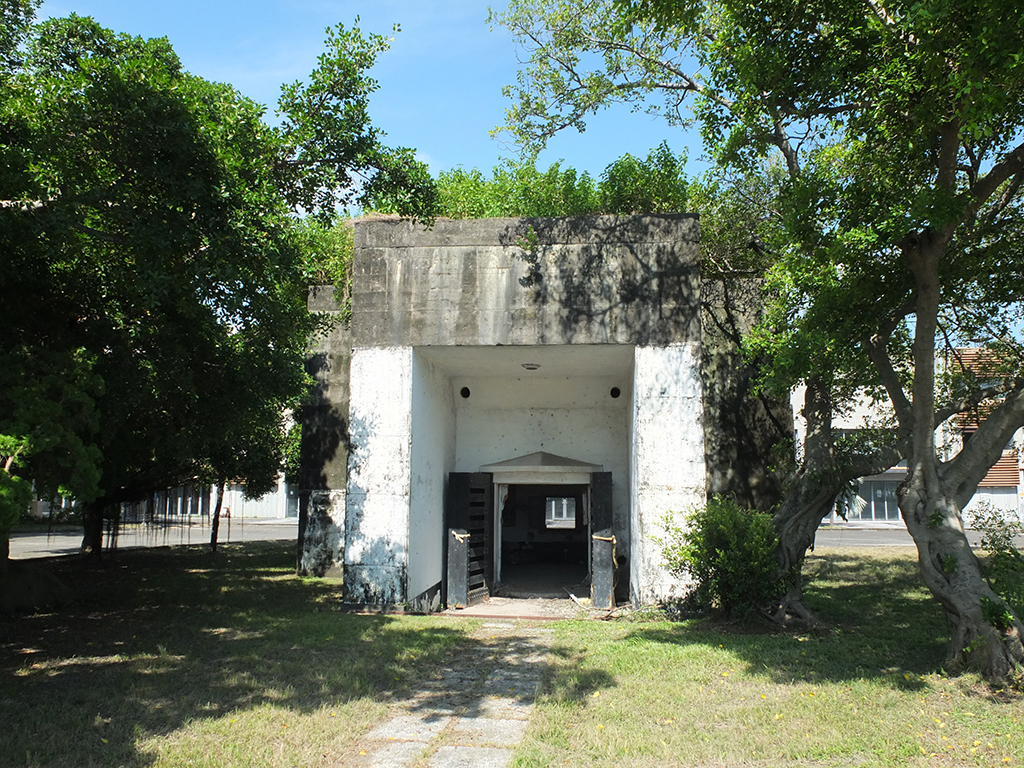
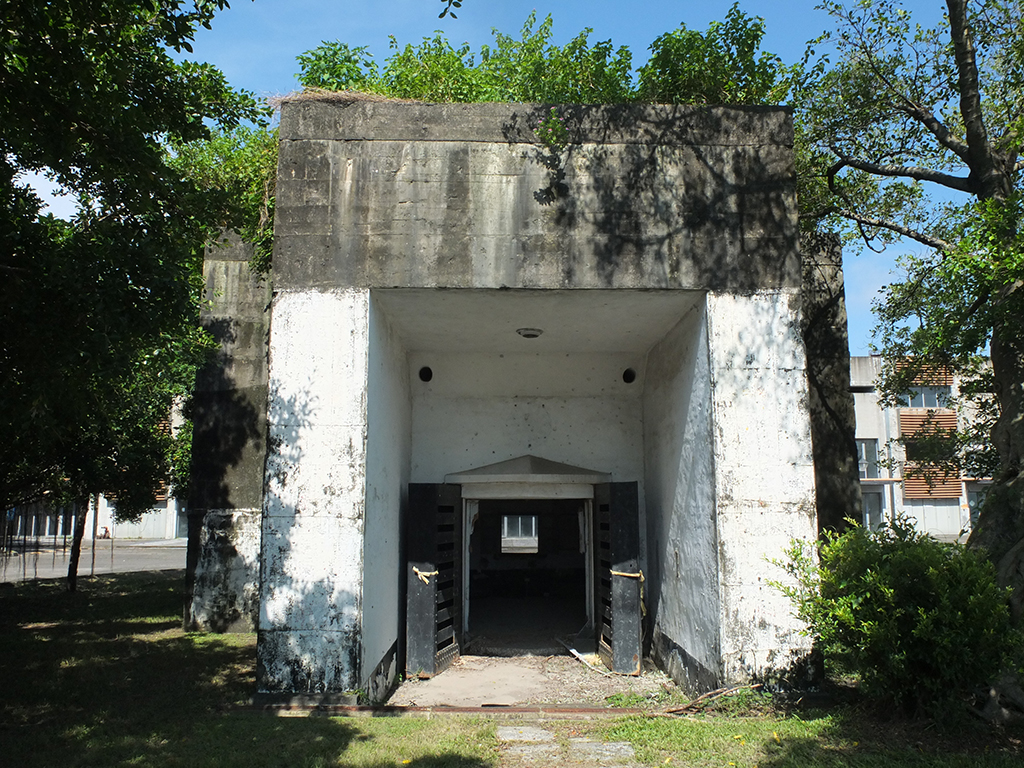
The military facilities and buildings of Dapeng Camp from the Japanese colonial period—including the Headquarters Company, Zhuangjing Building, Old Mess Hall, East Ammunition Depot, and West Ammunition Depot—date back to 1937 (Showa 12), when the Sino-Japanese War broke out. The Japanese military actively promoted various military constructions across Taiwan as main bases for their "Southward Advance Policy." The military projects in Donggang included the Dapeng Bay Naval Air Corps and the Donggang Branch of the 61st Naval Air Field. The entire camp was completed in 1940 (Showa 15).
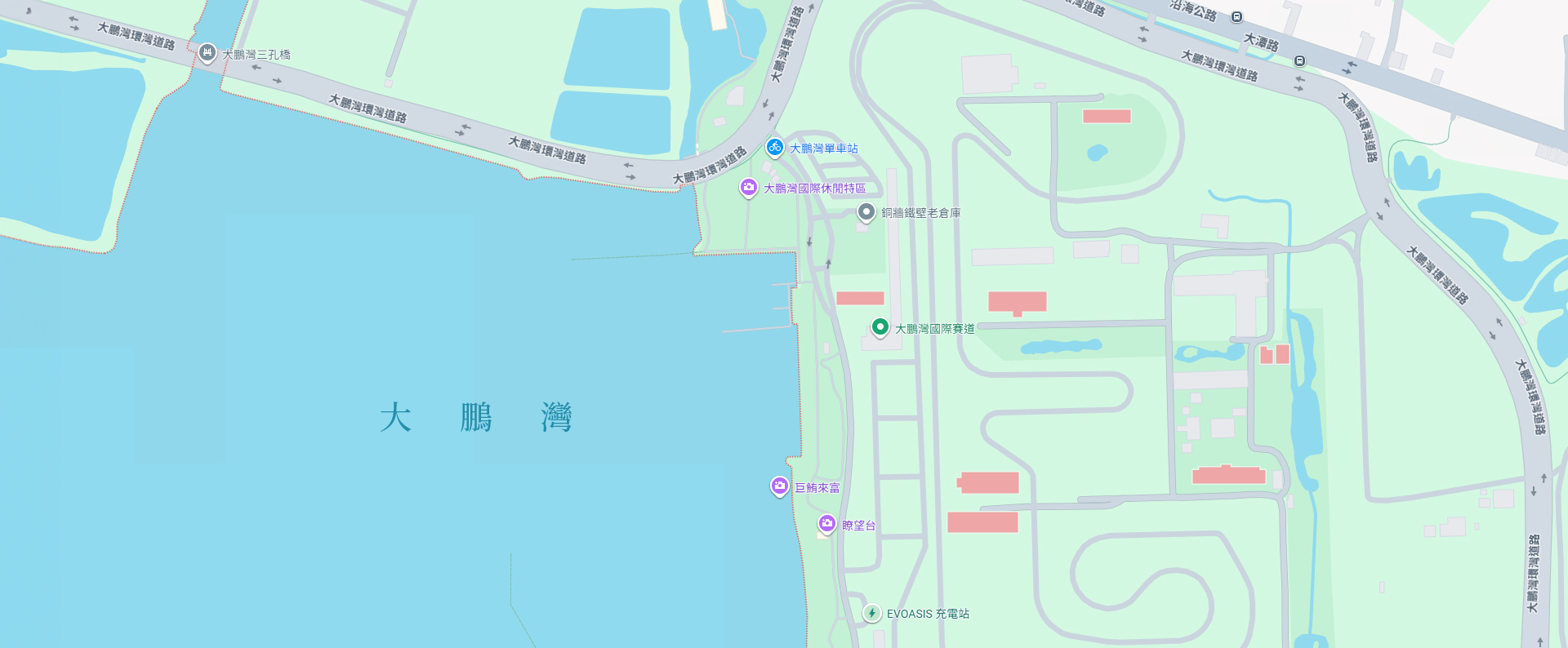
There are five designated historical buildings: Headquarters Company, Zhuangjing Building, Old Mess Hall, East Ammunition Depot, and West Ammunition Depot. Click on the map numbers to learn about the features of each building:
Click on the map numbers to learn about the features of each building
Swipe left or right to view the full map
Scroll down to view the full map
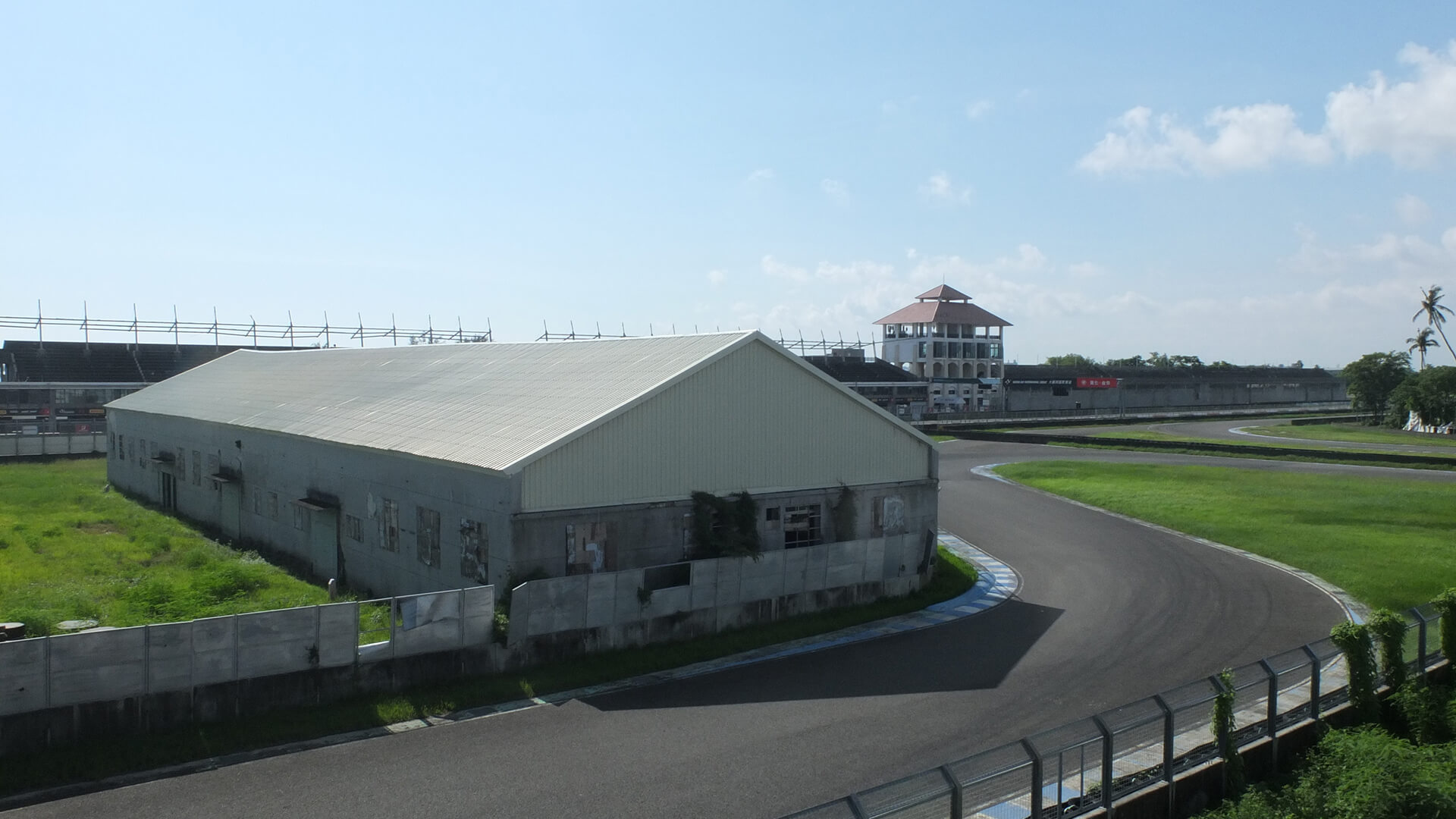
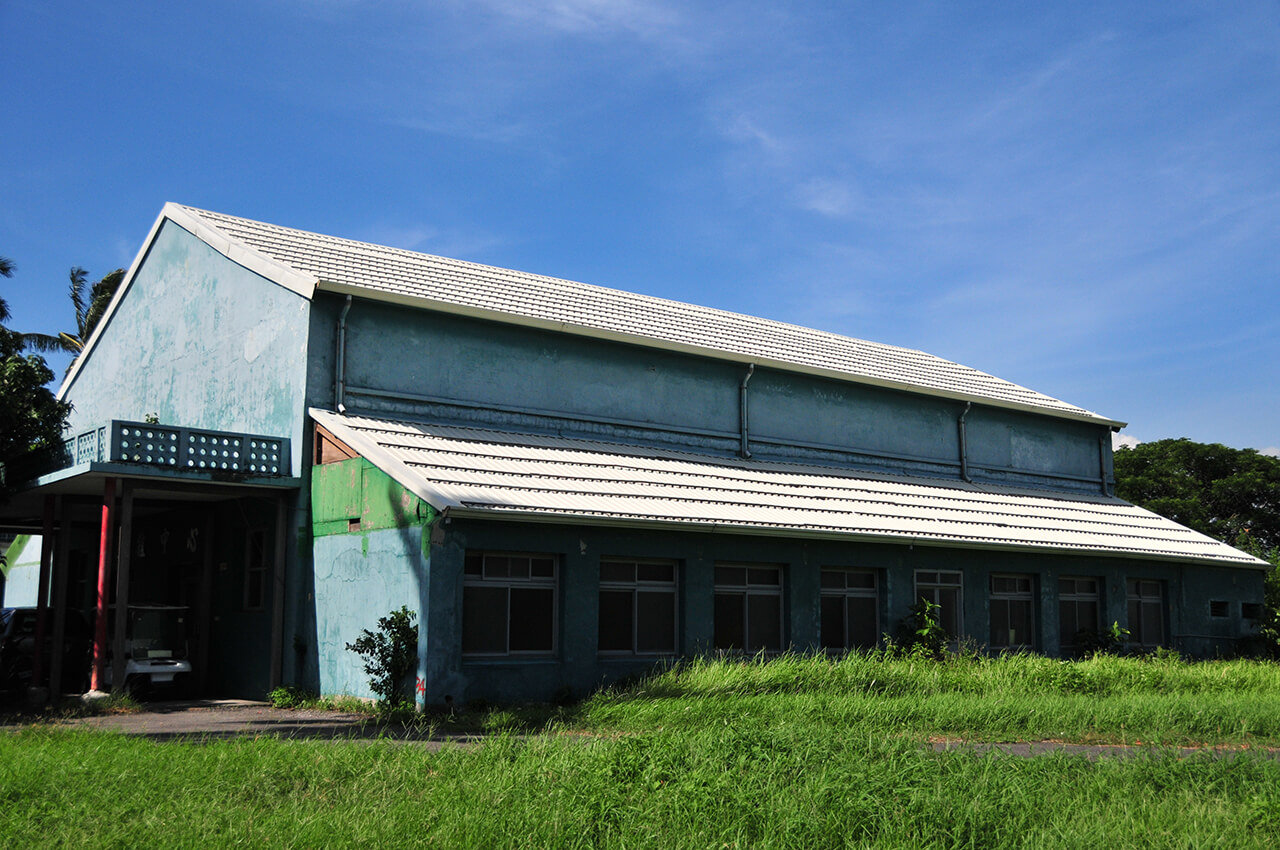
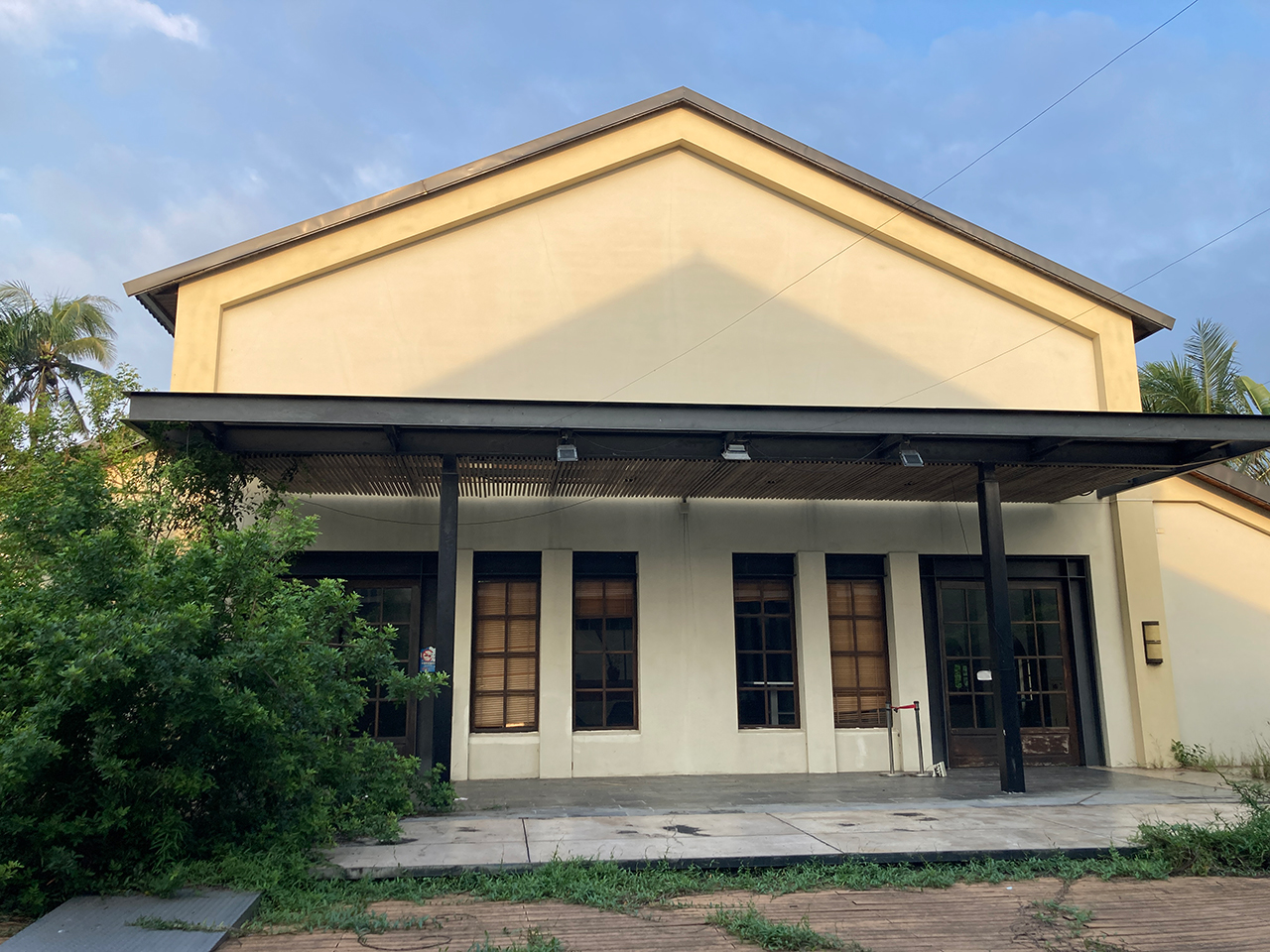
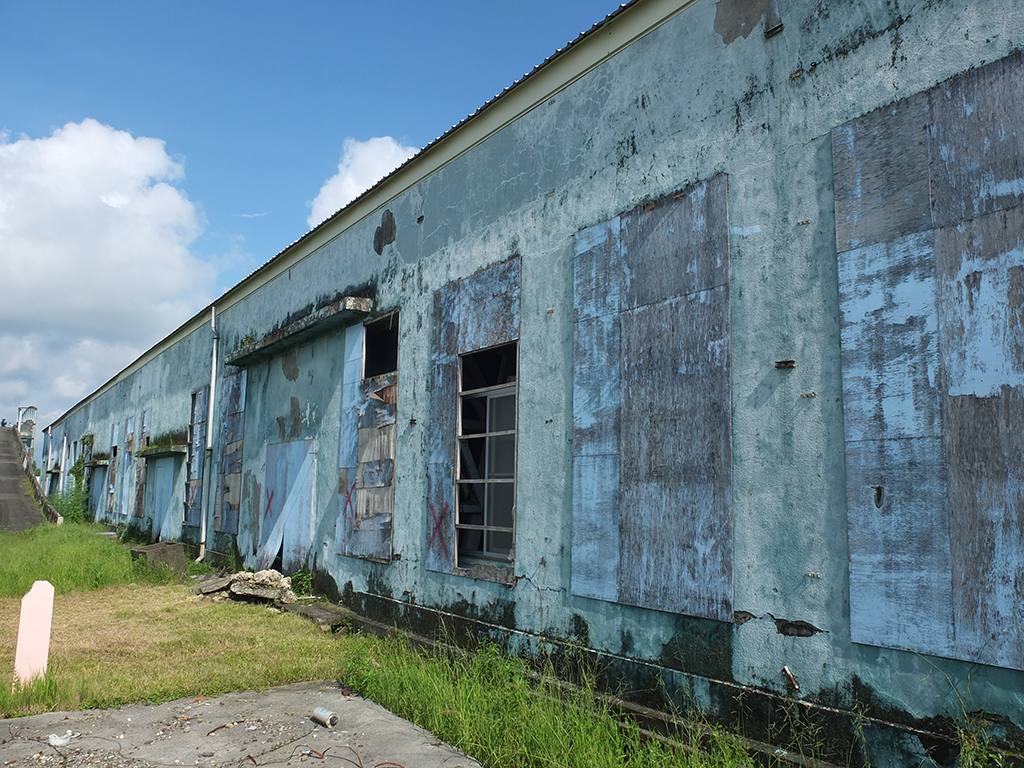
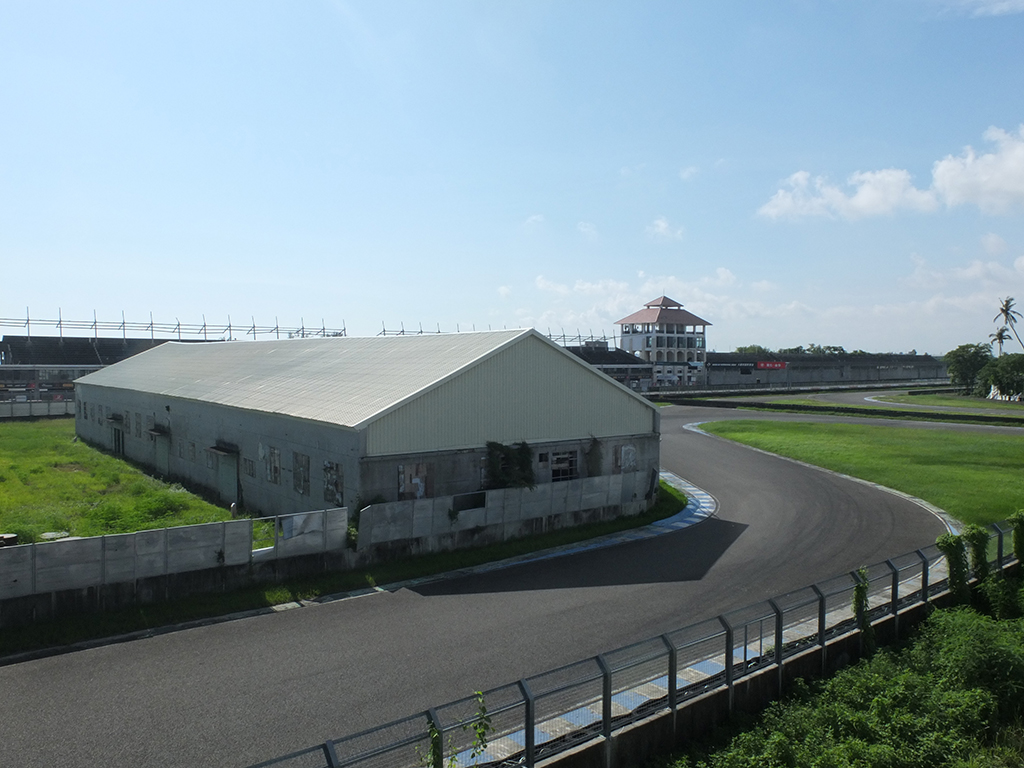
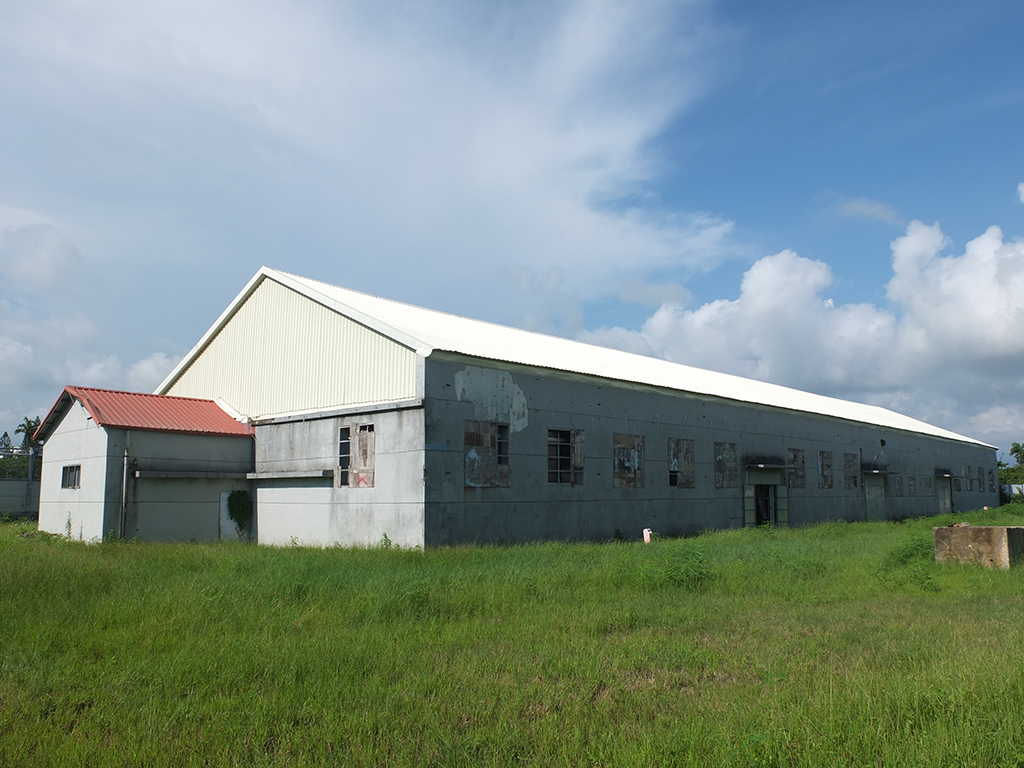
South Building (Old Mess Hall) & North Building (Zhongzheng Hall)
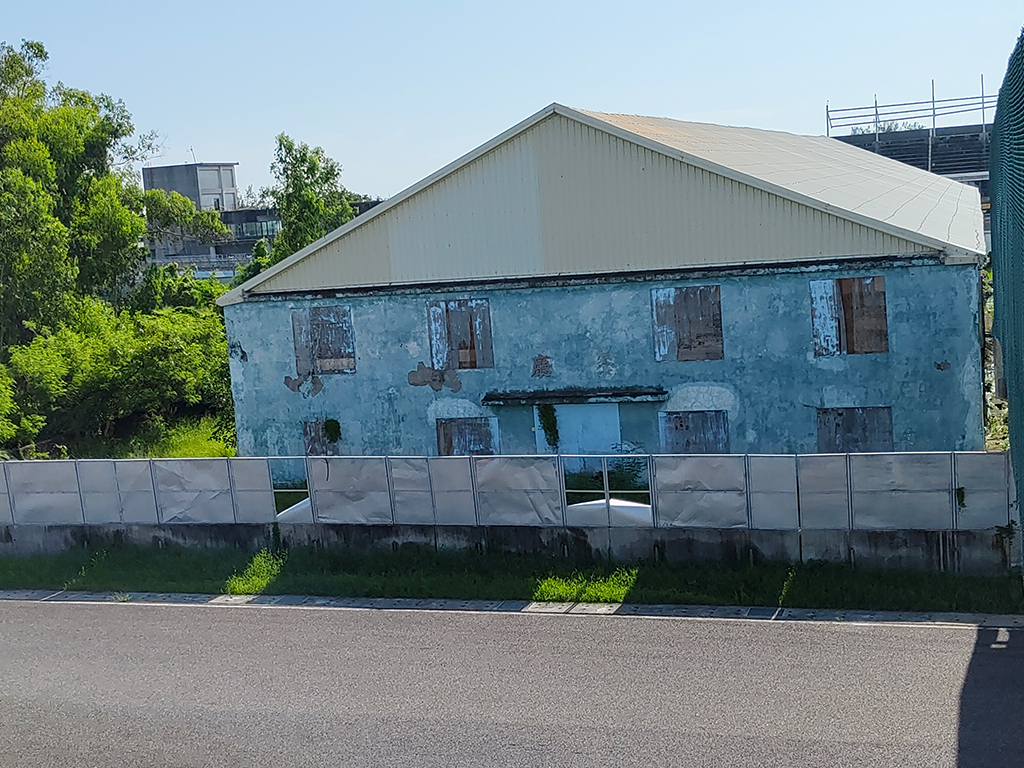
Dapeng Bay served as the Donggang Airfield, a naval military base established during the late Japanese colonial period. Located at the southern tip of Pingtung, Taiwan, it witnessed the history of military deployment formed by the "Southward Advance Policy" at that time. It fully demonstrates the historical process of naval affairs and the colonial strategy during the Japanese rule, possessing immense historical and cultural value. The "Former Japanese Donggang Naval Air Corps Engine Adjustment Plant" and the "Former Japanese Donggang Naval Air Corps Woodwork and Machinery Plant" were built during the colonial period as aircraft maintenance factories for the Donggang Seaplane Airfield. The wooden roof structures of both buildings employ wood construction techniques developed before World War II. They use a special structural method to assemble timber into large-span roof truss systems, showcasing the construction style and technology of large-span wooden buildings during the war period, which holds both aesthetic and scientific value.
The two seaplane maintenance plants established at that time were located next to the three main hangars. The "Engine Adjustment Plant" is today's South Building Aircraft Maintenance Plant, located behind the "First Hangar." Behind the "Third Hangar" was the "Woodwork and Machinery Plant," which is today's North Building Aircraft Maintenance Plant. After 1945 (Showa 20), the camp was successively used as the Air Force Staff School, Air Force Preparatory School, and the Air Force Anti-Aircraft Artillery Command Base Training Center. Originally used as soldiers' dormitories, they were later converted into dining halls. They are one-story buildings with brick walls and wooden roof structures. Before the Preparatory School was abolished, the South Building was used as a student cafeteria; the North Building served as an assembly hall and multi-functional classroom. Currently, access is restricted. The camp was relocated in January 1983. In 2003, the Dapeng Bay National Scenic Area was established, and in 2004, operation was entrusted to the Dapeng Bay International Development Co., Ltd. Subsequently, the North Building was used as a warehouse for stalactites, and the South Building was leased to other companies for light aircraft operations. Currently, access is restricted.
The exterior of the buildings features washed stone walls and tin pitched roofs (originally wood shingles). The interior structure is wooden, utilizing a truss system. The trusses consist of single and double rows of timber, forming a large-span spatial volume. The column bases are hinged. Both the South and North buildings are one-story structures made of brick, tin, wood, and steel.